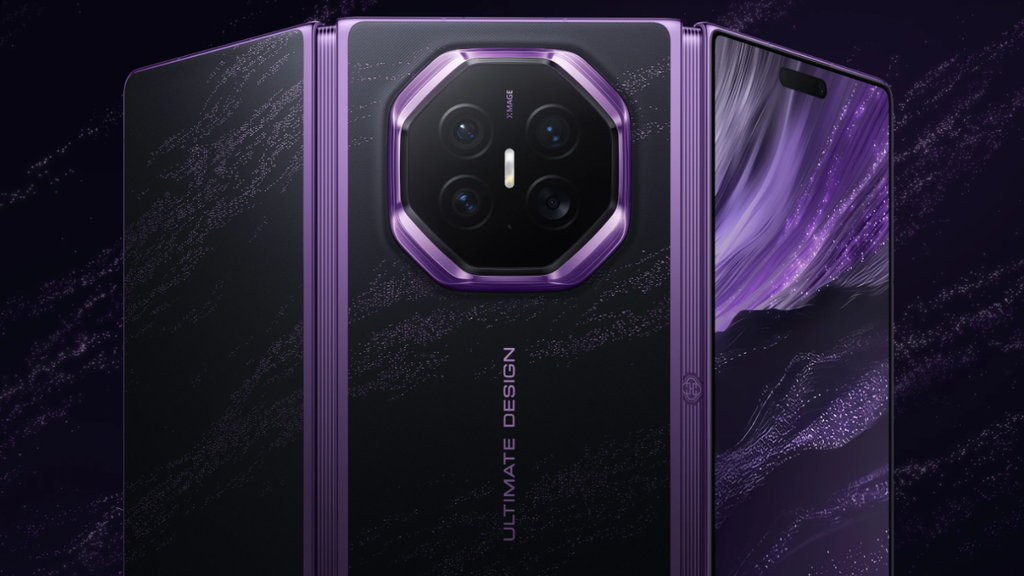
Huawei’s Mate XT 2 Ultimate Design is now official, launched today, September 7, in China, and the real story here isn’t the chip or the cameras, it’s how the phone folds. The original Mate XT used an outward, Z-shaped fold that left part of the flexible display exposed when closed. The XT 2 drops that entirely for a new inward-folding “wing-spread” design that tucks the screen fully inside the body, a structural overhaul Huawei says protects the panel during everyday use.
Display
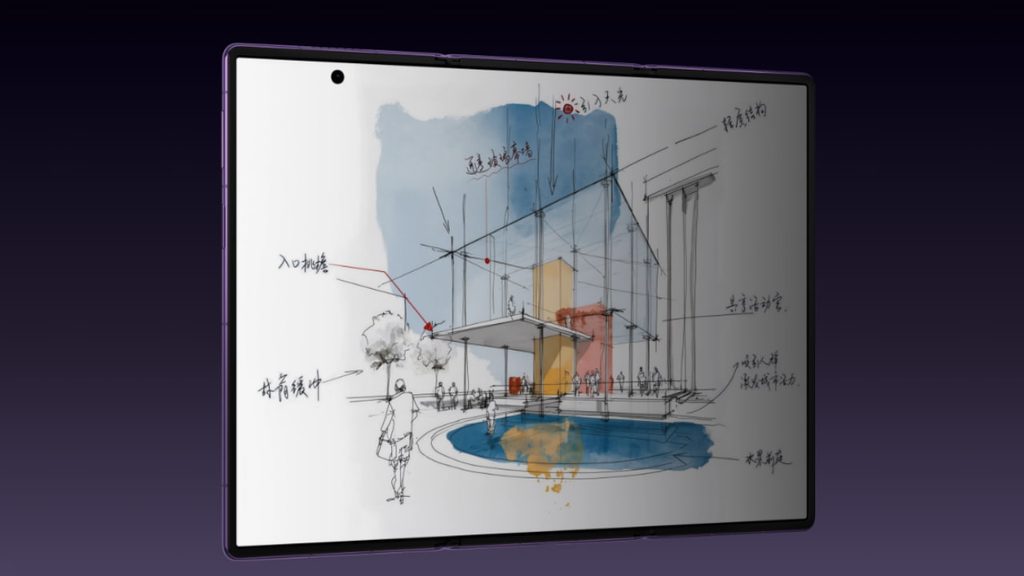
Unfolded, you get a 10.2-inch 3K OLED panel with a 12.8:9 aspect ratio, adaptive refresh up to 90Hz, and 1440Hz high-frequency PWM dimming to reduce flicker. Close it and a separate 6.5-inch cover display takes over, hitting up to 120Hz and 6,500 nits peak brightness, bright enough to stay readable in direct sun. That 1TB privacy configuration adds a hardware-level viewing-angle restriction so people next to you can’t peek at your screen.
Design
Despite squeezing in a third folding panel, Huawei kept things thin, 12.3mm folded and about 3.5mm at its slimmest when open, at roughly 299g. The new G-shaped hinge pairs with IP58/IP59 dust and water resistance, a first for a tri-fold, and Huawei claims the outer basalt/Kunlun-glass panel is 30 times more drop-resistant and 16 times more scratch-resistant than the outgoing model, with a reinforced inner display that absorbs harder impacts. It ships in Black, White, and Purple.
Performance
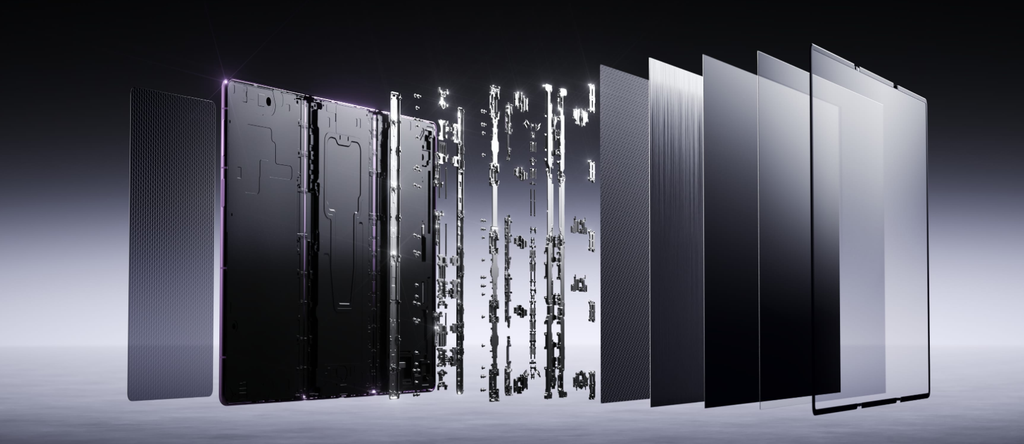
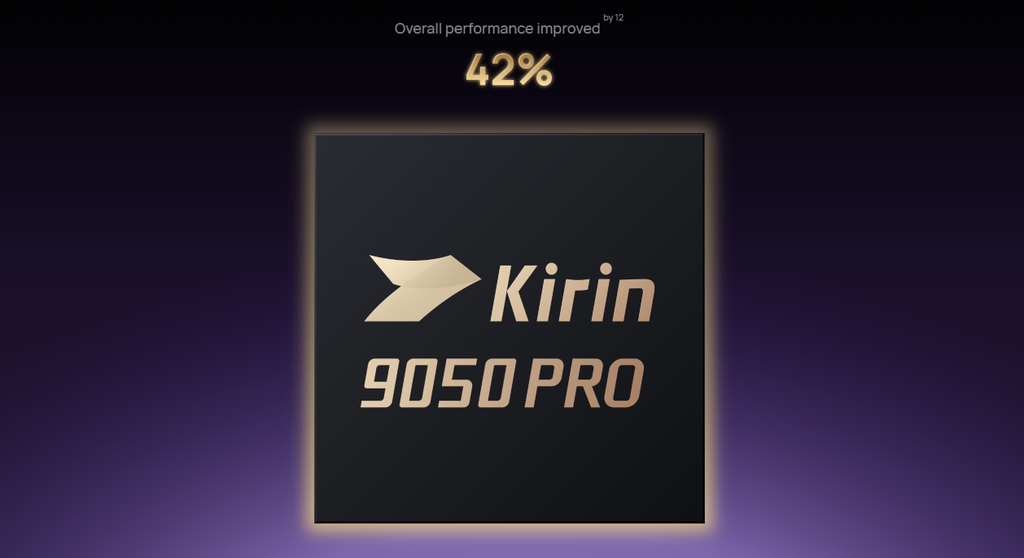
Powering it all is the Kirin 9050 Pro, Huawei’s first chip built on its LogicFolding architecture as part of the broader Tau Scaling Law approach to chip design, and the company claims roughly 42% higher overall performance than the previous generation with better efficiency to boot, needed given how much display it has to push. It’s a similar level of ambition to what Huawei’s other recent camera-focused launch chased on the imaging side, just redirected here toward raw processing.
Camera
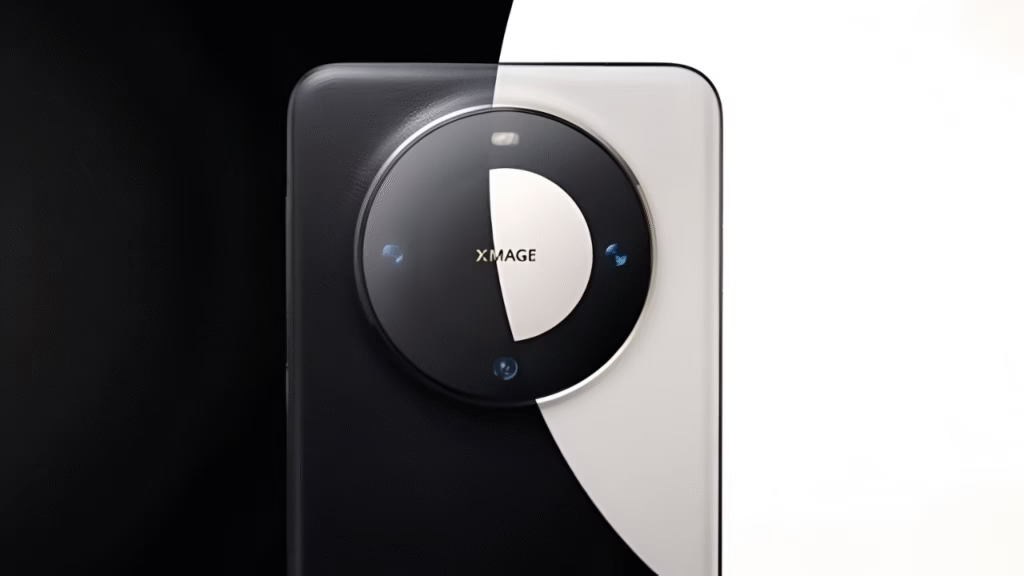
The camera setup is properly flagship: a 50MP main sensor at 1/1.28-inch with an RYYB filter, OIS, and a variable aperture from f/1.49 to f/4.0 for up to 18 EV of dynamic range, joined by a 40MP ultrawide and a 50MP periscope telephoto with 3.5x optical zoom. A fourth multispectral sensor handles color accuracy as part of Huawei’s third-gen Red Maple imaging system, while 8MP selfie cameras sit on both the inner and cover screens.
| Spec | Mate XT 2 Ultimate Design |
|---|---|
| Main display | 10.2″ 3K OLED, up to 90Hz |
| Cover display | 6.5″ OLED, up to 120Hz, 6,500 nits |
| Chipset | Kirin 9050 Pro |
| RAM | 16GB |
| Storage | 256GB – 2TB |
| Main camera | 50MP RYYB, variable aperture f/1.49-f/4.0, OIS |
| Ultrawide | 40MP |
| Periscope | 50MP, 3.5x optical zoom |
| Selfie | 8MP (inner + cover) |
| Battery | 5,600mAh |
| Wired charging | 66W |
| Wireless charging | 50W |
| OS | HarmonyOS 7 |
| Water resistance | IP58/IP59 |
| Weight | ~299g |
| Folded thickness | 12.3mm |
Battery
Battery capacity stays at 5,600mAh, unchanged from the original Mate XT, now backed by the more efficient chip and 66W wired plus 50W wireless charging. Software runs on HarmonyOS 7, built around the big unfolded canvas with three-window multitasking, independent per-window volume control, on-device AI tools, and PC-style productivity features. Alongside the phone, Huawei introduced the M-Pen 3 Mini, an 8.8g stylus with a 1.0mm tip that doubles as an air-mouse, plus a health feature that turns the metal frame into ECG electrodes for a 30-second heart-rhythm reading, clearly labeled as non-diagnostic.
Pricing
| Configuration | China price |
| 16GB + 256GB | ¥19,999 |
| 16GB + 512GB | ¥21,999 |
| 16GB + 1TB | ¥23,999 |
| 16GB + 1TB (Privacy Display) | ¥24,999 |
| 16GB + 2TB Collector/Stylist Edition | ¥29,999 |
For now, the Mate XT 2 is China-only, with no word yet on international availability. The timing is notable either way, landing in the same week Apple is expected to reveal its own long-rumored foldable iPhone, putting two very different approaches to folding hardware on the table within days of each other.

M Adnan Akram is the founder and lead writer at Phoonomo, covering mobile technology with a primary focus on Apple and the broader smartphone industry, alongside emerging developments in AI. He follows product launches, spec leaks, and industry trends closely to keep readers informed with timely updates.
Discover more from Phoonomo
Subscribe to get the latest posts sent to your email.