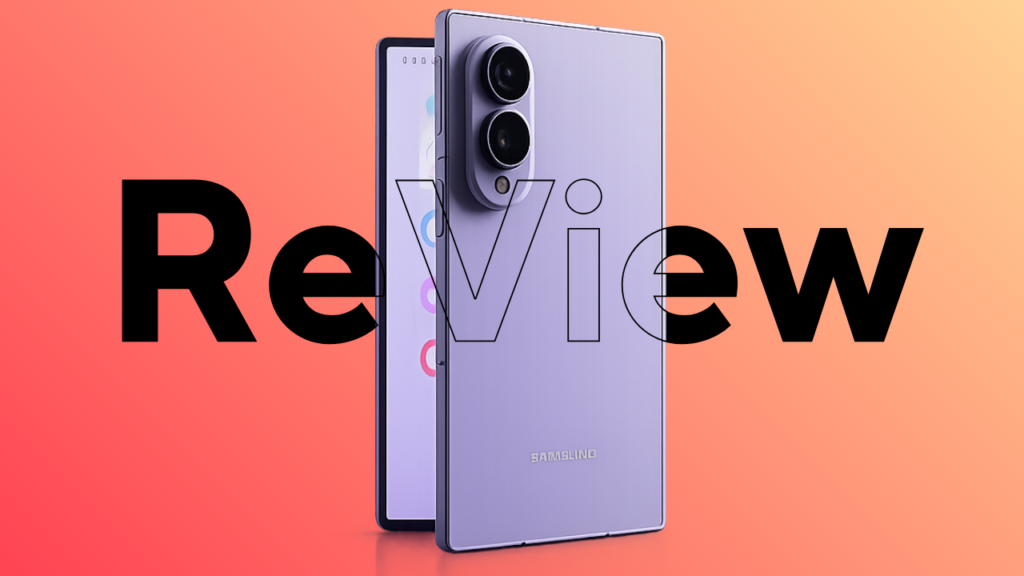
I’ve been carrying the Galaxy Z Fold 8 as my only phone for a little over a week now, and the thing that keeps hitting me every time I pull it out of my pocket isn’t a spec or a feature, it’s the shape. Samsung finally ditched the tall, narrow cover screen it’s used since the original Fold and went with a shorter, wider “passport” form factor instead.
Design: The Form Factor Changes Everything
I said in my Fold 7 review that the cover screen felt like an afterthought usable for notifications and maybe a quick reply, but cramped for anything else. The Fold 8’s 5.5-inch cover display fixes that completely. Typing a full email, browsing Instagram, using Maps without unfolding all of it feels natural now because apps actually have room to breathe. On the Fold 7, half my apps rendered in a tall, letterboxed strip that felt like using a phone through a mail slot. Here, the wider aspect ratio means keyboards are full-size and photos in my camera roll don’t get cropped into awkward slivers.
The other thing I noticed almost immediately: this is the lightest foldable Samsung has ever put out. I didn’t have a scale handy on day one, but after carrying the Fold 7 for a year, the difference is obvious in the hand within the first few minutes. It doesn’t feel like a “foldable” anymore in the sense of something bulky you’re tolerating for the screen; it feels like a slightly thick regular phone that happens to open up.
Honestly, this is the version of the Ultra naming that makes sense. The actual “Ultra” model in Samsung’s lineup this year focuses on camera hardware, but the Fold 8’s form factor is the bigger day-to-day upgrade. If Samsung ever wants to justify calling something the Ultra fold, this is closer to what that should feel like.
Display: Best Crease Yet, Still Not Perfect
Both screens are bright enough for outdoor use. I was reading emails on the inner display in direct sunlight on my patio without cupping my hand around it, which wasn’t always true on the Fold 6. That said, this isn’t the brightest foldable on the market, and if you’ve used one of the newer Honor or Oppo folds side by side, you’ll notice the Fold 8 isn’t winning that particular fight.
Samsung also put a titanium hinge in this generation, rated for 500,000 folds which works out to roughly 13 years if you’re folding it 100 times a day. I got an unplanned real-world test of it: the phone slipped off my kitchen counter onto tile from about waist height. I braced for a cracked hinge or a screen that wouldn’t close flush. Instead nothing. No new creak, no misalignment. On the Fold 6, a drop like that would’ve had me nervously checking the hinge gap for weeks afterward.
The crease itself is the best Samsung has managed. I have to catch the light at a specific angle to even notice it now, compared to the Fold 6 where I could see it under most indoor lighting. That said, I’ll say the same thing I said about last year’s model: it’s better, not gone. In fact, running my finger over both phones side by side, the Fold 6’s crease still edges out the Fold 8’s by a small margin under raking light which surprised me, since everything else about this generation moved forward. Samsung also showed off a genuinely creaseless panel at CES this year, and using the Fold 8 made me wish that tech had made it into a shipping product instead of staying a prototype.
One legitimately nice touch: the new aspect ratio on the inner screen shows more of a 16:9 video without cropping in when you zoom to fill the display. On the Fold 7, zooming a widescreen video to fit meant losing the edges of the frame. Here, more of the actual shot survives.
Camera: Strong Everywhere Except Zoom
This is where I have my biggest complaint. The Fold 8 still doesn’t have a dedicated telephoto lens, and it shows the moment you push past 4x. At 4x in good light, shots are genuinely decent, sharp enough that I posted a few straight from the phone without a second thought. But at 10x, the noise becomes obvious fast, especially indoors or at dusk. If you’re coming from a phone with a real telephoto, even the Fold 7 didn’t have one, so this isn’t a step backward, but it’s a gap that’s now more noticeable given how good everything else on this phone is.
The 50MP main and ultrawide sensors are the real story. In mixed lighting overcast skies, indoor restaurant lighting, backlit scenes they’ve been consistently reliable, more so than I remember the Fold 7 being in similar conditions. Switching on the 24MP manual shooting mode adds a noticeable bump in fine detail and color accuracy, though it’s buried a couple of taps deep in the camera settings and I suspect most people will never find it.
Video is where the Fold 8 actually pulls ahead of every foldable Samsung’s made, including the Fold 7: 4K up to 60fps and 8K at 30fps, both usable in practice, not just on a spec sheet. The rear-camera selfie trick using the main sensors while the phone is folded, framing yourself on the cover screen has become my go-to for anything I actually want to look decent, and it’s a clear step up from the front-facing camera alone. Samsung also carried over the pro video tools from the S26 Ultra, including the APV codec, log shooting, and LUT packs, which is a genuinely unexpected amount of overlap between the flagship slab and the fold this generation.
There’s a new AI “fan cam” feature that automatically isolates and tracks a subject in video, and it worked better than I expected at a kid’s soccer game though I did notice the phone got noticeably warm after about fifteen minutes of continuous 4K recording in the heat. It cooled down fine once I stopped, but it’s worth knowing if you’re planning to shoot anything extended outdoors in summer.
Battery Life: Good, Not Great
The 4,800mAh battery got me through heavy days with lots of camera use, GPS navigation, video recording outdoors with a little over four hours of screen-on time. That’s respectable but not a highlight; the Fold 6 and Honor’s Magic V6 both still outlast it under similar conditions in my experience. On lighter days email, messaging, some browsing, no heavy camera work it comfortably got me through a full day with room to spare, which is really what most people will experience day to day.
Performance and Software
Snapdragon 8 Gen 5 with 12GB of RAM means I never hit a wall. Multitasking between the cover screen and the 7.6-inch inner display is still the Fold’s best trick, and running One UI 9.0 on Android 17 hasn’t introduced any of the split-screen weirdness I occasionally saw on the Fold 6. Editing photos and videos on the big screen, especially with the Galaxy AI tools built into the gallery app, is genuinely more enjoyable than doing the same task on a regular phone. I found myself finishing edits I’d normally push off to my laptop.
Gaming ran at top frame rates without any dropped frames I noticed, even in demanding titles, and the phone didn’t get uncomfortably hot doing it unlike the video recording warmth I mentioned above.
One small bug worth flagging: a couple of times over the week, the cover screen’s app continuity didn’t carry over correctly when unfolding mid-task I’d be typing a message on the cover display, open the phone, and find the keyboard hadn’t caught up, requiring a tap to wake it back up. Minor, but it happened often enough that I noticed a pattern.
Price: Still the Catch
$1,899 to start, same as the last couple of generations. This is not a phone for someone weighing it against a mid-range slab, it’s a luxury purchase, plain and simple, and the price hasn’t moved despite the form factor overhaul.
Verdict
If you specifically want a foldable and the price isn’t the deciding factor, this is the best passport-style fold Samsung has made, and I’m planning to keep using it as my main phone going forward. The form factor change alone is enough to make it feel different from the Fold 6 and Fold 7, not just incrementally better.
If you’re currently on a Fold 7 and camera zoom or battery life matter a lot to you, I wouldn’t rush to upgrade neither of those improved much, and the zoom situation is genuinely no better than before. If you’re on a Fold 6 or earlier, the jump in weight, cover screen usability, and video quality is significant enough to justify it, assuming the price doesn’t scare you off.
And if what you actually want is a proper 5x optical zoom, S Pen support, or the narrower classic fold shape, this isn’t the phone the Ultra model or a competitor’s telephoto-equipped fold will serve you better. But for everything else, the Fold 8 is the first Samsung foldable I’ve tested that feels complete rather than like a compromise you’re accepting for the sake of the hinge.

M Adnan Akram is the founder and lead writer at Phoonomo, covering mobile technology with a primary focus on Samsung and the broader smartphone industry, alongside emerging developments in AI. He follows product launches, spec leaks, and industry trends closely to keep readers informed with timely updates.
Discover more from Phoonomo
Subscribe to get the latest posts sent to your email.