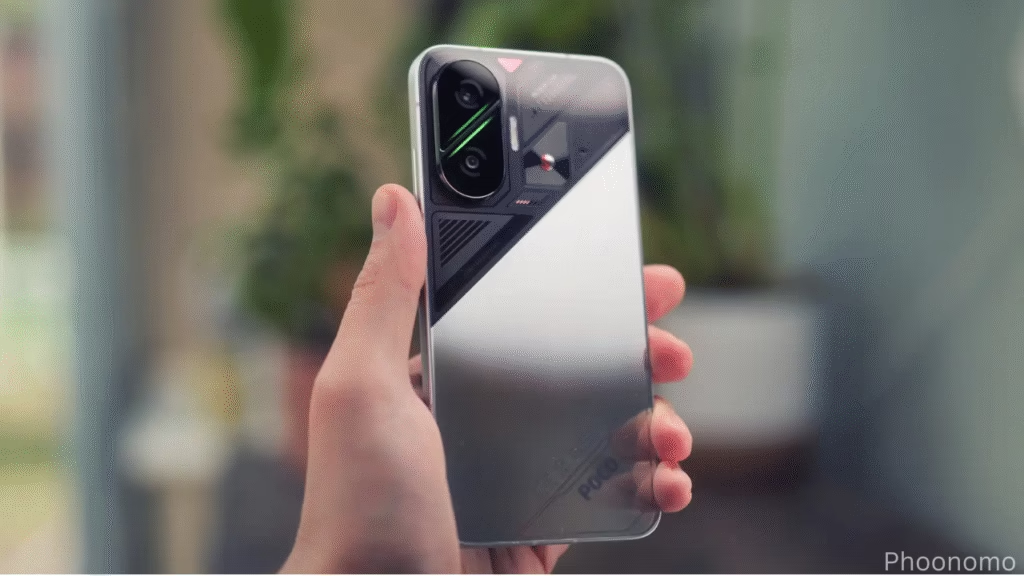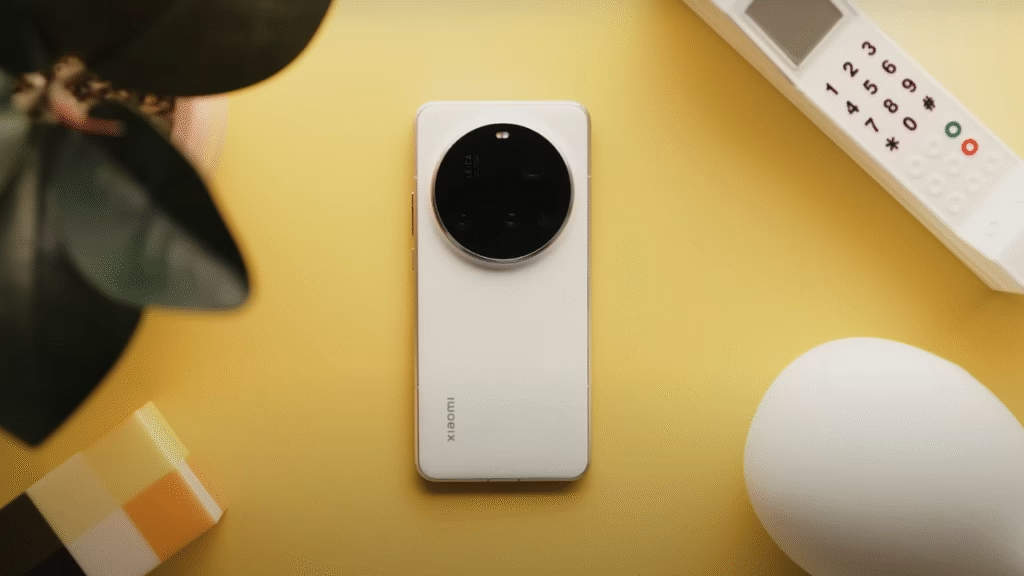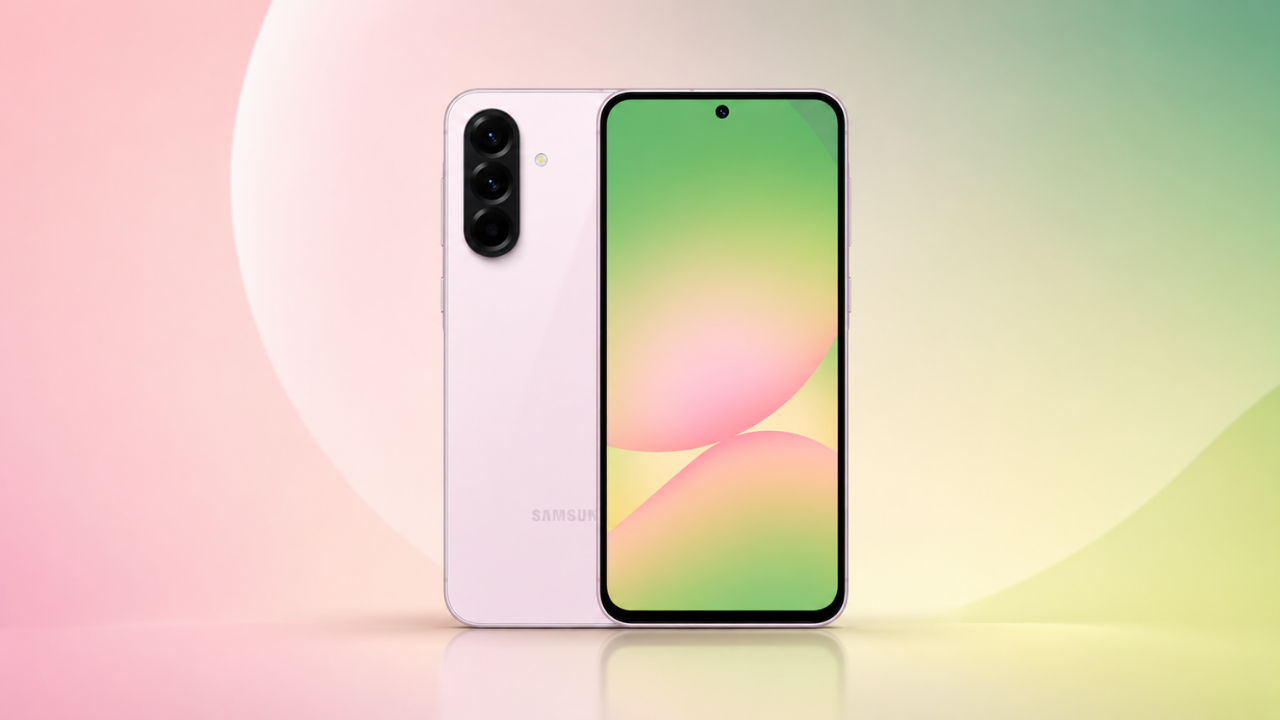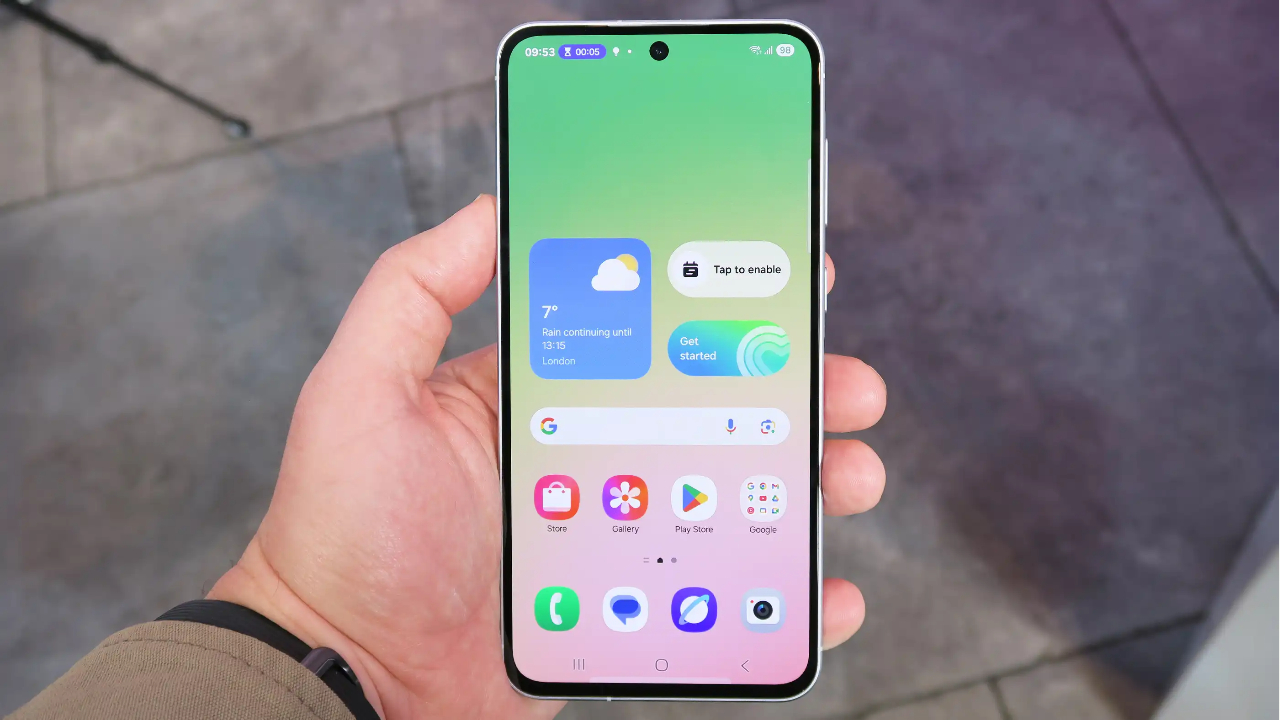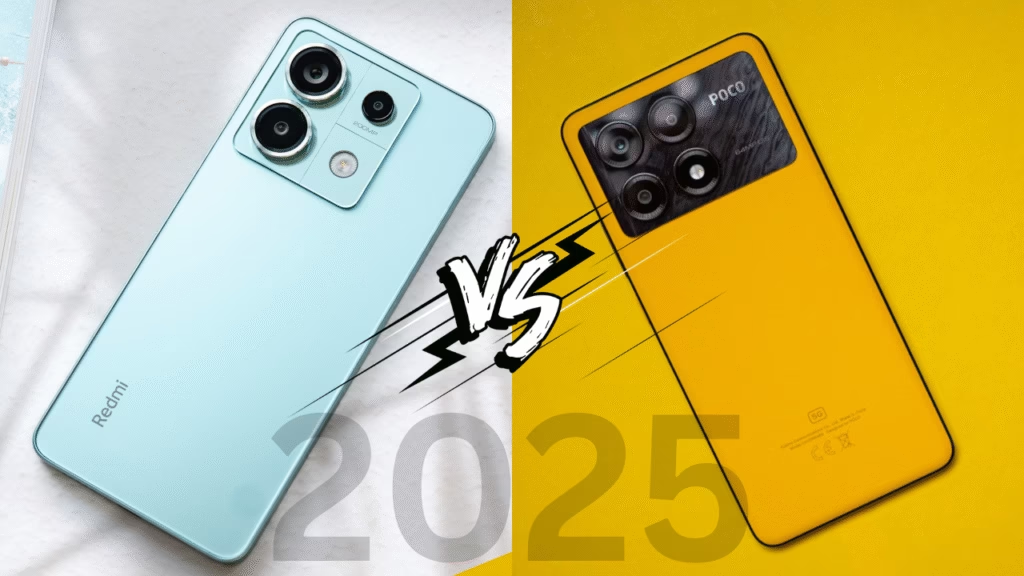
The mid-range smartphone market has become fiercely competitive, and two names keep popping up in recent conversations: Poco X6 Pro and Redmi Note 13 Pro. On paper, they may look like siblings, both coming from Xiaomi’s wider ecosystem, but dig a little deeper and the differences start to stand out. If you’re torn between these two devices, this in-depth comparison will help you make sense of the spec sheets, real-world performance, and those subtle design decisions that can make or break your purchase.
Design & Display
Both phones greet you with 6.67-inch AMOLED displays and 120Hz refresh rates. The resolution is essentially identical at 1220×2712 pixels, producing a crisp ~446 pixels per inch. In daily use, scrolling feels buttery smooth, and high-resolution videos look sharp with punchy colors.
Where the Poco X6 Pro takes a slight step ahead is in peak brightness it pushes up to around 1800 nits, making it a little easier to read under direct sunlight. It’s protected by Gorilla Glass 5, which is durable enough for everyday bumps, though not the toughest in the business.
The Redmi Note 13 Pro, on the other hand, opts for Gorilla Glass Victus, which is a generation stronger when it comes to scratch and drop resistance. That’s a small but meaningful win for durability. The Note 13 Pro is also just a hair taller and heavier, though you’d need calipers and a scale to really notice.
Both come with IP54 splash resistance, which means they can shrug off rain or the occasional kitchen accident but don’t mistake this for proper water resistance. Think “rain-safe,” not “pool-safe.”
Performance
If you’ve ever read about chipset wars, this is where things get interesting. The Poco X6 Pro is powered by MediaTek’s Dimensity 8300 Ultra, a 4nm chip that’s a performance beast for its category. Paired with LPDDR5X RAM and UFS 4.0 storage, it delivers snappier load times, faster app switching, and better sustained performance under heavy workloads like gaming.
In contrast, the Redmi Note 13 Pro relies on Qualcomm’s Snapdragon 7s Gen 2. This is also built on a 4nm process but is slightly less powerful in raw benchmarks. Storage is UFS 2.2, which means read/write speeds are slower compared to UFS 4.0. In regular usage browsing, social media, and messaging you may not notice a big difference, but when you’re installing large apps or loading big games, the Poco’s faster storage becomes apparent.
It’s worth noting that the Note 13 Pro offers more RAM in its top configuration up to 16GB which can be handy for multitasking fanatics. Still, in terms of pure speed, the Poco X6 Pro has the edge.
Cameras
Here’s where Redmi strikes back. The Redmi Note 13 Pro features a 200MP main camera with optical image stabilization (OIS), accompanied by an 8MP ultrawide and a 2MP macro. The main sensor is capable of capturing highly detailed shots, especially in good lighting. It’s also surprisingly capable at retaining sharpness when cropping in.
The Poco X6 Pro goes for a more balanced 64MP main camera, also with OIS, along with the same ultrawide and macro setup. While it doesn’t have the marketing punch of “200 megapixels,” in real-life shots the difference isn’t always night and day unless you’re zooming in aggressively or printing large posters.
Both devices handle 4K video with gyro-EIS for stabilization, and both use a 16MP front camera for selfies. In everyday scenarios, the Poco’s color tuning leans a bit warmer, while the Redmi tends to preserve more neutral tones. Choosing here comes down to whether you value gigantic image resolution or a more balanced image processing style.
Battery Life & Charging
The battery story is simple: the Poco X6 Pro has a 5000mAh battery, the Redmi Note 13 Pro has 5100mAh. That’s a negligible difference. Both support 67W wired fast charging, which takes you from empty to full in roughly 45 minutes.
Neither phone supports wireless charging, a reminder that these are still mid-range devices. Still, charging speeds are fast enough that even a quick coffee break can get you hours of extra use.
Connectivity & Extras
Both phones pack NFC, IR blasters, and stereo speakers. The Poco X6 Pro has Wi-Fi 6 and Bluetooth 5.4, making it a touch more future-proof for fast wireless connections. The Redmi Note 13 Pro sticks with slightly older Bluetooth 5.2 and standard dual-band Wi-Fi.
One key difference: the Redmi Note 13 Pro still has a headphone jack. If you use wired earphones or plug into car audio without adapters, this might be a deciding factor. The Poco X6 Pro ditches it entirely, betting on Bluetooth audio instead.
Software
Both devices come with Xiaomi’s new HyperOS interface. The Poco X6 Pro launches with Android 14 out of the box, while the Redmi Note 13 Pro originally shipped with Android 13 but is upgradeable. Expect a similar feature set, plenty of customization, and the usual mix of Xiaomi’s handy tools and some pre-installed apps you might want to remove.
Real-World Takeaways
When comparing Poco X6 Pro vs Redmi Note 13 Pro, the decision comes down to priorities:
- Pick the Poco X6 Pro if you want faster storage, a speedier processor, and slightly more future-proof connectivity. It’s the better choice for gamers and power users who care about sustained performance.
- Pick the Redmi Note 13 Pro if you care about maximum camera resolution, want stronger front glass, or still use a wired headphone jack. It’s more of a photography enthusiast’s pick in this price range.
In everyday use, both devices feel responsive, look premium, and deliver strong value. That’s the real kicker: whichever you choose, you’re getting more than your money’s worth.
Final Verdict
If I had to choose today, my pick would lean toward the Poco X6 Pro for its faster chipset, speedier storage, and slightly better wireless features. That said, if photography is your main focus and you want a device that doubles as a pocket zoom monster, the Redmi Note 13 Pro is a worthy contender.
Ultimately, there’s no outright “winner” , only the one that better matches your needs. And in a market where both these phones offer flagship-like features at mid-range prices, that’s not a bad problem to have.
FAQs
Which phone has the better performance, Poco X6 Pro or Redmi Note 13 Pro?
The Poco X6 Pro generally has the edge in raw speed thanks to its Dimensity 8300 Ultra processor, LPDDR5X RAM, and UFS 4.0 storage. It loads apps faster and handles heavy gaming more smoothly compared to the Redmi Note 13 Pro’s Snapdragon 7s Gen 2 with slower UFS 2.2 storage.
Is the 200MP camera on the Redmi Note 13 Pro worth it?
If you love high-resolution photography and often crop or zoom into your shots, yes the 200MP sensor offers exceptional detail. However, in everyday use, the difference from the Poco X6 Pro’s 64MP camera isn’t dramatic unless you’re pixel-peeping or printing large images.
Which phone is better for gaming?
The Poco X6 Pro is the better gaming phone due to its more powerful chipset, faster graphics performance, and improved thermal management. The higher-speed storage also helps in reducing game load times.
Does either phone have a headphone jack?
Yes, the Redmi Note 13 Pro still includes a 3.5mm headphone jack, which is handy if you use wired earphones. The Poco X6 Pro does not have one, so you’ll need to rely on Bluetooth or a USB-C audio adapter.
How long does the battery last on these phones?
Both phones can easily get you through a full day of mixed use, thanks to their 5000mAh+ batteries. Charging is equally fast at 67W, so you can go from 0 to 100% in about 45 minutes.
Which one should I buy for long-term use?
If you want a phone that feels fast for years and is better suited for heavy multitasking, the Poco X6 Pro is the safer bet. If you’re more interested in photography and value a headphone jack, the Redmi Note 13 Pro might be your better companion
Follow Phoonomo to never miss an update

M Adnan Akram is the founder and lead writer at Phoonomo, covering mobile technology with a primary focus on Apple and the broader smartphone industry, alongside emerging developments in AI. He follows product launches, spec leaks, and industry trends closely to keep readers informed with timely updates.
Discover more from Phoonomo
Subscribe to get the latest posts sent to your email.