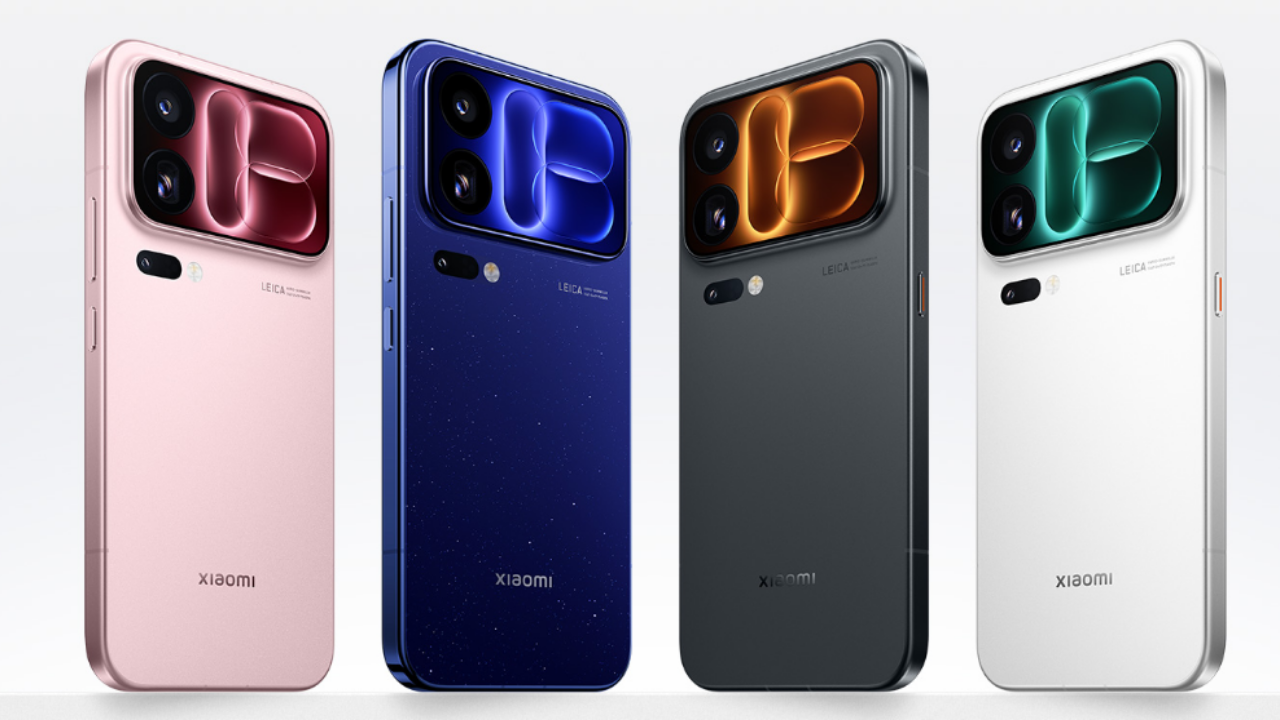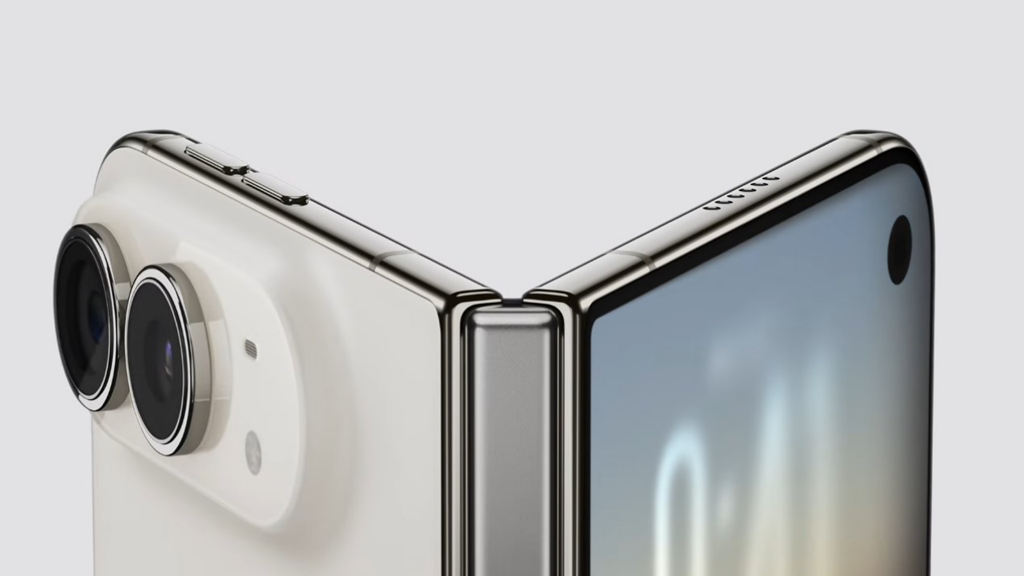
Apple has officially unveiled its first foldable iPhone, and the name isn’t iPhone Ultra or iPhone Fold as most pre-launch reports expected Apple to call it iPhone Duo. Unveiled alongside the iPhone 18 Pro and Pro Max at the September 9 “Surprise and Shine” event, iPhone Duo starts at $1,999, with pre-orders opening October 16 and availability from October 23.
Design
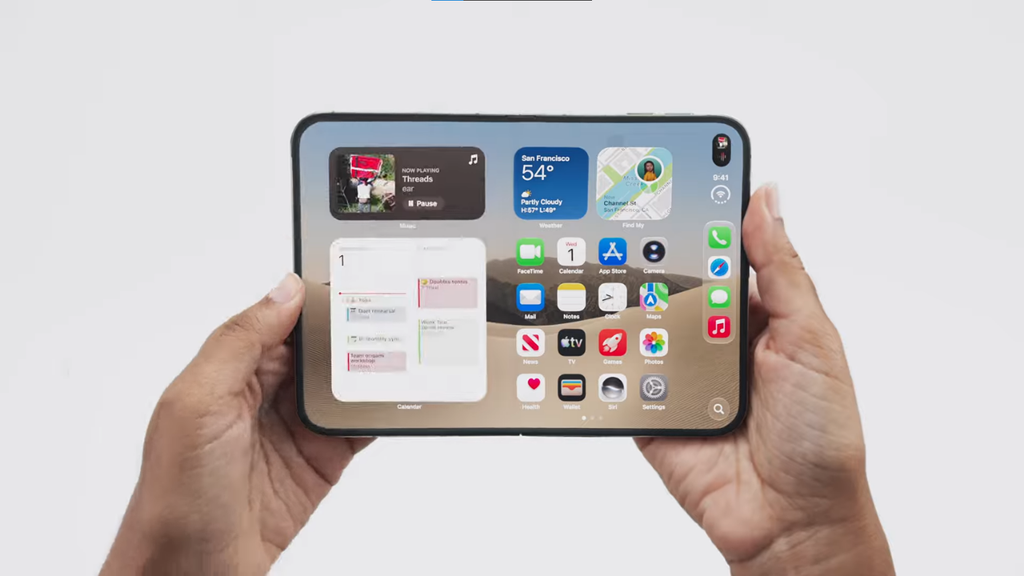
Apple designed Duo to feel closer to a passport than a tablet when closed in an asymmetric shape with two rounded corners that Apple says invites you to open it. The frame is built from Grade 5 titanium, chosen specifically for the strength it offers at this thinness, with the central structural plane reinforced by internal support ribs and ceramic-fiber inserts at the antenna splits that Apple says are three times stronger than the titanium itself. The back uses Ceramic Shield, the front Ceramic Shield 2, and the whole device carries an IP68 rating for dust and water resistance. It ships in two finishes: Star White and Night Sky.
| Spec | iPhone Duo |
| Inner display | 7.6″ Super Retina XDR |
| Outer display | 5.4″ |
| Inner vs. iPhone 18 Pro Max | 50% larger |
| Inner vs. iPhone 18 Pro | 80% larger |
| Outer vs. iPhone 18 Pro | 90% of screen area |
| Frame | Grade 5 titanium |
| Protection | Ceramic Shield 2 (front), Ceramic Shield (back) |
| Water resistance | IP68 |
| Authentication | Touch ID (side button) |
| SIM | eSIM only |
| Starting price | $1,999 |
| Storage | 256GB – 2TB |
The Display Engineering Behind the Crease
Apple spent a large chunk of its keynote on the display specifically, framing crease visibility, plastic-feeling screens, and scratch susceptibility as the three biggest complaints with existing foldables. Its answer is a custom nano-texture finish of the same family of technology used on iPad and Mac applied using maskless laser lithography, where each micro-lens is written individually. The result, Apple says, is a matte surface that scatters light to minimize how visible the crease looks while feeling more premium to the touch.
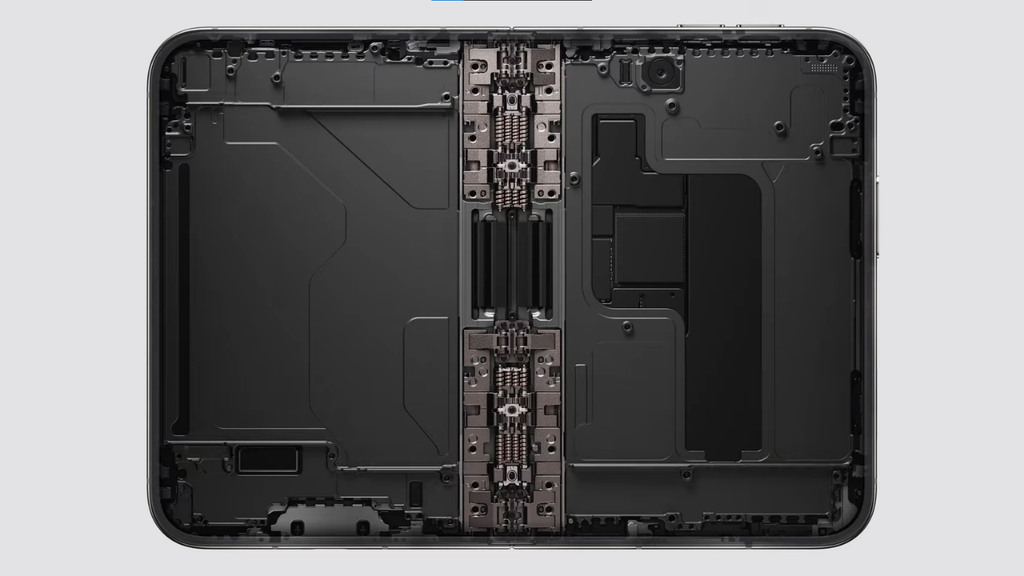
Underneath that sits a multi-layer lamination structure: a custom polymer cover layer rated up to 40% stiffer than other foldable materials on the market, high-strength glass above and below the OLED panel itself, and viscoelastic adhesives that let the layers glide against each other during folding similar to how pages move against each other in a book so the panel resists distorting over repeated folds. A titanium plate anchors the bottom layer.
The hinge is its own engineering story, built from more than 100 precision components with carbon-fiber support plates underneath the display. Apple says every hinge is individually matched to its housing using AI during manufacturing, and a confocal laser scans the topology of each unit before 3D-printing up to 25 microlayers of a custom photopolymer to cancel out any remaining waviness an unusually granular level of per-unit calibration for a mass-produced phone.
Performance and Connectivity
iPhone Duo runs on the same A20 Pro chip as the iPhone 18 Pro line, but with a new display engine built specifically to drive both screens simultaneously and blend the unusual pixel layout around the under-display FaceTime camera. A new chip package with a direct die-to-thermal design lets A20 Pro hit peak AI performance immediately, while a vapor chamber sustains that performance for extended sessions like high-frame-rate gaming Apple claims up to 35% higher sustained performance than the iPhone 17 Pro.
Connectivity runs through Apple’s C2 modem, which the company says improves on the previous C1X with up to 50% faster uploads, adds 5G mmWave support in the US, and uses 15% less energy with AI algorithms specifically tuned to reconnect faster in low-coverage areas. iPhone Duo is eSIM-only worldwide, a decision Apple says was made specifically to free up internal space for battery capacity rather than for a physical SIM tray.
Battery Life
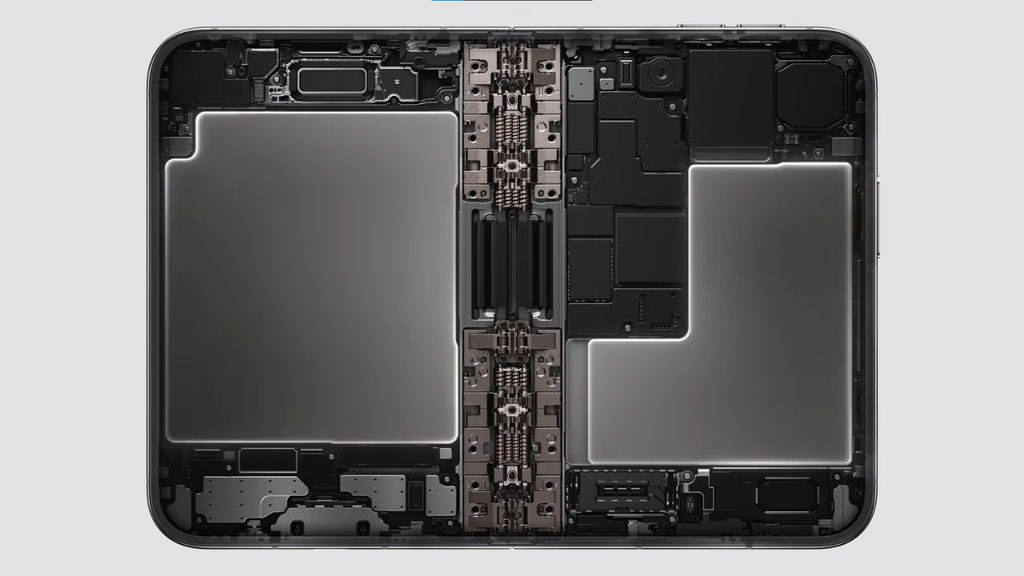
Duo uses two batteries, one on each side of the hinge, managed by custom silicon and algorithms so they charge, discharge, and rebalance as a single unit rather than independently. Apple’s figures: up to 31 hours of video playback using the inner display alone, up to 44 hours on the outer display alone, and up to 24 hours under a blended usage model that splits time between both screens. Charging tops out at 50% in about 20 minutes, and Apple says five minutes of charging is enough for roughly five hours of outer-display video playback.
Cameras
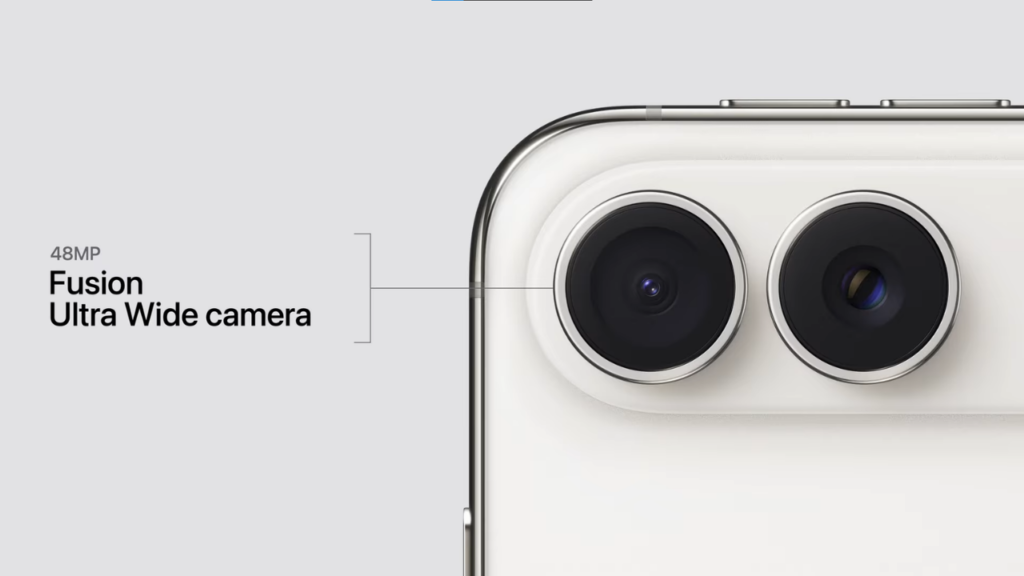
The rear camera system pairs a Fusion Main camera with a 2x optical-quality Telephoto and the same 48MP Fusion Ultra Wide used on the iPhone 18 Pro, all benefiting from zero shutter lag and 4K 120fps video for slow-motion capture. Because Duo can stand upright on its own, Apple is also positioning it for hands-free 4K Dolby Vision HDR time-lapses. The same updated Photographic Styles from the 18 Pro line carry over, including a new Film texture option for a vintage look.
Duo’s foldable shape opens up a handful of camera tricks that don’t exist on a regular iPhone. Duo Preview lets the person being photographed see themselves on the outer display to check their framing before the shot. Dual Capture shares both the front and rear camera feeds at once over FaceTime, so the person on the other end sees you and whatever you’re pointed at. Duo FaceTime lets a second person join a call on the outer display without everyone crowding around one screen. Kid Cue plays animations specifically to get kids looking at the camera, and Smart Take, powered by on-device AI, tracks a scene in real time and fires the shutter automatically once everyone’s posed, useful for group shots where whoever’s holding the phone would otherwise be left out of frame.
iOS 27 Rebuilt Around Two Screens

Rather than simply stretching the existing iPhone interface, Apple says it reworked iOS specifically around Duo’s proportions. Controls move to the side of the display to free up vertical space for content, the Home Screen dock runs vertically, and the status bar compresses into the corner. The software transitions gracefully as the phone opens, closes, rotates, or gets used partially folded, sliding content away from the crease area where taps are harder to register.
The bigger inner display also unlocks real multitasking: Split View lets two different apps run side by side, or two windows of the same app useful for comparison shopping in Safari, for instance with a tap on the divider to pin them together for later. StandBy has been reworked too, activating even when the phone isn’t charging, with new faces including Weather and Calendar and support for widgets like Music.
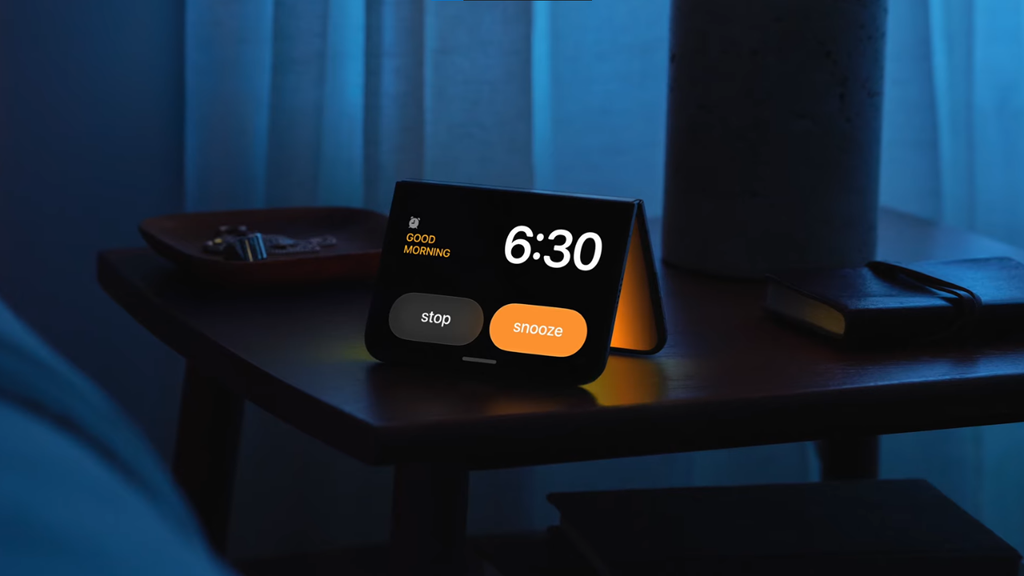
Apple also highlighted early developer support: Zoom turning Duo into a compact video-conference room, Slack showing a full workspace view, a note-taking app called Detail running on-device AI models through Apple’s Core AI framework, and Netflix using the outer display for scrolling Clips before opening to the inner screen for full viewing. Apple Pencil with USB-C support is coming to either display later this year, the first time Apple has brought its iPad stylus experience to an iPhone.
Accessories
Apple built two accessories specifically for Duo’s shape: an iPhone Duo Folio with a built-in kickstand that tucks away when not needed, and an iPhone Duo case made of two connected pieces that wrap around each half of the phone for drop protection.
Where It Fits
At $1,999 and up, iPhone Duo is a very different proposition from the metal-and-glass foldables that have defined the category so far worth keeping in mind if you’re already weighing something like a Z Fold 6 against a conventional flagship or comparing Android’s book-style foldables against each other. Apple’s pitch is less about matching spec-for-spec and more about treating the fold as core to the software experience rather than an afterthought bolted onto stretched iOS.
Full keynote details and official specifications are available via Apple’s iPhone Duo announcement.

M Adnan Akram is the founder and lead writer at Phoonomo, covering mobile technology with a primary focus on Samsung and the broader smartphone industry, alongside emerging developments in AI. He follows product launches, spec leaks, and industry trends closely to keep readers informed with timely updates.
Discover more from Phoonomo
Subscribe to get the latest posts sent to your email.