Apple’s first foldable iPhone is running into a production problem just days before its expected unveiling, and it isn’t the kind of problem anyone was expecting. According to Nikkei Asia, the device widely referred to as the iPhone Ultra was rolling off assembly lines at only a few hundred units per day as of late August. The bottleneck isn’t a shortage of parts. It’s Apple refusing to compromise on quality.
Supply-chain sources describe the holdup as centered entirely on Apple’s tolerance thresholds for the foldable’s display and hinge. The company is said to be scrutinizing display surface flatness, hinge performance, and overall yield with a level of strictness that’s slowing everything down. Apple reportedly ran an extra verification pass in August specifically to confirm the foldable could be mass-produced to its exact design spec, and that additional check alone pushed commercial production back by several weeks. The inner folding display is said to need an unusually flat surface with minimal crease when opened, which means suppliers have to hit very tight tolerances while still scaling volume, and the hinge carries its own separate durability bar to clear. None of this is new territory for the project. Hinge structure and display durability have shown up as recurring pain points since early testing, and Apple’s decision to run one more verification round on top of that suggests the company would rather delay than ship something that doesn’t meet its own bar.
What makes the timing awkward is how much Apple has already committed to this device. Back in July, Nikkei reported the company had raised its production target for the foldable to roughly 10 million units, up from an earlier 7–8 million estimate, and had booked components for around 80 million phones for the second half of 2026 covering the iPhone 18 Pro, iPhone 18 Pro Max, and the foldable. Total 2026 iPhone production was projected to top 220 million units. Getting from a few hundred units a day to a run rate that supports a 10-million-unit target is a massive jump, and Apple has only days left before the September 9 unveiling to close that gap. Sources describe Apple and its suppliers working around the clock to lift output before the phone hits distribution centers, and there’s a real chance inventory stays tight when sales open, echoing earlier chatter about a staggered rollout that starts in the US before expanding elsewhere.
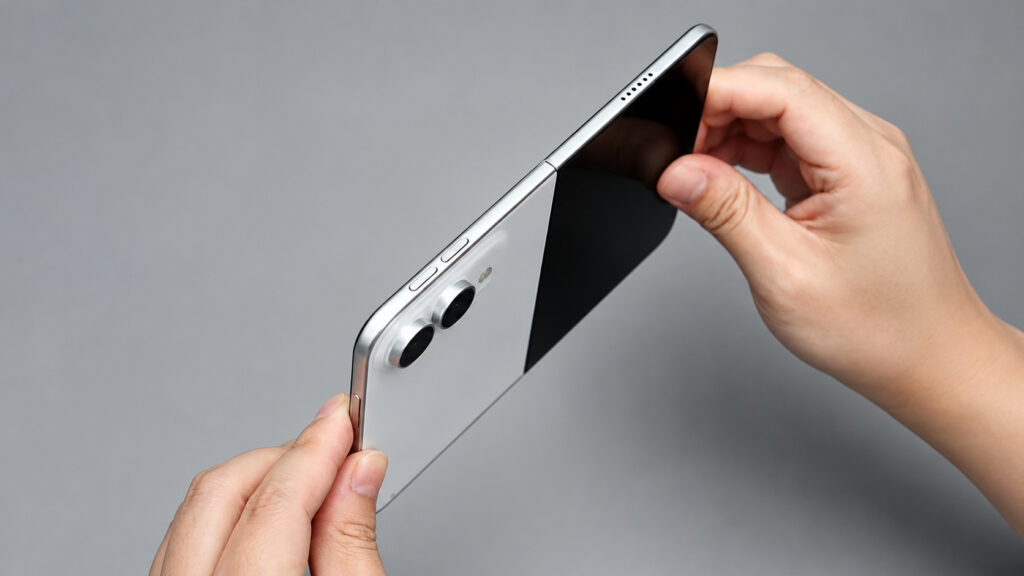
None of the device’s expected identity has changed through any of this. It’s still tipped as a book-style foldable with a roughly 5.5-inch cover screen and a 7.8-inch inner display, about 4.5mm thick unfolded, running the A20 Pro chip with Touch ID instead of Face ID, a dual rear camera setup, and support for MagSafe that Apple reportedly held onto despite the folding form factor. Software-wise, iOS 27 has been building in adaptive layouts and resizable multitasking aimed squarely at the foldable’s wider canvas. Price is where things get uncomfortable recent estimates put the starting price at $2,000 to $2,500, with a TrendForce figure specifically pointing to $2,099–$2,299 and top-storage models potentially crossing $3,000, which would make it Apple’s most expensive iPhone by a wide margin and something buyers will have to weigh against what the iPhone 18 Pro already covers at a fraction of the cost.
The important caveat is that “a few hundred units a day” describes late August, not necessarily where things stand right now. Apple and its suppliers have days, not weeks, to move that number substantially before the phone needs to start reaching stores. The Apple Post was among the first to detail the late-August figures, and how fast that ramp climbs over the next few days will likely decide how many people actually get to buy one at launch.

M Adnan Akram is the founder and lead writer at Phoonomo, covering mobile technology with a primary focus on Apple and the broader smartphone industry, alongside emerging developments in AI. He follows product launches, spec leaks, and industry trends closely to keep readers informed with timely updates.
Discover more from Phoonomo
Subscribe to get the latest posts sent to your email.