WhatsApp is testing a feature called Scam Alert that flags suspicious messages from people outside your contacts, and the interesting part is where the analysis actually happens. Instead of sending message content to WhatsApp’s servers, the classification runs entirely on your phone using a small machine-learning model, a design choice Meta says was made specifically to keep the feature compatible with end-to-end encryption.
Here’s the mechanism. Once enabled, the model checks incoming messages from non-contacts for patterns tied to known scams, things like linguistic red flags and conversational structures pulled from previously reported scam conversations. If it decides a message looks suspicious, a warning shows up in the chat, but only the recipient sees it, not the sender. From there you can block, report, keep talking, or mark the chat as trusted, and marking it as trusted stops future warnings for that conversation. There’s also an option to share the last five messages with WhatsApp when you do that, which helps Meta refine the model over time.
Read Also WhatsApp Tests iCloud-Free Chat Backups for iPhone
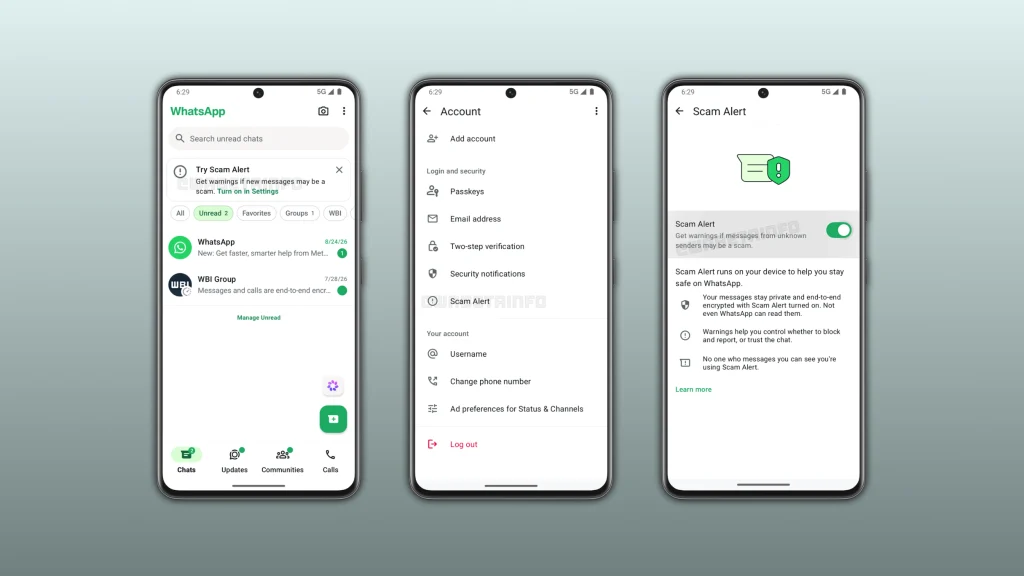
The privacy claims are specific enough to be checkable. Meta says no message content leaves the device for classification, and the only data WhatsApp receives is anonymized aggregate information, things like how many warnings got shown and what people did afterward, processed through confidential computing and differential privacy before Meta ever sees it. Meta is also publishing model versions to a public transparency ledger along with hashes, so researchers can verify which model is actually running rather than taking Meta’s word for it. Users get their own transparency log too, accessible under Account, Request Info, Scam Alert Activity, showing which messages were analyzed and flagged.
Right now this is limited beta territory. WABetaInfo has spotted it on WhatsApp beta for Android version 2.26.34.2, but the rollout is gradual, so running the latest beta doesn’t guarantee you’ll see it. Meta hasn’t given a timeline for a stable, public release.
This slots in alongside WhatsApp’s other anti-scam work, like the device-linking warnings introduced back in March, but it’s a distinct layer that’s actually reading message patterns rather than just flagging account activity. If the on-device approach holds up the way Meta describes it, it’s a rare case where a scam-detection feature doesn’t require trusting a company with your actual conversations to work.

M Adnan Akram is the founder and lead writer at Phoonomo, covering mobile technology with a primary focus on Apple and the broader smartphone industry, alongside emerging developments in AI. He follows product launches, spec leaks, and industry trends closely to keep readers informed with timely updates.
Discover more from Phoonomo
Subscribe to get the latest posts sent to your email.