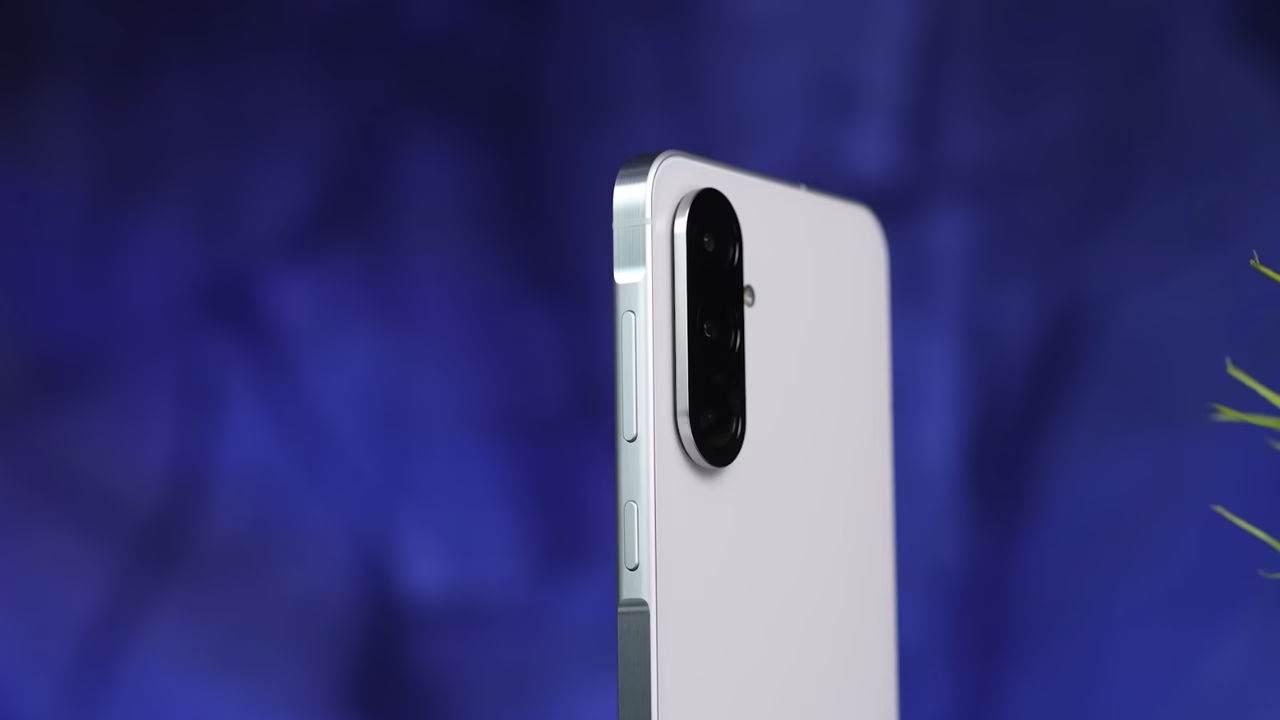
Google Assistant’s decade-long run on Android is ending September 4, when Google starts permanently replacing it with Gemini, a rollout the company had originally targeted for 2025 before pushing it back a year. Once the transition reaches a phone, tablet, Wear OS watch, or paired accessory, there’s no option to switch back.
The “Hey Google” wake phrase survives the transition, just pointing to a different assistant underneath. But the swap isn’t purely cosmetic. Assistant ran on a deterministic command matching instant recognition of a fixed set of phrases. Gemini, as a large language model, reportedly adds 380-620ms of cloud latency to each response unless it’s running on-device through Gemini Nano v3, which requires a 2026-generation flagship chip and 12GB of RAM. Most current phones, including last year’s Pixel 9 and Galaxy S25, don’t meet that bar, meaning many existing owners will be stuck with the slower cloud version permanently rather than the faster on-device experience Google is showcasing on newer hardware.
Some Assistant features also aren’t confirmed to carry over at all, including Interpreter Mode and automated daily smart home updates, even as call history, message history, and contacts do transfer to smooth the handoff.
Google Home speakers, Nest displays, and Google TV devices are exempt from this specific deadline, keeping Assistant until their own Gemini rollout arrives separately. For phone owners, the real question isn’t whether Gemini is smarter, it’s whether your hardware is new enough to get the fast version, or the noticeably slower one.

M Adnan Akram is the founder and lead writer at Phoonomo, covering mobile technology with a primary focus on Apple and the broader smartphone industry, alongside emerging developments in AI. He follows product launches, spec leaks, and industry trends closely to keep readers informed with timely updates.
Discover more from Phoonomo
Subscribe to get the latest posts sent to your email.