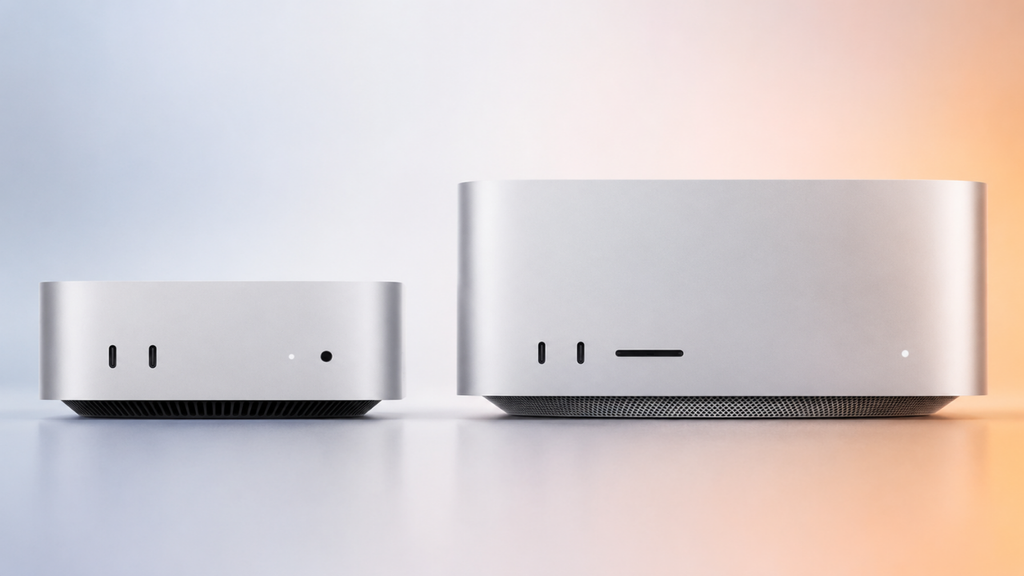
Apple reportedly got caught off guard by how fast businesses started buying Mac mini and Mac Studio units for AI work, and that demand is apparently why the new desktop Macs launched so early. According to The Information, Apple normally refreshes its Mac lineup in October or November, but this year’s Mac mini and Mac Studio arrived in late August instead, months ahead of schedule.
The driver behind the shift is enterprise AI usage. Businesses have been buying these compact desktops specifically to run AI agents and models locally, something Apple’s own senior product manager for Apple silicon, Doug Brooks, described back in July as “incredible demand.” His explanation makes sense once you think about it: people running AI agents want a dedicated machine, separate from their main computer, that they control fully and can leave running continuously. The Mac mini fits that role unusually well for something originally built as a budget desktop.
What’s notable is that Apple reportedly wasn’t structurally ready for this. The report says Apple lacked a dedicated engineering team focused on business customers and didn’t have a clear enterprise AI strategy in place, meaning the company built genuinely capable AI hardware and then found businesses adopting it faster than Apple’s internal teams could support. Tim Cook acknowledged the strain back in April, saying Mac mini and Mac Studio supply could take months to stabilize, a problem made worse by the broader global memory shortage. Some enterprise buyers, tired of waiting, have reportedly started looking at alternatives like Nvidia’s DGX Spark instead.
The new hardware itself leans into this shift hard. The Mac Studio now supports clustering multiple units together for larger AI workloads, and configurations scale up to 512GB of unified memory with the M5 Ultra chip, starting at $5,499. The Mac mini starts at $899 with the M6 chip, with pre-orders open now and availability beginning September 22.
Apple did draw one line, though: businesses that approached the company about buying access to Private Cloud Compute for their own AI needs were reportedly turned down, with Apple instead pointing them toward partners like WebAI and Mount Thor. That’s a telling detail. Apple wants to sell the hardware AI runs on, but it’s not ready to become an AI infrastructure provider itself.

M Adnan Akram is the founder and lead writer at Phoonomo, covering mobile technology with a primary focus on Apple and the broader smartphone industry, alongside emerging developments in AI. He follows product launches, spec leaks, and industry trends closely to keep readers informed with timely updates.
Discover more from Phoonomo
Subscribe to get the latest posts sent to your email.