Apple’s yearly iOS update cycle has a pattern. Some years bring dramatic visual overhauls, iOS 7’s flat design revolution, iOS 14’s widgets. Other years go deeper under the hood, fixing what’s broken and making everything faster and smarter. iOS 27 is firmly in the second camp and given how aggressively Google and Samsung have been pushing AI into every corner of Android, the timing couldn’t be more deliberate.
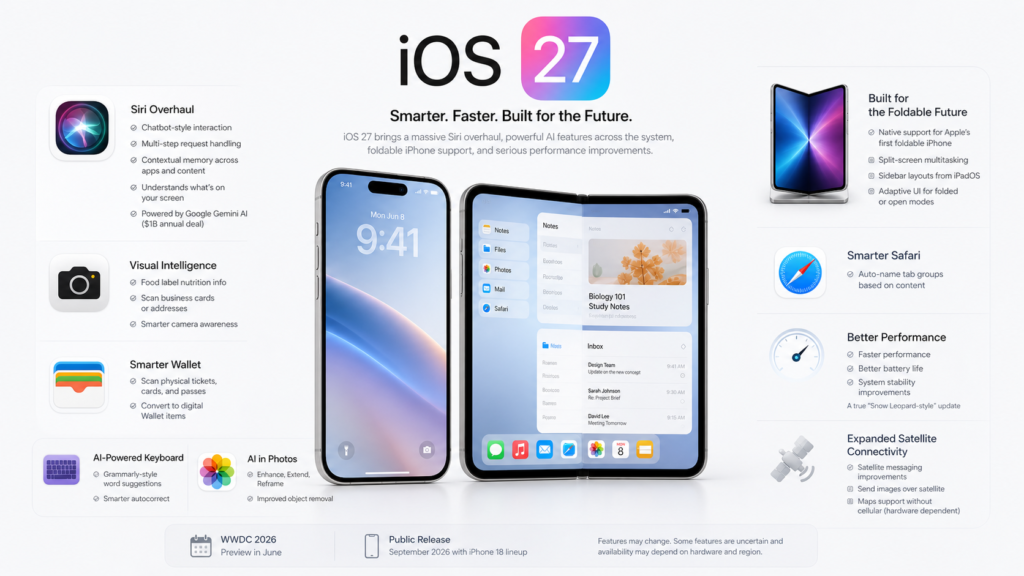
Expected to be previewed at WWDC in June 2026 and released publicly alongside the iPhone 18 lineup in September, iOS 27 is shaping up as Apple’s most AI-forward software release ever built around a revamped Siri, system-wide intelligence, and a structural foundation for something Apple has never shipped before: a foldable iPhone.
Siri is the centerpiece and the story that matters most. The assistant Apple has been quietly embarrassed by for years is getting a genuine overhaul chatbot-style interaction, multi-step request handling, contextual memory across messages, emails, and files, and the ability to understand what’s actually on your screen. The backend reportedly draws on Google Gemini AI models under a deal worth approximately $1 billion annually giving Siri the language model muscle it has always needed but never had. This isn’t a Siri refresh. It’s a Siri replacement.
The AI doesn’t stop there. Visual Intelligence is expanding significantly: point your camera at a food label and get nutrition information, scan a business card or printed address and add it directly to Contacts. The Wallet app is getting smarter too, with the ability to scan physical tickets, cards, and passes and convert them into digital Wallet items automatically. Safari will reportedly auto-name tab groups based on content. The keyboard is getting Grammarly-style word suggestions on top of the existing autocorrect system. Photos adds new AI editing tools Enhance, Extend, Reframe, and improved object removal pushing computational photography further without requiring third-party apps.
The foldable iPhone angle is equally significant from a structural standpoint. iOS 27 is being built to support Apple’s first foldable device natively meaning split-screen multitasking, sidebar layouts borrowed from iPadOS, and an adaptive UI that responds intelligently to whether the device is folded or fully open. This is one of the most meaningful architectural changes to iOS in years, even if most current iPhone users won’t directly benefit from it at launch.
Performance gets serious attention too. iOS 27 is being described internally as a “Snow Leopard-style update” a reference to the macOS release Apple used to quietly fix years of accumulated technical debt while adding relatively few visible features. Faster system performance, better battery efficiency, and stability improvements are the priority. After the rocky rollout of some iOS 26 features, that kind of disciplined refinement is exactly what the platform needs.
Satellite connectivity is also expanding; possible additions include satellite messaging improvements, image sending over satellite, and Maps support without cellular coverage. Availability will likely depend on newer hardware.
A few caveats worth keeping in mind. Most of what’s described here comes from code discoveries, leaks, and analyst reports rather than official Apple announcements. Features get cut, delayed, or quietly renamed between WWDC and September launch every single year. The Health AI features and some satellite additions are specifically flagged as uncertain. iOS 27 on paper and iOS 27 in September may not be identical.
Device compatibility is also worth watching. Rumors suggest iOS 27 may drop support for the iPhone 11 series and second-generation iPhone SE though Apple hasn’t confirmed anything yet.
WWDC is June 2026. If the Siri overhaul, foldable support, and Snow Leopard-style performance gains all arrive as described, iOS 27 could be the update that finally puts Apple’s AI ambitions on equal footing with what Google and Samsung have been building for the past two years.

M Adnan Akram is the founder and lead writer at Phoonomo, covering mobile technology with a primary focus on Apple and the broader smartphone industry, alongside emerging developments in AI. He follows product launches, spec leaks, and industry trends closely to keep readers informed with timely updates.
Discover more from Phoonomo
Subscribe to get the latest posts sent to your email.