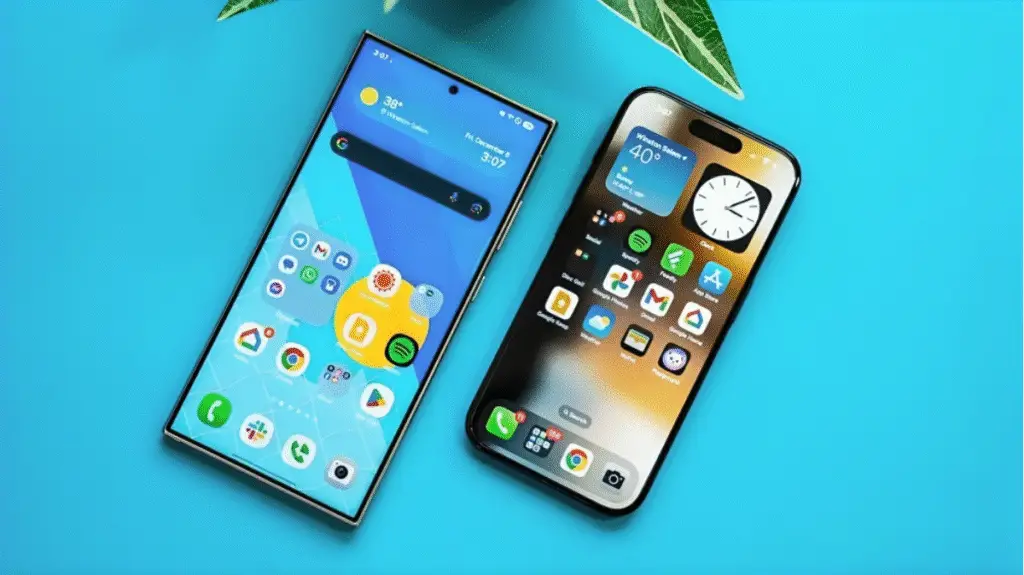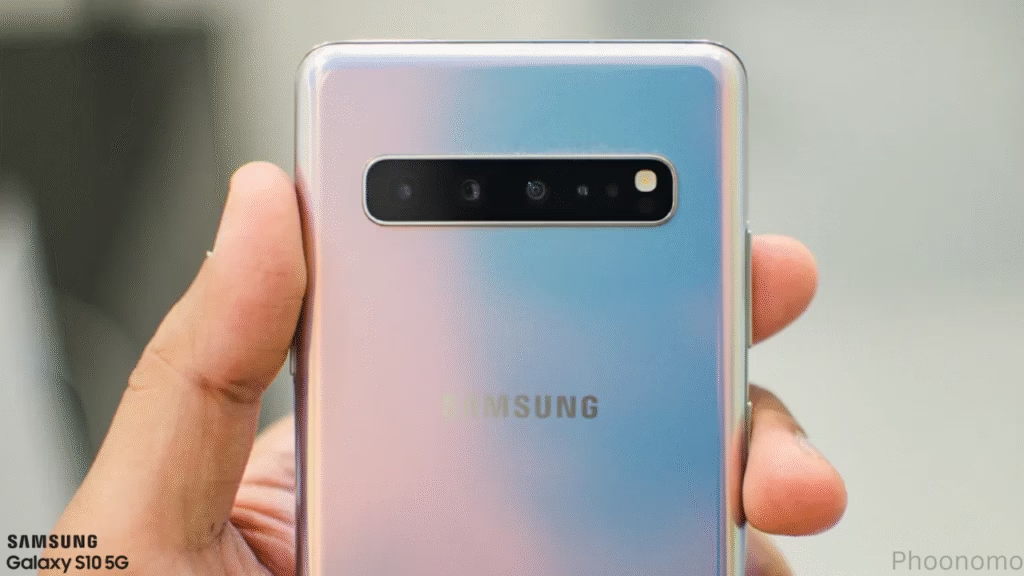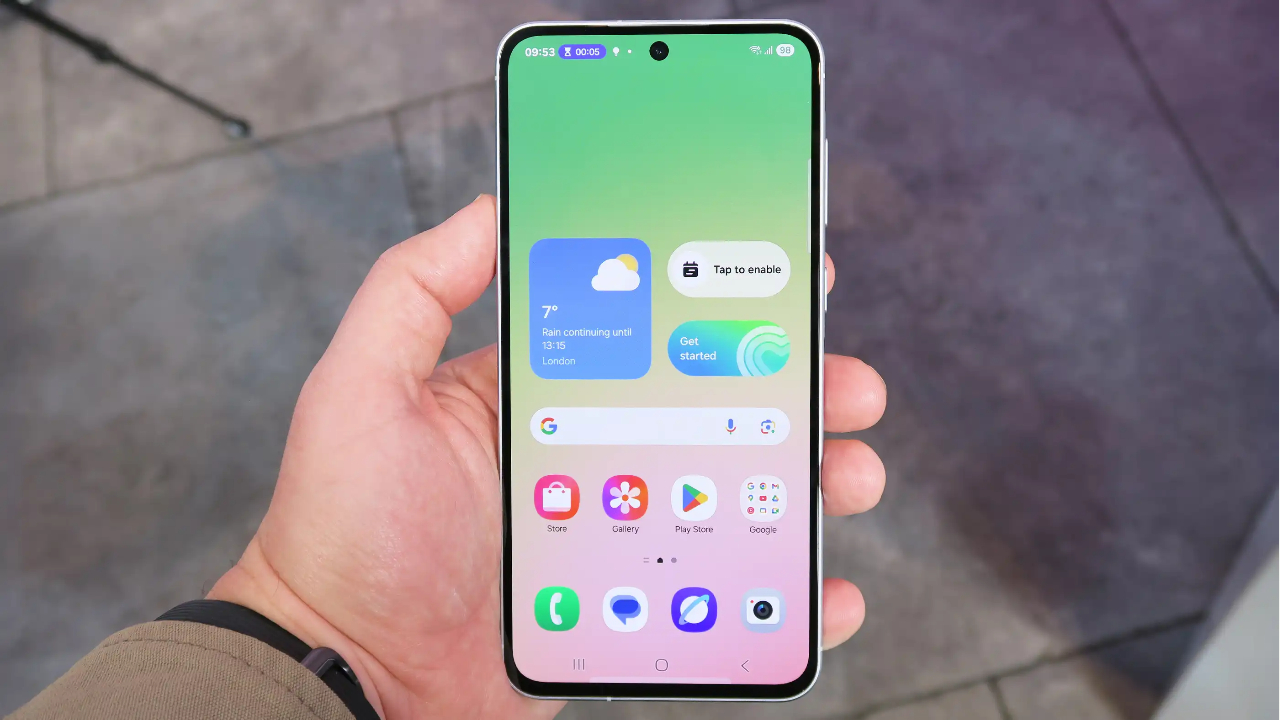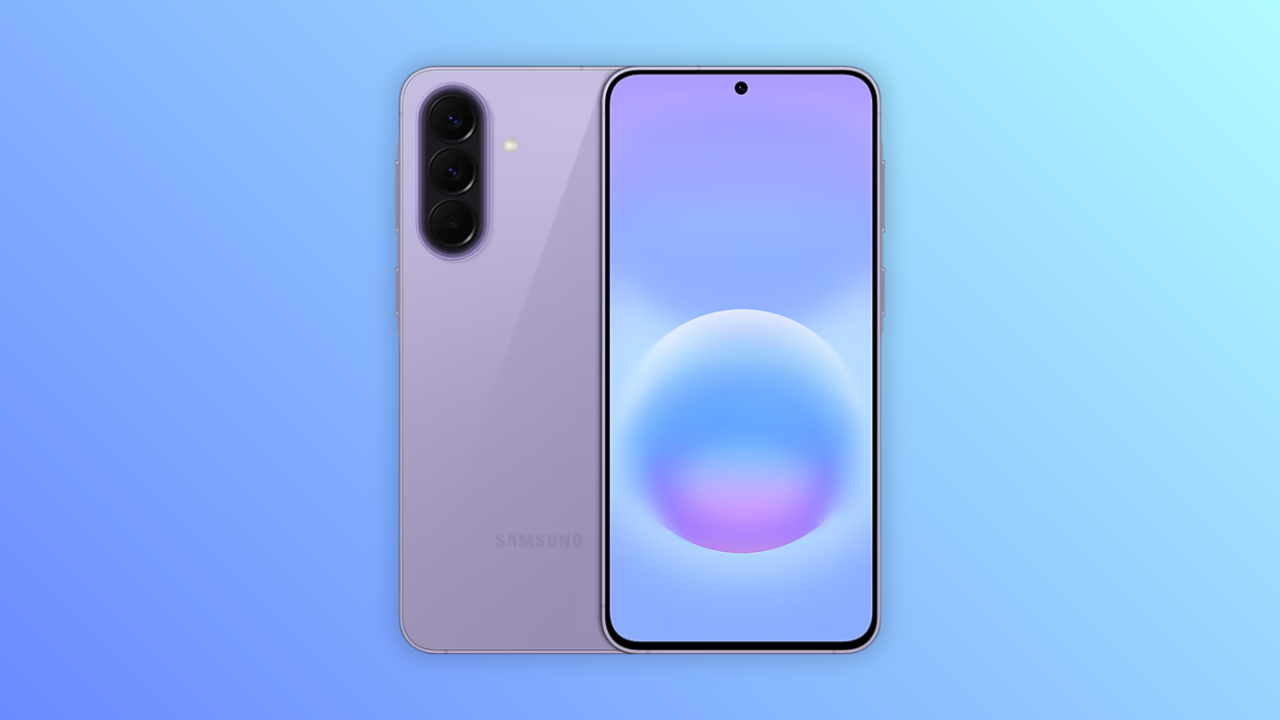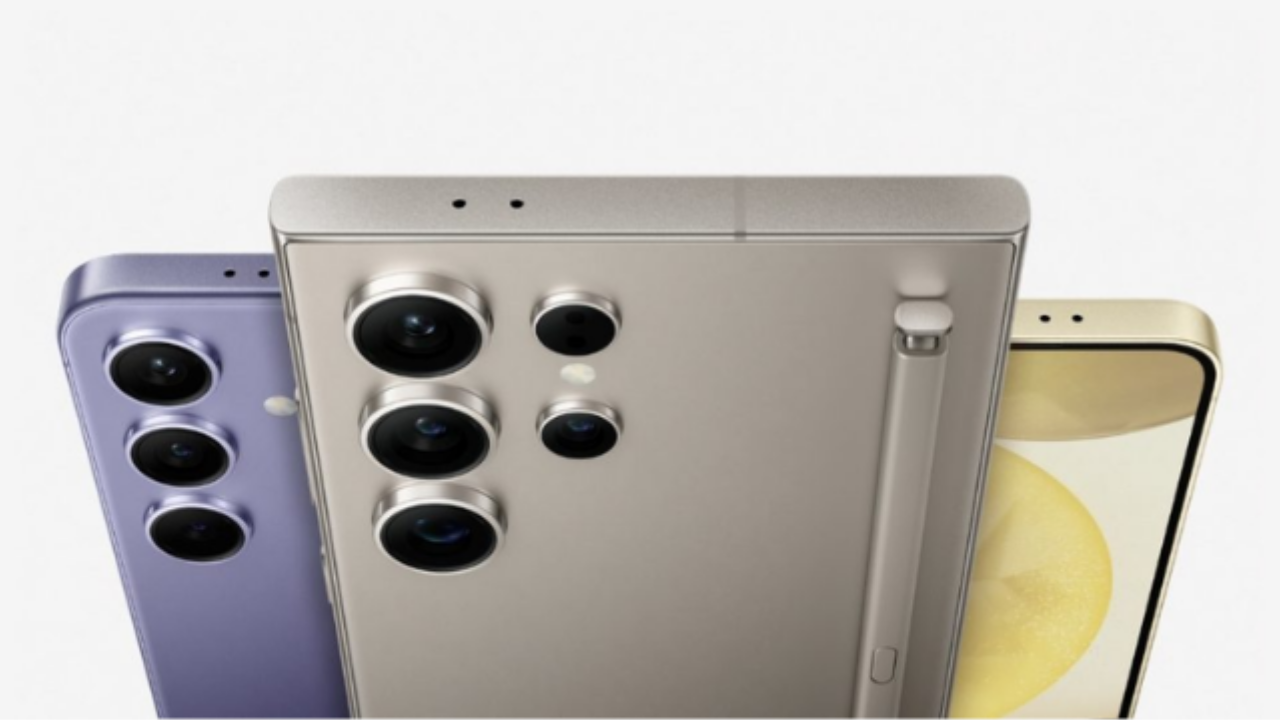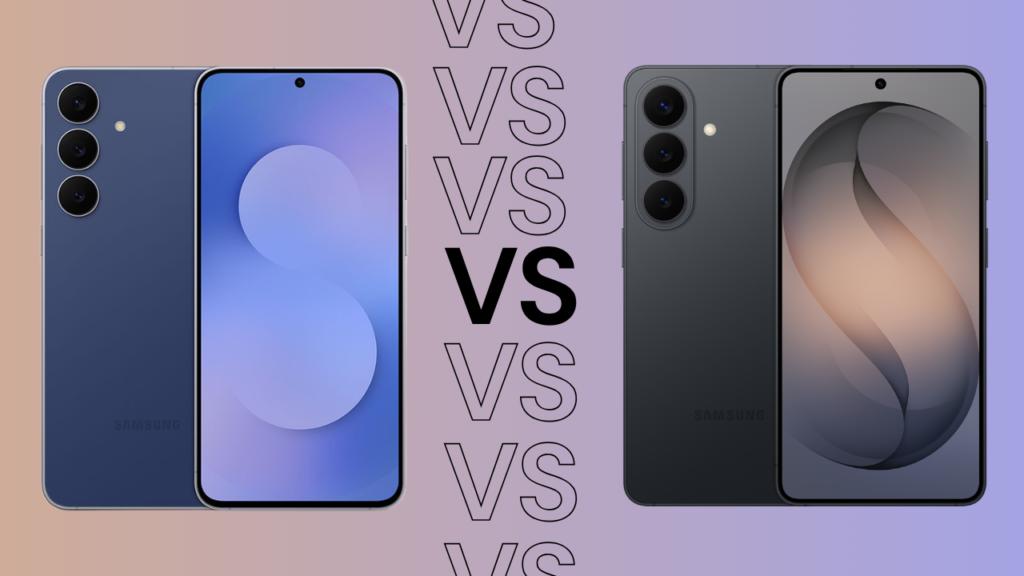
Samsung has a habit of making its own lineup confusing. You’ve got the flagship S series, the Fan Edition sitting just below it, and every year the question comes up is the cheaper option actually good enough? This time around, that question is genuinely interesting. The Galaxy S26 launched in March 2026 as Samsung’s mainstream flagship. The Galaxy S25 FE arrived back in September 2025 as the more affordable alternative. Both run Android 16 with One UI. Both carry Samsung’s name. Both sit in your pocket the same way.
But spend time with both and the gap between them becomes very clear, very quickly. Here’s the honest breakdown.
Size and Build Two Very Different Phones to Hold
The first thing you notice is how different these phones feel physically. The Galaxy S26 is compact 149.6 x 71.7 x 7.2mm, weighing just 167 grams. It’s genuinely light for a 2026 flagship, easy to use one-handed, and sits comfortably in a pocket without bulk. The S25 FE goes the other direction 161.3 x 76.6 x 7.4mm at 190 grams. That’s 23 grams heavier and significantly taller. Neither is better in an absolute sense. Some people prefer a bigger phone but if you’ve been holding the S26 for a week and then pick up the S25 FE, it feels noticeably chunkier.
Build quality on both is solid. Gorilla Glass Victus+ covers the S25 FE front and back, while the S26 steps up to Gorilla Glass Victus 2 on both surfaces. Both have aluminum frames and IP68 water resistance rated to 1.5 meters for 30 minutes. The S26’s frame is made from “Armor Aluminum 2” Samsung’s updated alloy which feels marginally more rigid. Neither phone will feel fragile in daily use.
Color options differ too. The S25 FE keeps it simple with Icyblue, Jetblack, Navy, and White. The S26 expands to six Cobalt Violet, Sky Blue, Black, White, Silver Shadow, and Pink Gold giving buyers more personality to work with.
Display Brighter, Sharper, Smaller
The S26 has a 6.3-inch Dynamic LTPO AMOLED 2X panel peaking at 2600 nits, with a pixel density of 411 ppi. The S25 FE runs a 6.7-inch Dynamic LTPO AMOLED 2X at 1900 nits peak and 385 ppi. In real-world use, the S26’s panel is noticeably brighter than 700 nit peak advantage shows clearly in direct sunlight. Text looks slightly sharper too, thanks to the higher pixel density despite the smaller screen.
Both panels run at 120Hz and support HDR10+. Both look genuinely excellent for streaming, gaming, and everyday use. The S25 FE’s larger canvas is better for media consumption and multitasking. The S26’s panel is simply the better display by technical measure. It depends on what matters more to you, size or quality.
The lab testing measured 1383 nits on the S26 and 1247 nits on the S25 FE under sustained brightness conditions. Both are strong, but the S26 has a clear lead when it counts.
Performance This Is Where It Gets Serious
This is the biggest gap between the two phones, and it’s not close.
The Galaxy S26 runs the Snapdragon 8 Elite Gen 5 (3nm) in the US and China variants, and the brand-new Exynos 2600 (2nm) everywhere else. The S25 FE runs the Exynos 2400 (4nm). AnTuTu scores tell the story bluntly; the S26 hits 2,441,481 on AnTuTu v10 while the S25 FE lands at 1,521,140. That’s roughly 60% faster on a synthetic benchmark. GeekBench single-core scores jump from 6,948 on the S25 FE to 10,824 on the S26.
In real life, the S25 FE is far from slow. It handles everything most people do daily without breaking a sweat. But if you game heavily, use demanding AI features, or just want a phone that stays fast for five or six years the S26 is in a different league. Both ship with 12GB RAM on the S26 versus 8GB on the S25 FE, which also contributes to the S26 feeling smoother under multitasking load.
Storage uses UFS 4.X on the S26 versus UFS 4.0 on the S25 FE, a minor but measurable improvement in file read and write speeds for heavy users.
Cameras Similar Setup, Different Results
On paper, both cameras look fairly similar. Triple rear setups, 50MP main sensors, ultrawide and telephoto lenses. But the details matter.
The S26’s ultrawide uses a 1/2.55″ sensor with 1.4µm pixels, significantly larger than the S25 FE’s 1/3.0″ ultrawide with 1.12µm pixels. Larger pixels capture more light, meaning the S26’s ultrawide handles low-light conditions better in practice. The telephoto lenses are both 3x optical, though the S25 FE’s is a 75mm equivalent while the S26 uses 67mm, a minor difference in framing.
Video on the S25 FE actually edges ahead in one area; it can record 4K at 120fps, which the S26 doesn’t support. The S26 counters with Horizon Lock stabilization, 10-bit HDR video, and Super Steady mode on the ultrawide. For photographers, the S26’s larger ultrawide sensor and newer processing pipeline give it the edge. For videographers who specifically want 4K 120fps, the S25 FE has a niche advantage.
Both front cameras are 12MP with similar specs. No meaningful difference in selfie quality between the two.
Battery and Charging The FE Wins Here
The S25 FE packs a 4900mAh battery compared to the S26’s 4300mAh. That gap shows in real-world testing. The active use score landed at 15 hours 20 minutes for the S26 and 11 hours 57 minutes for the S25 FE which tells an interesting story. Despite having the smaller battery, the S26 outlasts the S25 FE significantly, almost entirely thanks to the more efficient 3nm and 2nm chipsets. The S25 FE’s bigger battery gets eaten by the less efficient Exynos 2400.
Charging is a mixed bag. The S25 FE supports 45W wired charging, reaching 65% in 30 minutes. The S26 drops to 25W wired charging, hitting 55% in 30 minutes slower, and a genuine step backward for a flagship released a year later. Wireless charging is 15W on both with Qi2 support. The S25 FE also charges faster wirelessly in some conditions, and both support reverse wireless charging.
If you care about plugging in quickly and going, the S25 FE is the better choice. If you’d rather not plug in as often, the S26’s efficiency keeps it going longer on a single charge.
Software and Updates
Both phones ship with Android 16 and One UI, and both carry Samsung’s commitment to 7 major Android upgrades and 7 years of security patches. The S26 runs One UI 8.5 with the full suite of Galaxy AI features. The S25 FE ships on One UI 8 it will eventually receive the 8.5 update, but it launched a step behind. For long-term support, both are excellent.
Price The Gap That Defines Everything
The Galaxy S25 FE starts at approximately $339 / €479 / £429 / ₹48,850. The Galaxy S26 opens at $740 / €716 / £649 / ₹73,879. That’s more than double the price in the US market.
At that price difference, the question becomes brutally simple. Is the S26 twice as good as the S25 FE? In performance, yes. In camera, meaningfully. In display quality, clearly. In charging speed, no the FE actually wins there.
Who Should Buy Which? (Galaxy S26 vs Galaxy S25 FE)
The Galaxy S25 FE makes sense if you want a large screen, faster wired charging, don’t need cutting-edge performance, and want to save significant money. It’s a capable, well-built phone at a genuinely fair price.
The Galaxy S26 is for anyone who wants the best Samsung performance available in the standard lineup, a brighter and sharper display, longer real-world battery life, and better camera hardware and is willing to pay for it.
At $340, the S25 FE is excellent value. At $740, the S26 has to earn it and mostly, it does.
Discover Also iPhone 17 vs iPhone 17 Air: Which One Should You Actually Buy?

M Adnan Akram is the founder and lead writer at Phoonomo, covering mobile technology with a primary focus on Apple and the broader smartphone industry, alongside emerging developments in AI. He follows product launches, spec leaks, and industry trends closely to keep readers informed with timely updates.
Discover more from Phoonomo
Subscribe to get the latest posts sent to your email.