Qualcomm has officially detailed its Snapdragon X2 Elite platform, the latest addition to its Snapdragon X series designed primarily for Windows AI PCs and high-performance laptops. While the X2 Elite is aimed at notebooks and Copilot+ devices, its architecture is expected to influence future flagship mobile processors later this year.
The Snapdragon X2 Elite family includes two main variants: the standard X2 Elite and the more powerful X2 Elite Extreme. Both are built to push CPU, GPU and AI performance significantly beyond the prior Snapdragon X Elite generation, combining strong single-threaded speeds with improved efficiency and a deep focus on on-device AI.
Performance and Architecture
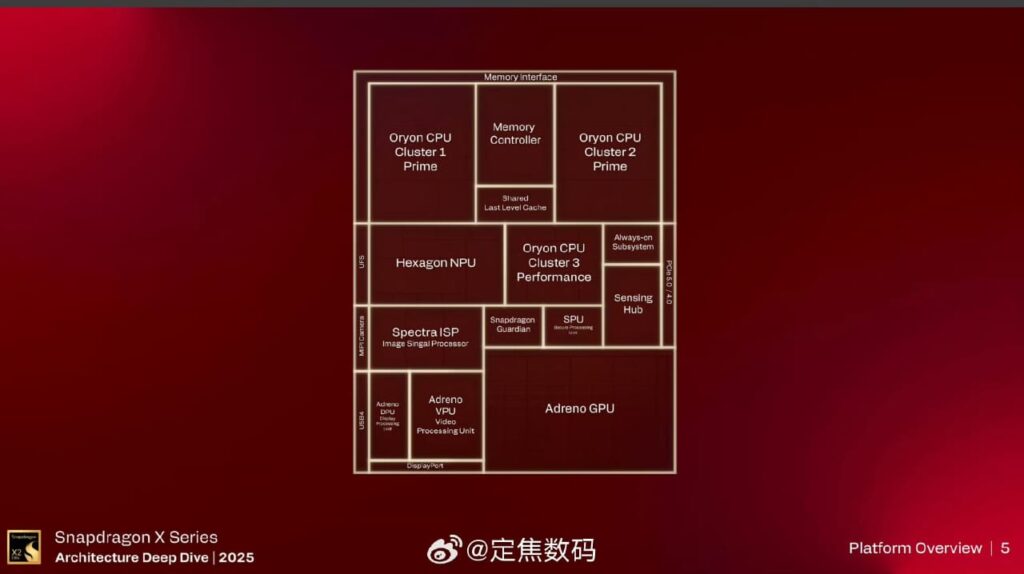
At the heart of the X2 Elite chips is the third-generation Qualcomm Oryon CPU architecture, which powers up to 18 cores across the highest-end models. On the X2 Elite Extreme, this configuration includes 12 prime cores and six performance cores, with peak clock speeds reaching up to 5.0 GHz, a first for an ARM-based processor in this segment. The standard X2 Elite typically features fewer cores but still delivers meaningful performance gains.
Both variants are manufactured using advanced processes (3 nm for the Extreme and efficient 4 nm for the standard Elite) to balance power and thermal performance. Qualcomm has also implemented a shared memory architecture and support for up to 128 GB of LPDDR5X memory, enabling faster data movement between the CPU, GPU and AI engine.
AI and Graphics Capabilities
AI performance is a standout feature of the Snapdragon X2 Elite platform. Qualcomm’s Hexagon NPU delivers up to 80 TOPS (trillions of operations per second), supporting on-device AI workloads such as real-time language models, background processing, and AI-enhanced experiences without relying heavily on cloud compute. These capabilities make the platform especially suitable for Copilot+ PCs with built-in generative and assistive AI features.
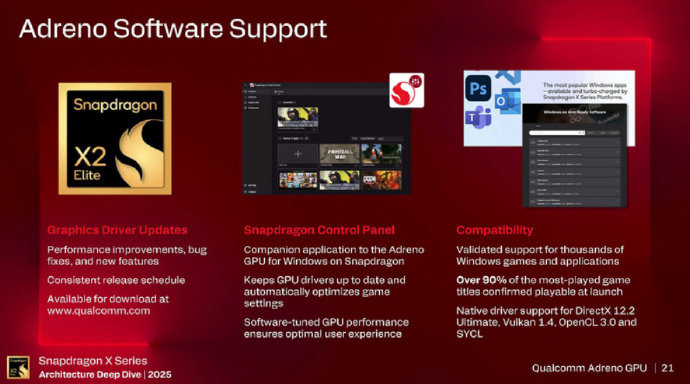
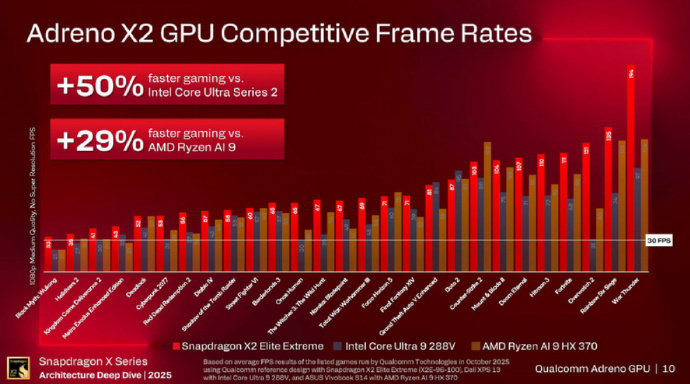
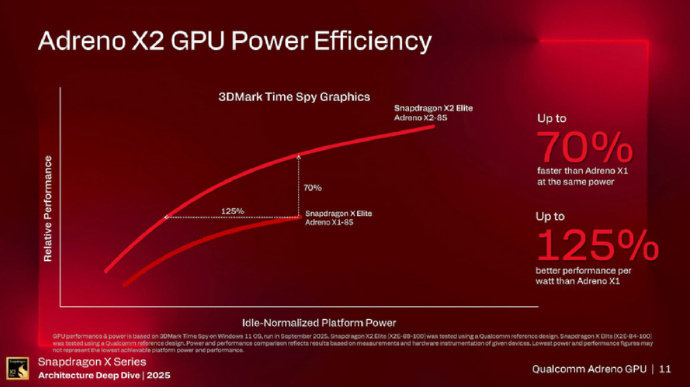
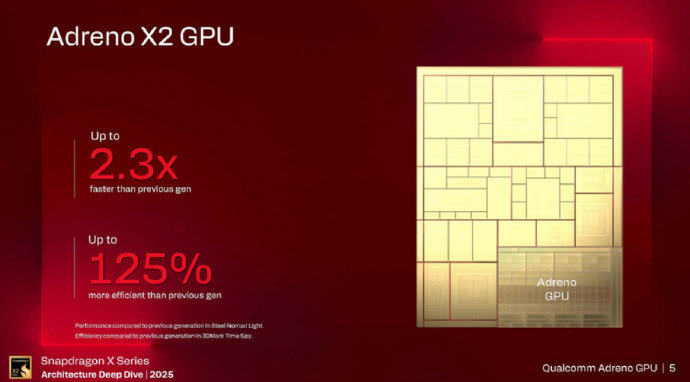
Graphics performance has also been improved with Qualcomm’s next-generation Adreno GPU, which supports modern APIs like DirectX 12.2 Ultimate, Vulkan 1.4, and advanced display options, including multi-4K output and high-refresh-rate panels.

Efficiency and Connectivity
Qualcomm says that compared with the previous Snapdragon X Elite, the X2 Elite delivers up to 31 % faster performance at the same power level and up to 43 % lower power consumption, helping extend battery life even under demanding workloads. Both chips also support Wi-Fi 7 via FastConnect and optional 5G connectivity with the Snapdragon X75 modem, offering fast wireless performance when needed.
The platform’s improved efficiency and strong task handling make it a contender in premium laptops and 2-in-1 devices scheduled to launch in the first half of 2026.
Influence on Future Mobile Chips
While the Snapdragon X2 Elite series is targeted at PCs, Qualcomm’s push toward larger core counts, unified memory design and stronger AI engines reflects a broader architectural shift that is expected to influence its mobile flagship designs later in the year. Analysts and industry watchers anticipate that learnings from the X2 Elite’s performance and AI throughput will trickle down into the next generation of Snapdragon 8-series mobile SoCs, especially as phones adopt more on-device AI tasks.
When and Where
The Snapdragon X2 Elite and X2 Elite Extreme chips were announced at Qualcomm’s Snapdragon Summit, and devices powered by these platforms are set to start reaching the market throughout 2026, with many showing up first at CES 2026 and later in laptops from major OEMs.
Discover More Qualcomm’s Snapdragon X2 Chips Could Soon Power Android Laptops Too

M Adnan Akram is the founder and lead writer at Phoonomo, covering mobile technology with a primary focus on Samsung and the broader smartphone industry, alongside emerging developments in AI. He follows product launches, spec leaks, and industry trends closely to keep readers informed with timely updates.
Discover more from Phoonomo
Subscribe to get the latest posts sent to your email.