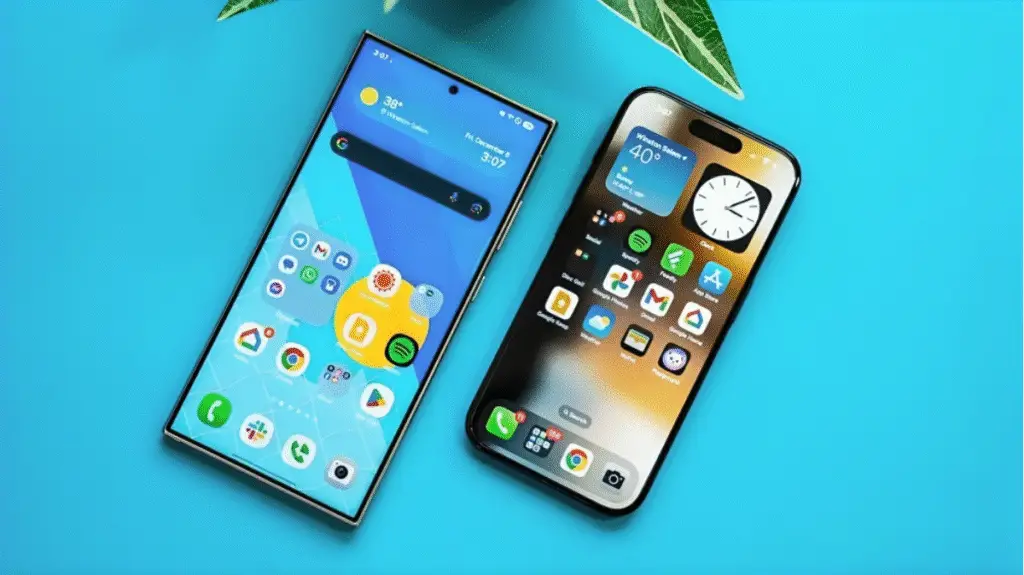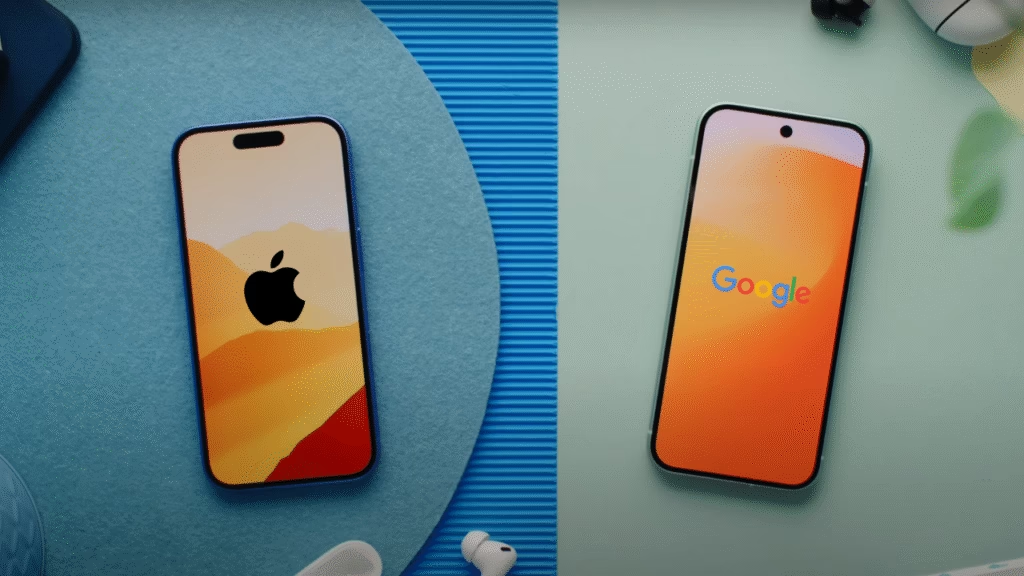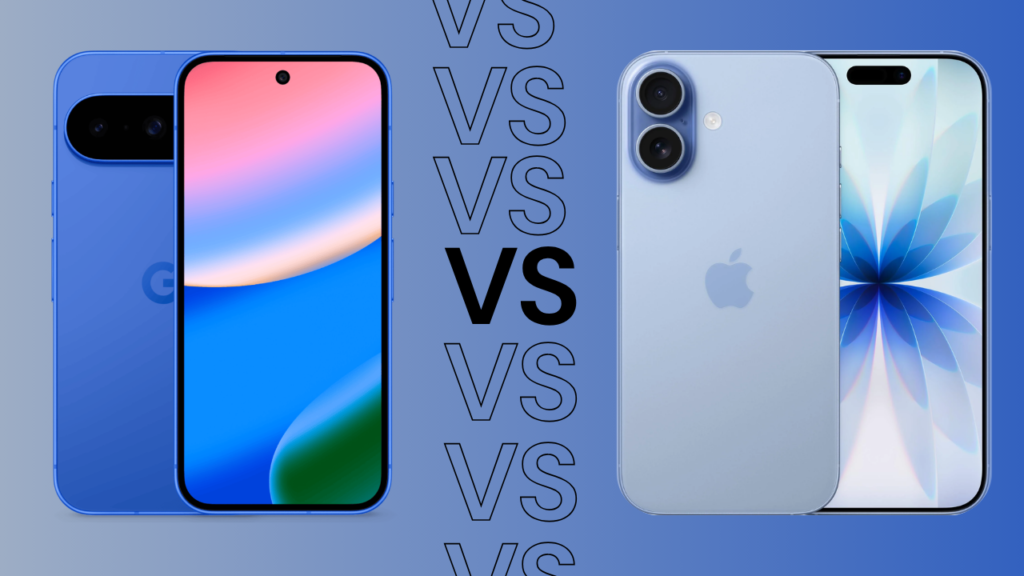
For years the Pixel has been the phone you recommend when someone wants great cameras, clean software, and genuine value without paying Apple prices. That was Google’s lane. Their thing. And then the iPhone 17 showed up and just… took it.
That’s a weird sentence to write. But after going through both phones properly display, cameras, battery, performance, the full picture it’s hard to argue against it. The iPhone 17 this year feels more like what a Pixel should be than the Pixel 10 does. Let’s get into why.
Design Both Look Familiar, and That’s Fine
Neither of these phones is going to make you gasp at a glance. The Pixel 10 looks a lot like the Pixel 9. The iPhone 17 looks a lot like the iPhone 16. Flat glass, flat sides, flat backs that’s just what phones look like in 2026.
Both use matte aluminium frames and glass backs. The Pixel 10 goes with a glossy finish on its Gorilla Glass Victus 2. The iPhone goes for a frosted look, though Apple doesn’t specify what glass they’re actually using, which is a little odd for a $799 phone.
Weight-wise, the iPhone is lighter at just 6.1 oz and you notice it. Hours of scrolling, and that lightness starts to matter more than you’d think.
The one genuinely new thing on the Pixel 10 is Pixel Snap Google’s version of MagSafe. Apple has had MagSafe since 2020, so Google is late to the party, but it’s still a useful addition for accessories and wireless charging. The irony is that adding Pixel Snap meant Google had to drop wireless reverse charging, which the Pixel 9 actually had. So one step forward, one step back.
Camera layout is still the main visual differentiator between the two phones. The Pixel’s bar across the back is distinctive. The iPhone’s circular island stays familiar. It comes down to which aesthetic you prefer.
Display Pixel Is Brighter, iPhone Is Better
Both phones have 6.3-inch screens. That’s where the similarities start to fade.
The Pixel 10 uses a standard OLED. The iPhone 17 gets an LTPO OLED and that matters more than the acronym suggests. Both can hit 120Hz, but the Pixel can only drop to 60Hz when you’re not using it actively. The iPhone can go all the way down to 1Hz. That’s how it supports a proper always-on display with full wallpaper, something the Pixel can’t do.
In our brightness test, the Pixel absolutely crushed it 2,317 nits under simulated direct sunlight. The iPhone couldn’t match that. So if outdoor visibility in harsh sunlight is your main concern, the Pixel wins clearly here.
But zoom out and look at the full picture: the Pixel has noticeably thicker bezels, lower resolution, no Dolby Vision support, no dynamic refresh rate, and no anti-reflective coating. The iPhone has all of those things. Apple went from a 60Hz panel on the iPhone 16 to a fully pro-level display on the 17. That’s a massive single-generation jump.
For fingerprint security, the Pixel has an ultrasonic under-display sensor. The iPhone uses Face ID in the Dynamic Island. Face unlocking exists on the Pixel too, but it uses only the front camera and no depth sensors so it’s less secure. Both biometric systems work well in daily use, though Face ID is still the more consistent of the two.
Cameras This Is Where It Gets Complicated
Both phones have 48MP main cameras. The Pixel 10 has a technically new sensor here, but it’s actually smaller than the 50MP sensor on the Pixel 9. That’s a downgrade on your flagship camera, and it shows. Apple didn’t change anything on the main lens from last year’s same hardware but it’s still a very good camera.
Color science is the clearest difference. The Pixel shoots more true-to-life tones. The iPhone tends to warm things up, especially on skin. Neither is objectively wrong. It’s a processing choice but in mixed indoor lighting, both can get their white balance a bit off.
The ultrawide is where the Pixel 10 story gets worse. The Pixel 9 had a 48MP ultrawide. The Pixel 10 has a 13MP one. Google downgraded this to make room for something else. The iPhone 17 went in the opposite direction, finally replacing the old 12MP ultrawide from the iPhone 16 with a 48MP lens. In head-to-head ultrawide shots, the iPhone’s advantage in detail and dynamic range is obvious. Physics wins. More megapixels on a modern sensor beats processing tricks.
The one area where the Pixel 10 genuinely wins on cameras is zoom. The Pixel 10 is the first base Google phone to include a dedicated telephoto lens 10.8MP, 5x optical, up to 20x super res zoom. The iPhone still doesn’t have a telephoto on the base model in 2026. At 10x zoom, the Pixel’s dedicated lens makes the iPhone look blurry. At 20x, you’re losing detail on the Pixel too, but at least it can get there.
Portrait mode is another iPhone win. Both phones can do it, but the iPhone’s background blur is more natural, and edge detection is cleaner even at 3x digital zoom. The Pixel also has the strange limitation of not being able to use its telephoto lens for portrait shots, which is a frustrating software decision.
For selfies, results flipped. Despite the iPhone having an 18MP front camera (vs the Pixel’s 10.5MP), the Pixel actually delivered more realistic skin tones and sharper details in good light. Low light selfies were close, with the Pixel pulling slightly better skin texture and the iPhone offering a touch more dynamic range.
Video is the iPhone’s strongest camera category by a clear margin. At 4K30, the iPhone is noticeably sharper. The Pixel over-smooths textures and loses detail during fast motion. Portrait video on the Pixel drops to 1080p 24fps a significant quality step down. The iPhone stays at 4K 30fps. On ultrawide video, the iPhone again wins on detail, and the Pixel shows more chromatic aberration on bright highlights.
The mic performance swaps the winner again. The Pixel is excellent at killing background noise, almost too good, as it can make voices sound a bit processed. The iPhone lets ambient sound through more freely, which is either natural or messy depending on your use case.
The honest camera summary: Pixel wins selfies and zoom. iPhone wins video, portrait, ultrawide, and low-light overall. For most people shooting everyday photos, both are excellent. For video, there’s a clear gap.
Performance No Contest
Under the hood, the Pixel 10 runs Google’s Tensor G5. The iPhone 17 runs Apple’s A19. Both are custom silicon, but that’s where the comparison ends.
In real-world tests, the iPhone finished exporting 99 photos in Lightroom in literally half the time it took the Pixel. It rendered a 4K video clip 13 seconds faster. In gaming, the Tensor chip still has compatibility issues; some AAA titles like Grid Legends simply won’t run on the Pixel. The iPhone handles them fine, though it does run warm at around 116°F. The Pixel got hotter during gaming, hitting around 120°F, and dropped from 60 to 41 FPS with maxed-out graphics. The iPhone only dipped to 50 FPS.
Geekbench numbers confirmed what real-world tests showed the iPhone leads in both single-core and multi-core. In the 3DMark stress test, the iPhone’s lowest loop score was still higher than the Pixel’s best. That’s not a close race.
On storage, the Pixel 10 still starts at 128GB. The iPhone 17 now starts at 256GB. If you want 256GB on the Pixel, that’s an extra $100. And the Pixel maxes out at 256GB the iPhone goes up to 1TB.
One frustrating iPhone holdover: USB 2.0 transfer speeds. For a $799 phone in 2026, that’s genuinely hard to defend.
RAM is 12GB on the Pixel versus 8GB on the iPhone. In day-to-day use, both feel fluid. But for heavy multitasking and keeping more apps alive in the background, the Pixel’s extra RAM does help.
Software Google’s Strongest Card
Both phones run their respective latest OS versions. Google is promising 7 years of software and security updates for the Pixel 10. Apple doesn’t give a formal timeline, but iPhones historically get about 7 years of support too.
The Pixel UI leans into Material 3 poppy colors, bouncy animations, everything reacts to your touch. It feels alive. AI features are more deeply baked in: Voice Translate for live call translation, Camera Coach for framing help, Magic Q for smart message replies, Gemini, Circle to Search with gesture support. Google is a software company, and it shows.
The iPhone 17 runs iOS 26.2 with the new “Liquid Glass” design language translucent elements everywhere, from icons to the lock screen. It looks polished, but the AI features feel less cohesive. Call screening is there, Siri has ChatGPT integration, Visual Intelligence lets you search with your camera. But there’s no global back gesture still, and the Apple Intelligence rollout has had a bumpy road.
If software fluidity and AI integration matter most to you, the Pixel experience is still more intentional and thought-through. But it’s not as wide a gap as it used to be.
Battery iPhone Wins and It’s Not Close
The Pixel 10 has a 4,970mAh battery with 30W wired charging. Apple doesn’t publish their wired speeds, but wireless goes up to 25W on MagSafe. The iPhone also supports wireless reverse charging through MagSafe power banks.
In an 8-hour mixed usage test covering social media, navigation, gaming, YouTube, music, and video calls the Pixel died after 8 hours and 2 minutes. The iPhone kept going for 11 hours and 2 minutes. That’s three extra hours. Not a marginal win, a clear category difference.
Charging speed: the iPhone hit 33W peak and was fully charged in 1 hour 14 minutes. The Pixel peaked at 26W and took 1 hour 26 minutes. The iPhone charges faster despite Pixel having a smaller battery. That’s impressive.
Price Same Starting Point, Very Different Value
Both phones start at $799. Neither brand raised prices from last year, which is genuinely good news.
But at $799, the Pixel 10 gives you 128GB of storage. The iPhone 17 gives you 256GB. To match the iPhone’s base storage on the Pixel, you’re spending $899. That’s the same price for less hardware, worse performance, weaker video, and shorter battery life.
The value crown used to belong to Android and specifically to the Pixel. This year, Apple took it.
Final Verdict
The Pixel 10 isn’t a bad phone. The software is still excellent, the zoom camera is a genuine advantage, selfies are surprisingly strong, and 7 years of updates on a $799 phone is fair. But Google made some decisions this year downgrading the main sensor, downgrading the ultrawide that feel like compromises rather than upgrades.
The iPhone 17 is the more complete package. Better display, massively better performance, significantly better battery life, better video, and double the base storage at the same price. It genuinely feels like what you’d want a $799 phone to be in 2026.
If zoom photography matters most to you, get the Pixel. If you want the best overall phone at this price right now, the iPhone 17 is the harder to argue against.
Discover Also Galaxy A57 vs Galaxy A37 Here’s What Actually Separates Them

M Adnan Akram is the founder and lead writer at Phoonomo, covering mobile technology with a primary focus on Apple and the broader smartphone industry, alongside emerging developments in AI. He follows product launches, spec leaks, and industry trends closely to keep readers informed with timely updates.
Discover more from Phoonomo
Subscribe to get the latest posts sent to your email.