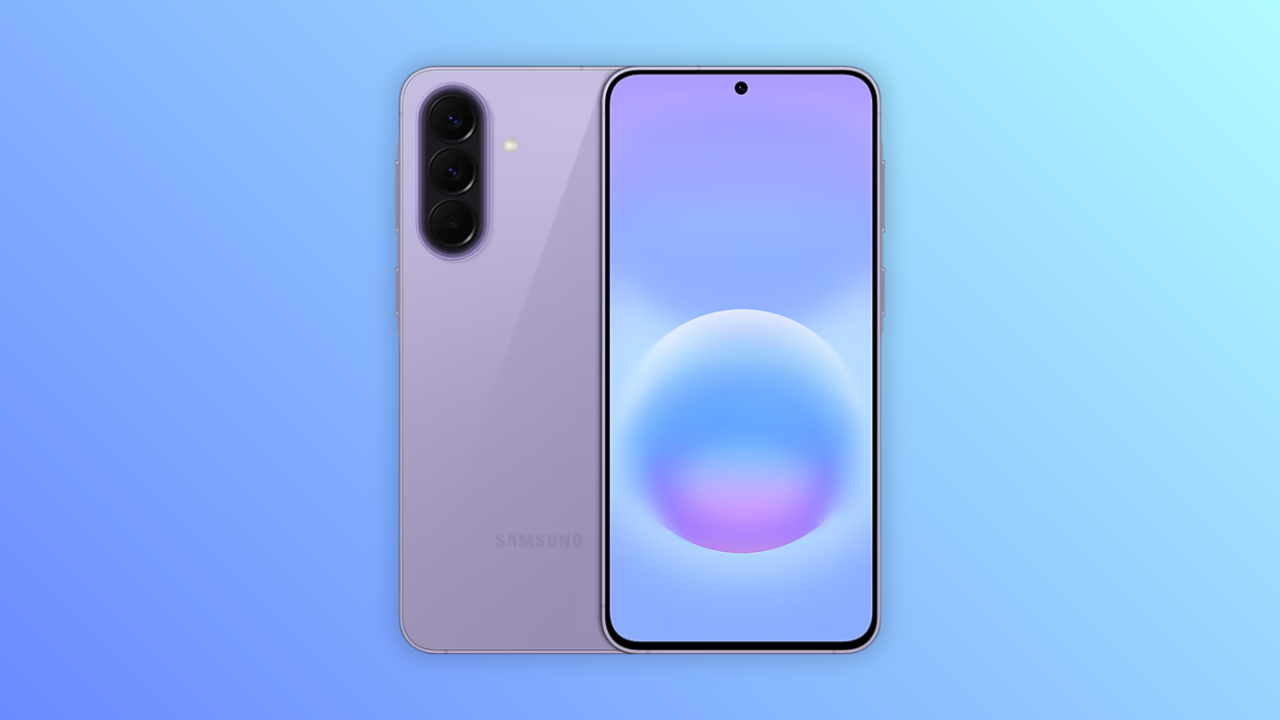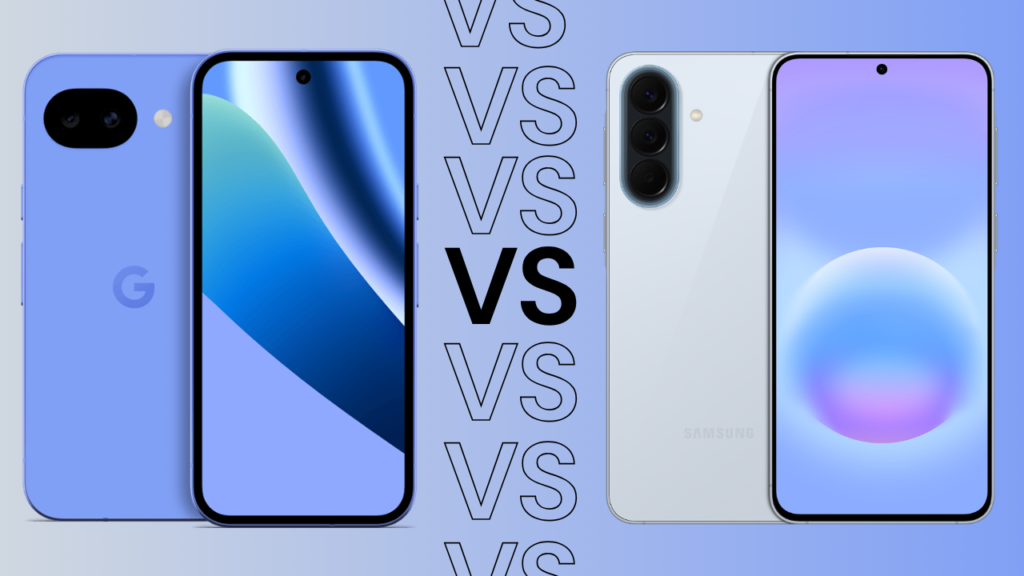
Two phones. Both mid-range. Both recently launched. Both running Android 16 out of the box. And yet spending time with the Pixel 10a and Galaxy A57 back to back reveals two very different philosophies about what a sub-$550 smartphone should be in 2026.
The Galaxy A57 5G costs $549. The Pixel 10a costs $499. That $50 difference feels small until you start comparing what each phone actually delivers and then the gap between them starts feeling much wider than the price tags suggest. I spent proper time with both. Here’s the honest breakdown of everything I found.
First Impressions Build and Design
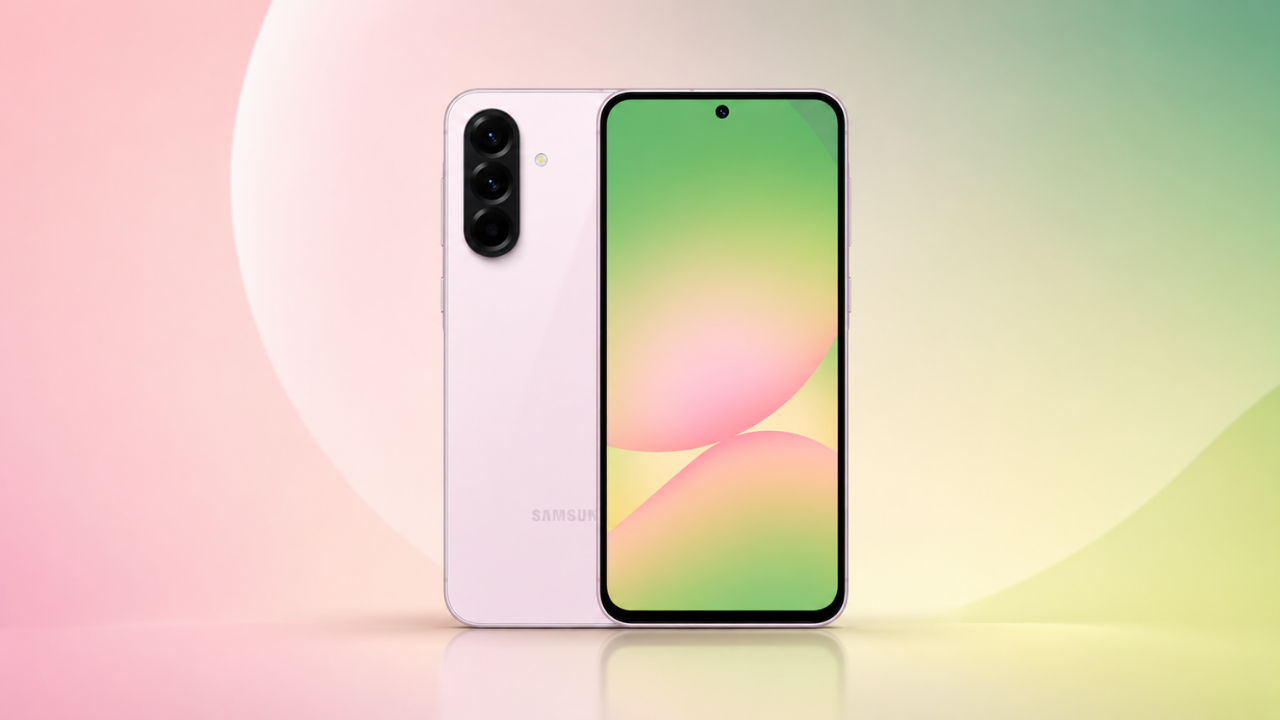
Pick up both phones and you immediately notice the size difference. The Galaxy A57 is noticeably larger with a 6.7-inch display versus the Pixel 10a’s 6.3-inch panel and it carries that larger footprint in everything from how it fits in your pocket to how comfortable it is in one hand. For people who love big screens, the Samsung is going to feel immediately satisfying.
Build materials tell an interesting story. The Galaxy A57 uses glass on the back, a premium touch for the price, while the Pixel 10a uses plastic. You might expect that to make the Pixel feel cheaper. It doesn’t. The matte finish on the Pixel 10a is excellent: it resists fingerprints, feels comfortable in hand, and genuinely hides the fact that it’s plastic better than you’d believe possible. Both phones have metal frames and both feel more premium than their prices suggest.
One practical design win for the Pixel is that it has a completely flat back. Put the Samsung on a table and it rocks slightly because of the camera bump. The Pixel sits absolutely flat. When you’re typing or watching something propped on a table, that makes a real difference. The Samsung’s reflective glass back also picks up fingerprints easily. The Pixel’s matte surface simply doesn’t.
The Galaxy A57 is 6.9mm thin and impressively slim. The Pixel 10a is thicker at 9mm, though most people won’t notice in any case. Samsung’s raised button area on the right side is a nice design detail. Pixel keeps its power button above the volume buttons which is slightly unusual but you adapt quickly.
Both phones offer IP68 dust and water resistance, NFC, stereo speakers, USB-C, and in-display optical fingerprint scanners that work fast and reliably. Both support face unlock as an alternative. Neither has a microSD card slot. Both come with 128GB internal storage.
The one feature Samsung misses entirely no wireless charging on the Galaxy A57. At $549 in 2026, that’s genuinely hard to justify. The Pixel 10a supports 10W wireless charging not blazing fast, but it works, and having it available at $499 makes Samsung’s omission feel like a deliberate cost-cutting decision that punishes buyers at a higher price point.
Display Not Even Close
This is the section that most clearly shows where Samsung’s priorities lie with the A57.
The Galaxy A57 has a 6.7-inch Super AMOLED Plus panel with a 120Hz refresh rate on paper, a very capable display. In practice, it looks good. Colors are vibrant, the refresh rate is smooth, and watching content feels pleasant.
Then you look at the Pixel 10a next to it.
The Pixel’s 6.3-inch P-OLED panel hits 2,000 nits in high brightness mode and 3,000 nits peak for HDR content. The Galaxy A57 maxes out at 1,200 nits high brightness and 1,900 nits peak. That’s not a small gap outdoors in bright sunlight, the Pixel is dramatically more readable. I tested both outside on a sunny day and the Samsung genuinely struggled in comparison. The Pixel just kept going brighter when you needed it.
Pixel density tells a similar story: 422 ppi on the Pixel versus 385 ppi on the Samsung. Text and fine details look noticeably sharper on the Pixel’s smaller panel. Smaller screen, yes but the quality is clearly a step above.
The Samsung has a larger screen-to-body ratio at 88.8% versus 84.3% on the Pixel, and the bezels are smaller on the A57. If raw screen real estate is your priority, Samsung still wins that specific argument. But for display quality brightness, sharpness, outdoor visibility the Pixel 10a is the better panel without question.
Performance Benchmark vs Reality
The Galaxy A57 runs Samsung’s Exynos 1680 chip. The Pixel 10a uses Google’s Tensor G4. Both phones have 8GB of RAM.
I ran Geekbench 6 on both. Single-core performance goes clearly to the Pixel Tensor G4 beats Exynos 1680 noticeably here. Multi-core is closer, with the Galaxy A57 edging slightly ahead in that specific test. Real-world daily use tells a slightly different story: both phones feel smooth in general use, social media, streaming, and everyday tasks.
Where the difference shows up is in demanding scenarios. The Pixel handles things more consistently without any noticeable hesitation during multitasking. The Exynos 1680 is a capable chip but it’s not Google’s most efficient design and you can feel it working harder in certain situations.
For gaming both phones handle casual titles comfortably. Neither is going to be your primary gaming device if you’re a demanding mobile gamer, but for everyday gaming they both hold up respectably.
The performance difference won’t make most people choose one phone over the other on its own. But combined with the software advantages the Pixel brings, the Tensor G4 is the better chip in this comparison overall.
Cameras One of These Phones is a Different Class
This is the biggest gap between these two phones and it goes strongly in one direction.
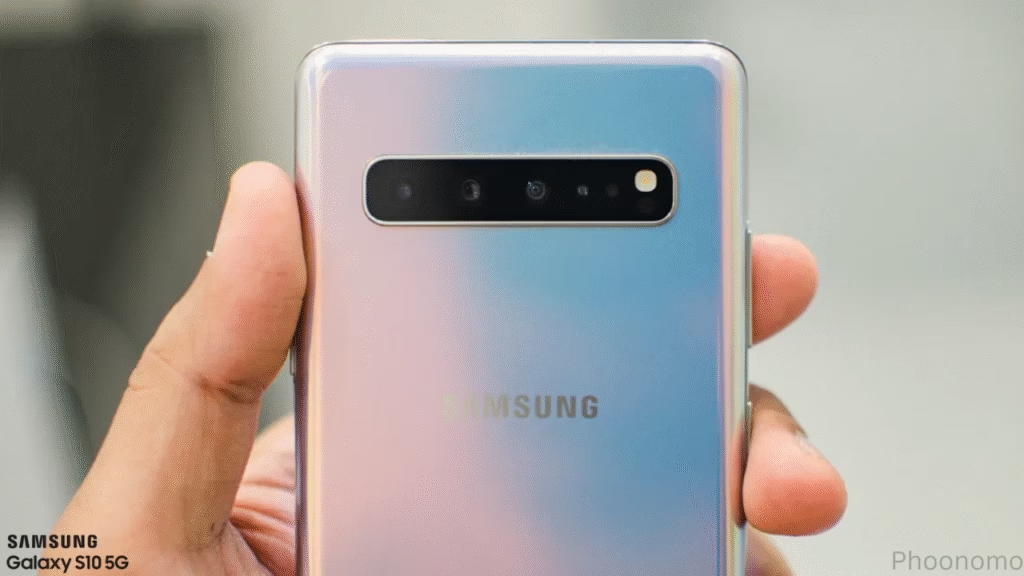
The Galaxy A57 has a triple rear camera 50MP main, 12MP ultrawide, and 5MP macro. On paper that sounds like more capability. In practice, the macro camera is barely useful in daily life and the overall camera system is decent but not exceptional. Photos in good light look fine. Portraits are acceptable. Low light is where things fall apart.
The Pixel 10a has a dual camera setup 48MP main and 13MP ultrawide. Two cameras versus three. But those two cameras absolutely destroy the Samsung system in almost every real-world shooting scenario I tested.
In low light especially the gap is significant. The Pixel’s computational photography pipeline Google has been refining this for years pulls detail and manages noise in a way the Galaxy A57 simply cannot match. Side by side night shots aren’t even close. The Pixel produces clean, detailed, natural-looking images. Samsung produces acceptable but noticeably inferior results.
Even in daylight, the Pixel handles dynamic range, skin tones, and detail more naturally. Colors look accurate rather than processed. The Samsung oversharps in certain conditions and handles complex lighting less gracefully.
The front cameras are close to 12MP on Samsung versus 13MP on Pixel with both producing solid selfie results in good light.
The Pixel 10a’s camera system punches well above its price point. The Galaxy A57’s cameras are adequate but unremarkable. For anyone who uses their phone camera regularly, this category alone would be enough to make the decision.
Battery and Charging
Battery life is genuinely close between these two phones.
The Galaxy A57 has a 5,000mAh battery with 45W wired charging. The Pixel 10a carries a slightly larger 5,100mAh battery but slower 30W wired charging.
In daily use both phones comfortably get through a full day. The Samsung’s 45W charging does fill up noticeably faster than the Pixel’s 30W. If you’re
frequently in a rush to top up before leaving the house, the Samsung charges faster.
The Pixel wins on wireless charging 10W wireless that Samsung doesn’t offer at all. Again, not MagSafe speeds, but the convenience of dropping your phone on a pad before bed rather than finding a cable is something people actually use every single day.
Both phones have similar real-world battery endurance. Neither is going to leave heavy users anxious before the end of the day in normal conditions.
Software Support The Long Game
Both phones ship with Android 16 out of the box.
The Galaxy A57 gets 6 years of major Android software updates. The Pixel 10a gets 7 years. That extra year matters at a product level by the time most people replace their phones, both will be long-supported. But the Pixel 10a stays current one year longer, which has real value for buyers who keep phones for four or five years.
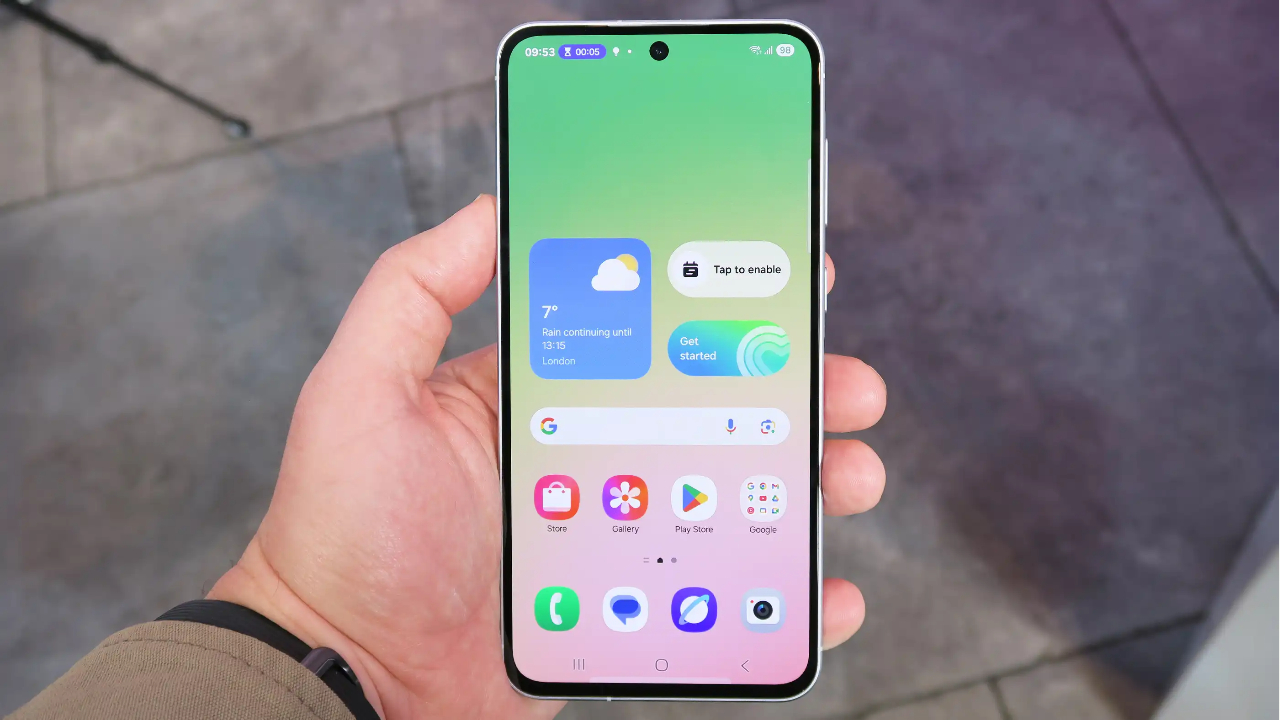
Beyond update length, Google’s version of Android is simply cleaner and more refined than Samsung’s One UI. Google’s AI features are integrated more naturally throughout the system. The overall software experience on the Pixel feels more considered and less cluttered than the Samsung.
Final Verdict
Spending time with both phones makes the choice clearer than the price gap suggests. The Galaxy A57 is a larger phone with a bigger screen, glass back, faster charging, and thinner profile. Those are real advantages for specific buyers.
But the Pixel 10a is the better phone. Better display quality by a significant margin. Better cameras especially in low light. Better performance in real-world use. Wireless charging the Samsung doesn’t offer. One extra year of software support. And it costs $50 less.
The Samsung A57 makes sense if you specifically want a larger screen and faster wired charging matters more to you than camera quality or display brightness. For everyone else the Pixel 10a is the smarter buy at $499.
$50 less. Better cameras. Better display. Wireless charging included. The Pixel 10a wins this comparison clearly and it’s not particularly close.
Discover Also iPhone 17 vs Vivo X300 I Tested Both and One of Them Surprised Me Completely

M Adnan Akram is the founder and lead writer at Phoonomo, covering mobile technology with a primary focus on Apple and the broader smartphone industry, alongside emerging developments in AI. He follows product launches, spec leaks, and industry trends closely to keep readers informed with timely updates.
Discover more from Phoonomo
Subscribe to get the latest posts sent to your email.