Samsung’s A series doesn’t get the same YouTube treatment as the S series, but let’s be honest this is the range that most people are actually buying. The Galaxy A37 and A57 are now official, and after spending some early hands-on time with both, there’s a lot to talk about. Some of the differences are obvious. Others are the kind of thing you’d only notice after living with the phone for a week.
So let’s get into what’s actually different between these two, where the A57 genuinely earns the extra money, and the one thing Samsung did that’s worth calling out.
Design They Look Similar, But They Don’t Feel the Same
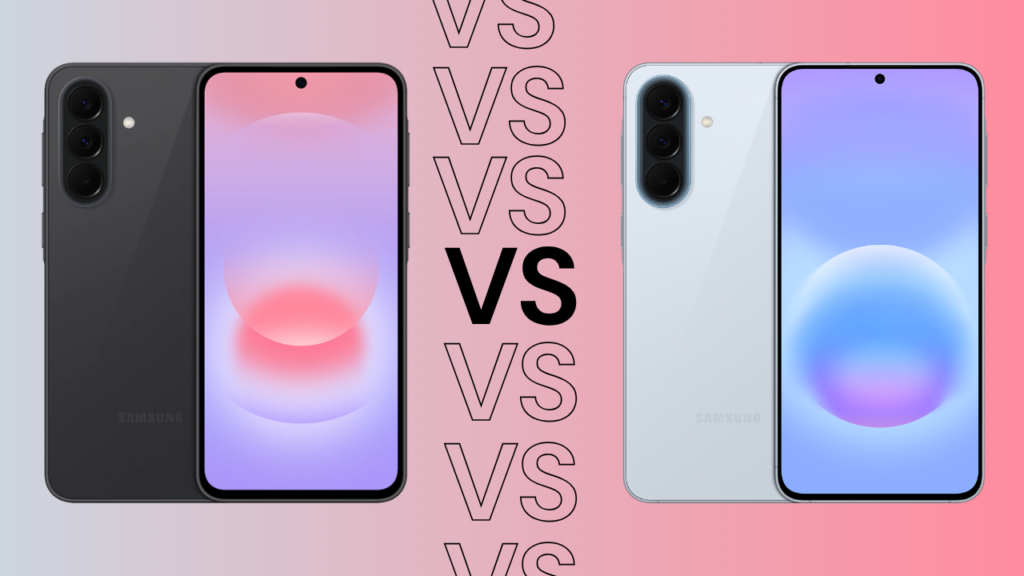
First thing you notice when you pick up both phones: the A37 has a polycarbonate frame. The A57 has aluminium. And that difference which looks like a small detail on a spec sheet is immediately noticeable in the hand. The A57 just feels more solid. More intentional.
Both phones come with Gorilla Glass Victus Plus on the front. The A57 also gets it on the back, while the A37 gets standard Victus. Not a dealbreaker, but worth knowing if you’re the type who skips cases.
Color options on both are plentiful. The A37 comes in lavender, charcoal, gray, green, and white. The A57 gets lilac, icy blue, gray, and navy. Samsung has decided to call every single color “Awesome” so you’ve got Awesome Lavender, Awesome Icy Blue, and so on. It’s a bit much, but the colors themselves are solid choices.
One thing to know: the darker shades on both phones attract fingerprints noticeably. This year’s colors are flatter than what the A36 had last year, and that makes the smudge situation worse on the darker options. If you’re going charcoal or navy, a case is probably the move.
The camera module got a refresh on both phones too; there’s an “ambient island” design with a translucent bump and a gradient pad around it. Looks fine, but if you had the A56, you might actually think that one looked sharper. The A56 had a metal camera module which gave it a premium look that the A57 doesn’t quite match.
The A57 has earned a genuinely impressive record though: it’s now the thinnest A series phone Samsung has ever made. At just 6.9mm, it’s about 5mm slimmer than the A56, and roughly 20 grams lighter too. You can feel that in daily use. It’s not just a stat the A57 genuinely feels like a step up in how it sits in the pocket and the hand.
Both phones are rated IP68, which is up from IP67 on the previous generation. More water resistance for the same price range is always a good thing.
Display Closer Than You’d Think, But Not Identical
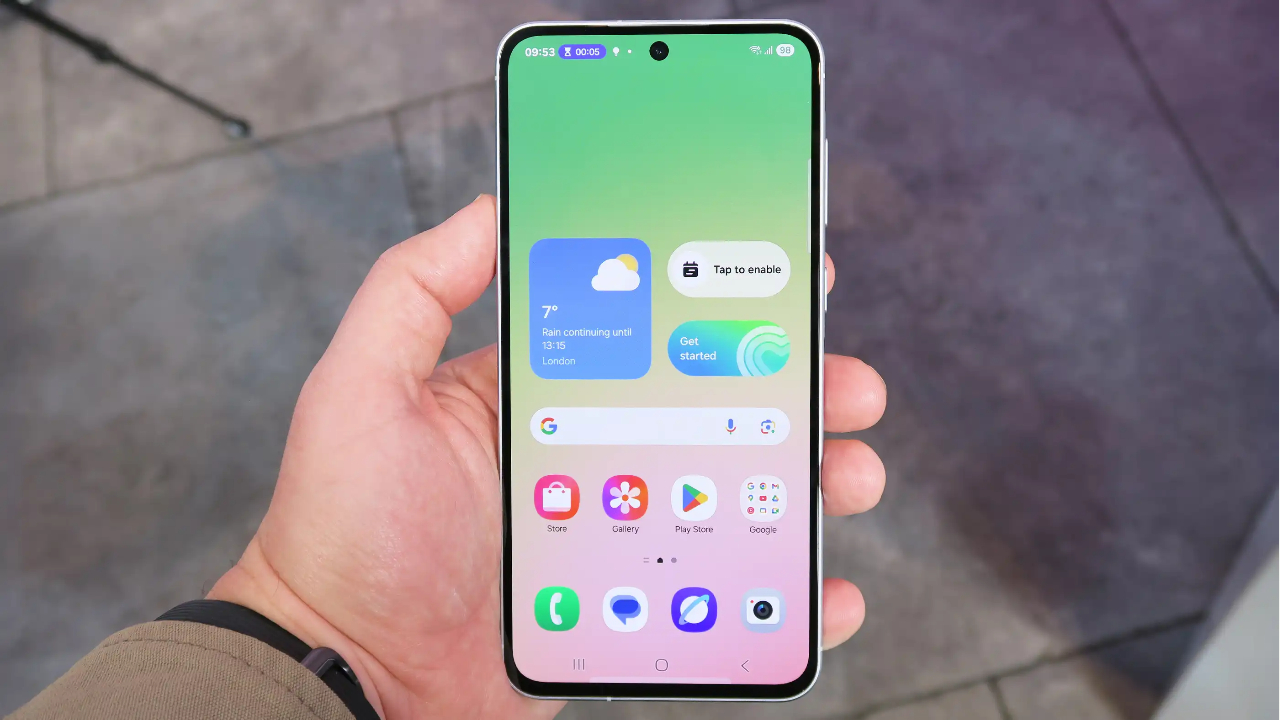
Both phones run a 6.7-inch Full HD+ display at 120Hz, with 1,200 nits in high brightness mode and 1,900 nits peak. On paper they’re nearly twins.
The real difference is the panel technology. The A57 uses Super AMOLED Plus. The A37 gets Super AMOLED. The “Plus” version is actually a thinner display panel that draws less power and this contributes to the A57’s slimmer profile. In real-world use, the A57’s screen is going to feel marginally smoother to look at, and it’ll be slightly easier on battery life too.
The bezels are another thing. Both phones have reduced bezels versus their predecessors, but the A37 still has a visible chin at the bottom. The A57’s bezels are more even. If you’re coming from a phone with uniform bezels like a Pixel 9a or a Nothing Phone 3a the A37’s chin is something you’ll notice for the first few days.
Cameras The A37 Got a Serious Upgrade Here
This is where it gets interesting especially for the A37.
Both phones have a 50MP primary camera with optical image stabilization and a 5MP macro lens. The ultrawide is where they split: 8MP on the A37, 12MP on the A57. That difference matters if you shoot a lot of wide shots, but for most people, the primary camera is going to be what they use 90% of the time.
The macro camera, let’s be real, is there to let Samsung say “triple rear camera.” In practice, nobody is using a 5MP macro in 2026 for anything meaningful. Don’t factor it into your decision.
What’s actually worth talking about on the cameras is shot speed. The A37 now captures in 400 milliseconds. Last year it was 1,000 milliseconds. That is a massive improvement. Kids, pets, fast-moving anything this is the kind of upgrade that changes how usable a camera actually feels. The A57 goes from about 300ms down to 230ms, which is a smaller but still meaningful improvement.
Portrait mode has also been brought up to a higher standard on the A37 this year. Samsung has added an AI segmentation model with context-aware edge detection, and even with a complex background it handles edges really well. This was a strength of the A56 last year, and it’s now available on the much more affordable A37. That’s a genuinely good thing.
The A57 gets two exclusive camera features. One is blur-free zoom transitions so when you switch between the ultrawide and the primary camera, the transition is smooth rather than a jarring jump. The A37 still does the jump. The other exclusive is Auto Trim, which uses AI to pull highlights from your videos automatically.
Both phones share the same 12MP selfie camera with HDR video support.
Performance Different Chips, Different Ceilings
The A37 runs on the Exynos 1480. The A57 steps up to the Exynos 1680. Neither of these is going to challenge a Snapdragon 8 Elite or an A19 in a benchmark test but that’s not the point. For daily tasks, social media, streaming, and light gaming, both chips handle things without complaint.
The bigger upgrade across both phones this year is RAM speed. The A37 moves from LPDDR4X to LPDDR5X that’s roughly a 75% memory improvement. The A57 goes from LPDDR5 to LPDDR5X, which gives it about a 17% memory bump. In everyday use, this means apps stay loaded in the background longer, multitasking is smoother, and the phone feels more responsive over time.
The A57 also comes with a 13% larger vapor chamber for heat management. If you’re planning to use this phone for gaming sessions, the A57 is the more sensible choice. The A37 will hold up for casual gaming, but sustained heavy use is the A57’s lane.
Software and AI Six Years of Updates Is the Real Headline
Both phones ship with Android 16 and One UI 8.5. And Samsung is promising six years of OS updates and six years of security patches for both devices. For business customers, it extends to seven years.
In a market where some brands still offer three years of support, this is a genuinely big deal. It means a phone you buy today should still be receiving software updates in 2031 or 2032. For people who keep their phones for a long time, which is most people, this matters more than almost anything else on the spec sheet.
On the AI side, both phones support Gemini, Bixby, and Perplexity and you can choose between them depending on what you need. Circle to Search now lets you ask follow-up questions after searching, which is a useful improvement. There’s also voice transcription for calls and meetings on both phones.
The honest note: you’re not getting the full Galaxy AI experience from the S series here. Object eraser is present on both phones but doesn’t work nearly as well as it does on the flagships. Best Face and Auto Trim are A57 exclusives, but Best Face in particular has limitations: it takes stills from motion photos and enhances them, so the quality ceiling is lower than you’d want.
Battery and Charging Same Story, Both Phones
Both phones come with 5,000mAh batteries and 45W wired fast charging. That’s roughly 60% charge in 30 minutes. No wireless charging on either which is starting to feel like something Samsung needs to address at this price point.
The A57 will get slightly better battery life thanks to the more efficient chipset, but both phones should comfortably get through a full day for most users.
One thing to note: chargers are not included in the box in the UK. They may be included in your region check with your retailer before assuming.
Connectivity A57 Steps Up Here Too
The A37 has Wi-Fi 6 with Bluetooth 5.3. The A57 moves to Wi-Fi 6E and Bluetooth 6.1. The practical benefits of Wi-Fi 6E are mostly felt in congested environments such as offices, apartment buildings, and stadiums. If you’re using your phone mostly at home with a decent router, you’re unlikely to notice the difference day to day. But if you work in busy environments, the extended range and better efficiency of Wi-Fi 6E is a real-world improvement.
Pricing And the One Thing Worth Knowing
The A37 starts at £399 for the 128GB version. But here’s the catch: last year’s A36 started at £399 with 256GB included. So technically, you’re paying the same price for half the storage. The 256GB version of the A37 with 8GB RAM comes in at £459. The A57 starts at £529 for 256GB, and the 512GB version with 12GB of RAM is around £700.
There’s a global memory and storage component shortage that’s pushing these prices up across the board and it’s not just Samsung. But it’s worth knowing when you’re comparing year-over-year.
There’s also something worth mentioning. At certain points, the Galaxy S25 FE was available from Amazon for around £500. If you can get it at that price in your region, it’s worth a serious look at the Exynos 2400 chip, an actual telephoto camera, wireless charging, and the full Galaxy AI experience. It would be the smarter buy over the A57 at a similar price. That said, availability varies a lot by market.
So Which One Should You Actually Buy? (Galaxy A57 vs Galaxy A37)
The A37 is the right phone for most people in this range. The camera improvements are bigger than you’d expect, the six-year update promise is excellent, the battery and display are solid, and £399 for a well-built 5G phone with IP68 is a reasonable deal even with the storage situation.
The A57 is worth the extra money if the slimmer design matters to you, if you game more than casually, if you want the better ultrawide camera, or if Wi-Fi 6E is relevant to how you use your phone. The aluminium frame and Super AMOLED Plus display also give it a noticeably more premium feel in the hand.
Discover Also Xiaomi 17 vs Vivo X300 The Compact Flagship Battle Nobody Saw Coming

M Adnan Akram is the founder and lead writer at Phoonomo, covering mobile technology with a primary focus on Apple and the broader smartphone industry, alongside emerging developments in AI. He follows product launches, spec leaks, and industry trends closely to keep readers informed with timely updates.
Discover more from Phoonomo
Subscribe to get the latest posts sent to your email.