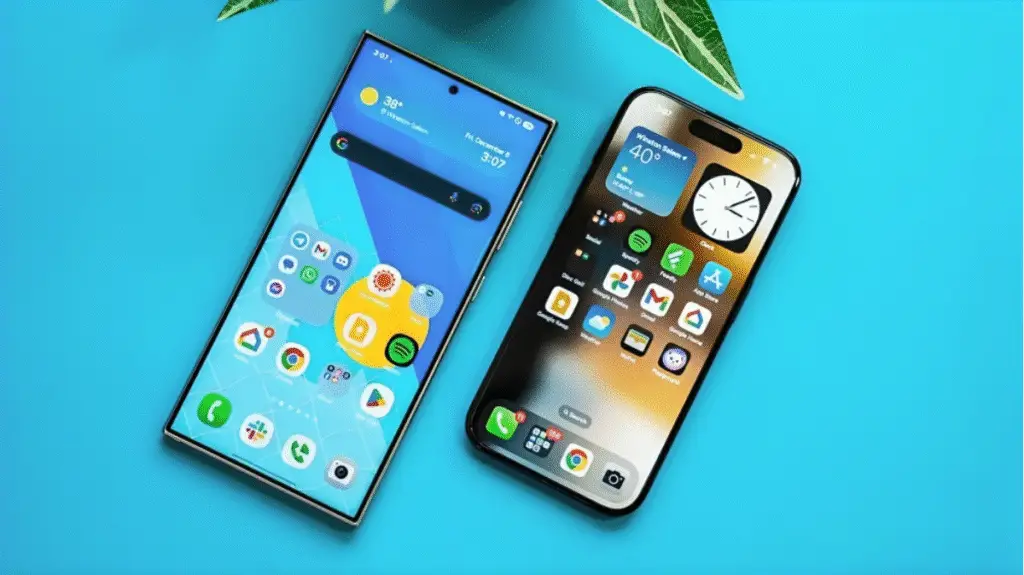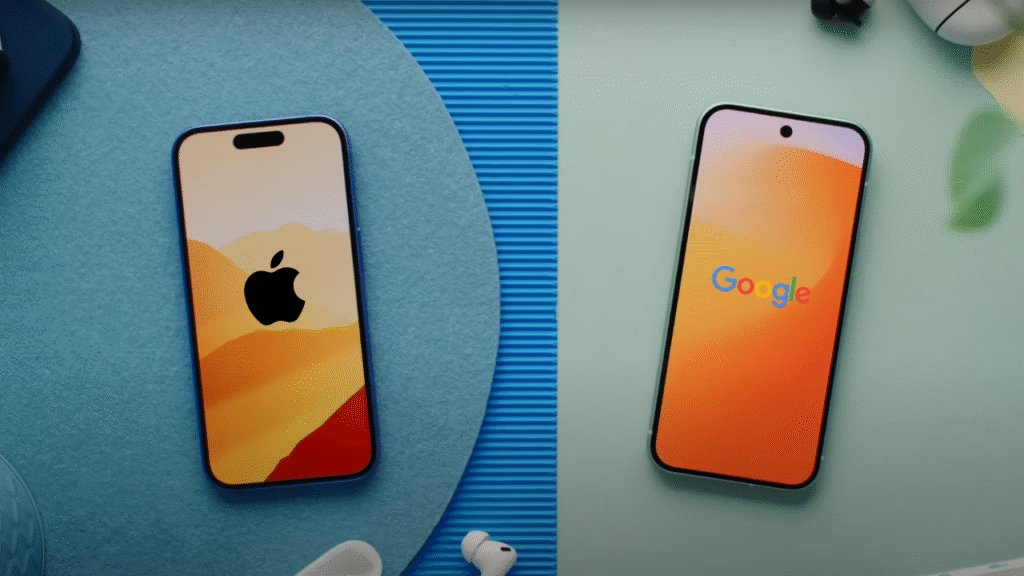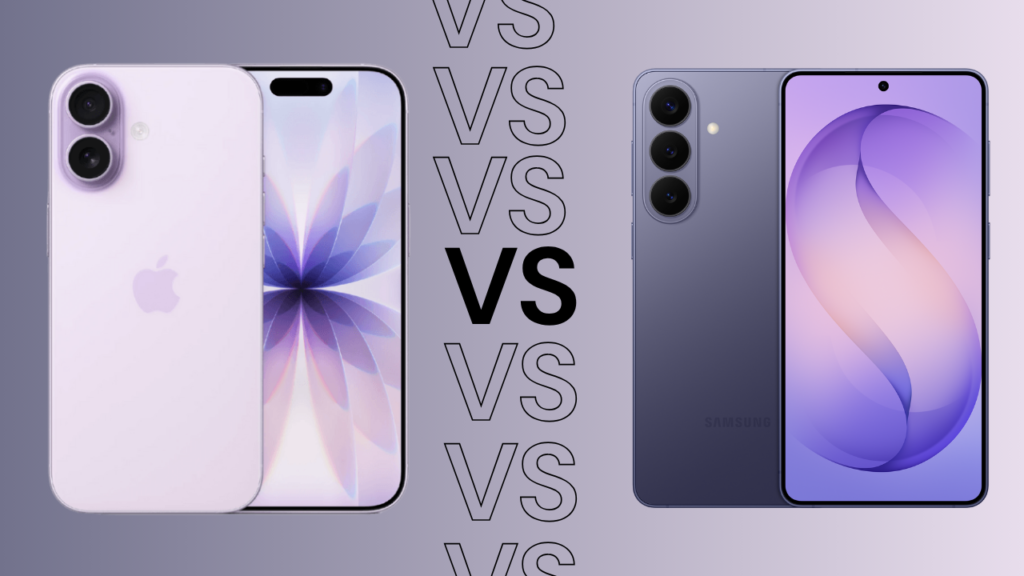
Most of the attention in the smartphone world goes to the Ultras and the Maxes. And honestly, I get it. Those are the phones that push things forward, that give tech people something to talk about. But here’s the thing: most people aren’t buying those. Most people are looking at the Galaxy S26 and the iPhone 17, trying to figure out which one makes more sense for their actual life.
I own both of these. Nobody sent them to me. So I have absolutely no reason to learn one way or the other. This is just what I’ve noticed after using them both day in and day out. Let’s get into it.
Design and How They Feel in Your Hand
This one really comes down to personal taste, and I mean that genuinely not in a cop-out way.
The iPhone 17 is 8mm thick, 177 grams, and it just feels really refined. Ceramic Shield 2, aluminum frame, glass back, and now finally 120Hz. The rounded edges, the slim feel, the way it sits in your hand it just feels premium. A lot of people are saying this is the best value iPhone ever, and I think that’s a fair point. The reduced bezels, the 6.3-inch display, the whole thing just feels like it was thought through carefully.
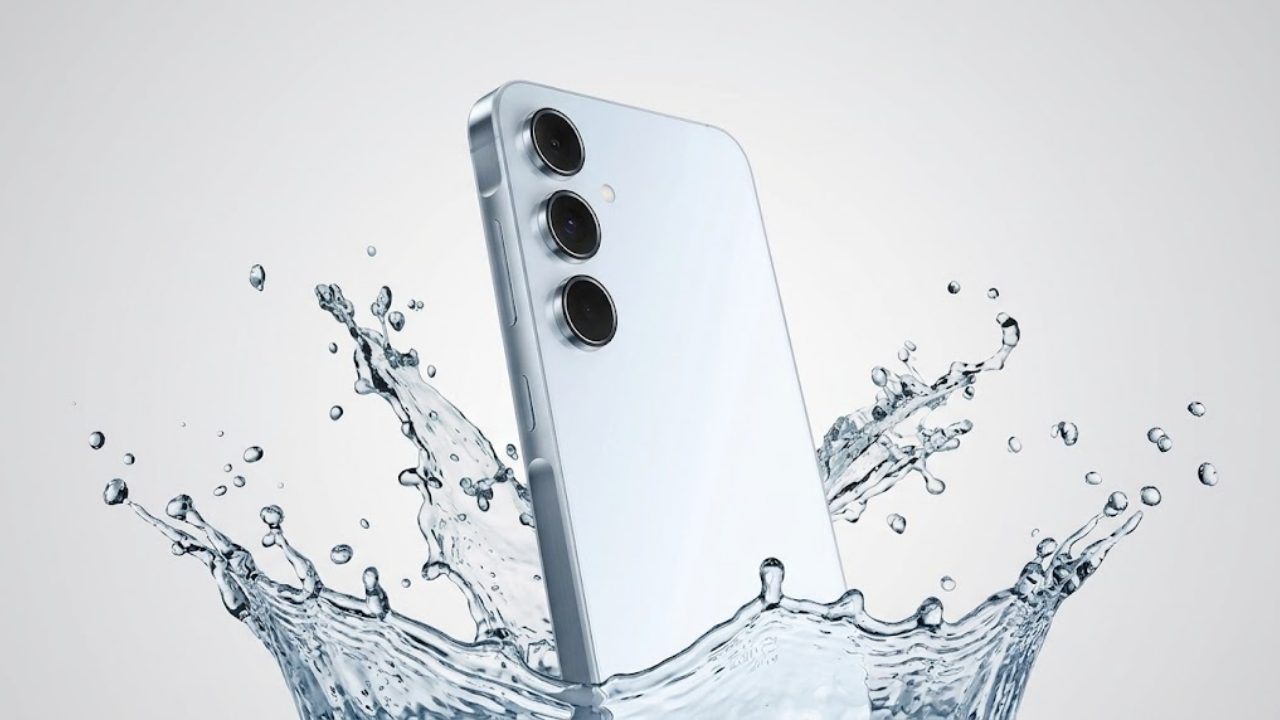
The Galaxy S26 goes a completely different direction. It’s actually thinner at 7.2mm, lighter, and has that boxy shape that looks almost like a miniature Ultra. And I think that’s actually a smart move from Samsung. A lot of people want that Ultra look without paying Ultra money. But you do have to be okay with the boxy corners and the slightly larger punch hole. If you’re used to the rounded feel of an iPhone or an older Galaxy, it might take some getting used to.
My honest suggestion is to hold both of them. Even if you think you already know which one you want. A case adds grip but it doesn’t change the shape of the phone. The shape matters more than people admit.
Display Close, But Not the Same
Both phones are 6.3 inches. Same aspect ratio. And yet they feel a little different.
The Galaxy runs at 411 pixels per inch. The iPhone hits 460. In real life, sitting at a normal distance, you’re almost certainly not going to notice this. But if you’re someone who reads a lot on your phone, zooms in on text, or just cares about sharp images, the iPhone has the edge here.
The iPhone 17 also hits 30,000 nits of peak brightness. The Galaxy tops out at 2,600. Now in practice, the Galaxy actually feels quite bright because Samsung lets you crank the brightness up without waiting for sunlight to trigger it automatically. The iPhone’s max brightness kicks in under direct sunlight. So it depends on where you use your phone more.
One thing Samsung needs to work on is PWM. If you’re sensitive to that kind of thing, the iPhone just handles it better. Apple added display pulse smoothing in accessibility settings, and combined with the ProMotion 120Hz that the base iPhone finally has this year, it’s genuinely more comfortable to look at for long sessions.
The Galaxy has Dynamic AMOLED and the iPhone has OLED. Both are excellent. Contrast is great on both. The main practical difference for most people is going to be the punch hole on the Galaxy versus Dynamic Island on the iPhone. If you use Live Activities, timers, music controls Dynamic Island is more functional. The Galaxy has Now Bar features that try to do something similar, but it’s not quite the same experience.
For display, I’d personally go for the iPhone 17. The color calibration feels more accurate to me, and the eye comfort features are just more complete.
Performance Galaxy Hits Different Here
The Galaxy S26 runs the Snapdragon 8 Elite Gen 5 for Galaxy. That’s essentially the same chip you get in the Ultra. And it shows. In benchmark tests, it beats the iPhone’s A19 chip on multi-core and matches it closely on single-core.
The iPhone 17 uses the A19 not the A19 Pro. And while the A19 is absolutely not slow, the Galaxy just has more RAM. More RAM means more apps stay open in the background, smoother multitasking, and better long-term performance as apps get heavier over time.
Day to day, apps feel like they launch a bit faster on the Galaxy. It just feels snappier. The iPhone feels smooth and polished, but the Galaxy feels quick. If speed is what you’re after, Samsung wins this round pretty clearly.
Software It Depends on How You Actually Use Your Phone
Here’s where a lot of comparisons go wrong: they say “it’s just preference” and leave it at that. But I think it’s more specific than that.
One UI 8.5 on the Galaxy feels like a computer. You’ve got split screen, a proper file system, DeX mode where you can plug into a monitor and run a full desktop-like experience. If you’re someone who uses your phone to get actual work done writing, editing, managing files, running multiple apps at once the Galaxy just does more.
The iPhone feels more like a polished mobile device. Apps are beautifully made. Everything works reliably. You never really question whether something is going to work. But when I have the iPhone, I find myself reaching for my Mac or my iPad more often. With the Galaxy, I don’t feel that pull as much.
If you’re someone who uses their phone mainly for messaging, social media, streaming, and photography the iPhone is probably the cleaner choice. If you want to do more with your phone than that, the Galaxy is where it’s at.
Cameras The Galaxy Leaves Something on the Table
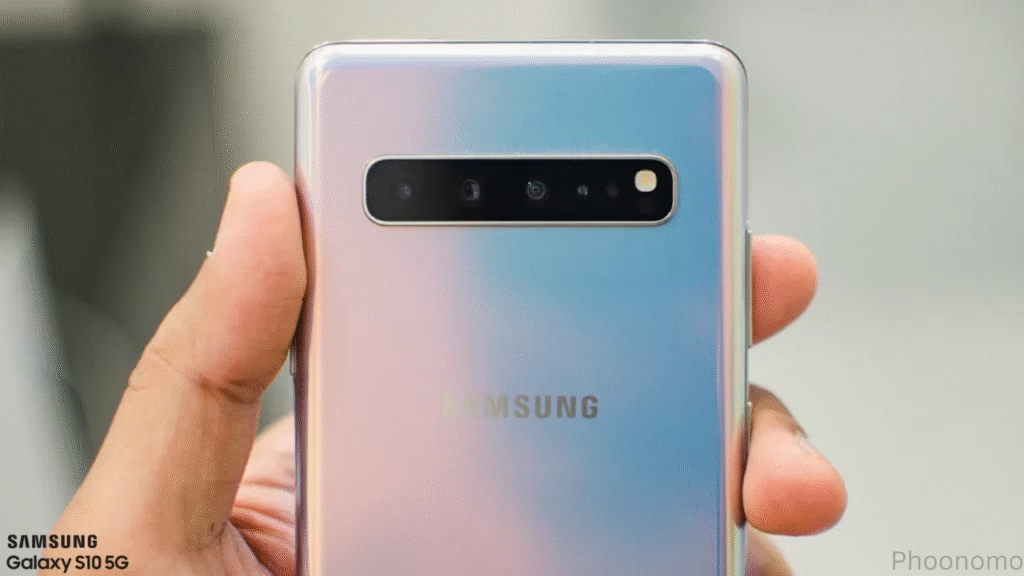
Okay, real talk about the Galaxy camera situation. The base S26 has a 50MP main sensor. That’s fine. The processing has improved, and there’s a genuinely great horizontal lock feature that stabilizes video even when you’re changing directions, really useful for anyone who shoots moving content. You also get 8K 30fps video, which is impressive at this price.
But when you’ve seen what the Ultra can do with 200MP, it’s hard not to feel a little shortchanged. No LUTs, no 200MP sensor. For nearly $800 to $900, it would be nice to have something a little closer to what the top model gets.
The iPhone 17 tells a different story. Apple basically put the same main sensor from the Pro in here. You’re missing the zoom camera, and you lose some of the more advanced Pro RAW controls, but the image quality on the main and ultrawide is right there with the more expensive models. That’s a really good deal.
For selfies and social media photos, the iPhone wins. The front camera is better, the processing looks more natural, and people who care about Instagram results tend to prefer it. For manual controls, pro video modes, and 8K recording, the Galaxy is your pick.
AI Features Galaxy Is Ahead, But Ask Yourself If You’ll Use It
Samsung has Galaxy AI, Gemini integration, Circle to Search, Now Nudge, a smarter Bixby the whole package. And it works well. If you’re someone who uses AI tools heavily, Samsung is the more capable phone right now.
Apple has Visual Intelligence and Apple Intelligence baked in, with ChatGPT integration. It’s decent, but it’s behind where Samsung is currently. That said, iOS 27 is coming, and Apple has clearly been building toward something bigger on the AI side. If you’re buying for the future, the iPhone might catch up quickly.
But here’s the honest truth: a lot of people aren’t really using the built-in AI features that much. If you’ve got Claude, ChatGPT, or Gemini as apps, you can use them on any phone. The built-in stuff matters, but maybe less than the marketing suggests.
Battery Life The iPhone Wins in the Real World
This one surprised me a little, but it’s true. The iPhone 17 just lasts longer in real-world use. Not dramatically longer, maybe an hour and a half more on a full day. But standby time is noticeably better, and from 100% down to about 90%, the Galaxy drains a bit quicker.
Both phones will get you through a full day. I want to be clear about that. The Galaxy is not a bad battery phone. But the iPhone edges it out consistently.
The one area where the Galaxy loses unexpectedly is wireless charging; it does 15W wirelessly, while the iPhone 17 does 25W. That’s not something you usually hear. Samsung typically leads on charging speeds, so this was a bit of a curveball.
Biometrics, Ecosystem, and Resale
Face ID on the iPhone is just more reliable in more situations. Even when your hands are dirty, greasy, or the screen is smudged, it works. The Galaxy’s ultrasonic fingerprint sensor is fast, sometimes very fast but on a greasy screen it can miss.
For the ecosystem, Apple still edges it out. The way an iPhone connects with a MacBook, iPad, Apple Watch, and AirPods is almost hard to explain until you experience it. It feels like one product spread across multiple devices. Samsung’s ecosystem is genuinely impressive and has caught up a lot, but that Apple seamlessness is still hard to beat.
Resale value? iPhone. It holds its value better, sells faster, and if you like to upgrade regularly, that matters.
So Which One Should You Actually Get? (Galaxy S26 vs iPhone 17)
The iPhone 17 is the everyman phone. It doesn’t matter who you are: casual user, tech person, student, professional. You can pick up the iPhone 17 and be happy. Great camera, great battery, polished apps, smooth experience, and a platform that just works. The only real complaints are the limited zoom range and a design that hasn’t changed much from last year.
The Galaxy S26 is the power user’s base phone. If you want to do more than just use apps, if you want to multitask, run DeX, shoot 8K video, use AI tools heavily, and want a phone that feels more like a pocket computer, the Galaxy wins. It’s got more RAM, a faster chip for heavy use, and more flexibility overall.
If you’re going to keep your phone for a few years and want to get everything out of it Galaxy.
If you want the smoothest, most reliable, most complete experience for everyday life iPhone 17.
Both are genuinely excellent phones. Go hold them both before you decide.
Discover Also Samsung Galaxy S26 vs Galaxy S25 FE Same Brand, Very Different Phones, One Clear Winner

M Adnan Akram is the founder and lead writer at Phoonomo, covering mobile technology with a primary focus on Samsung and the broader smartphone industry, alongside emerging developments in AI. He follows product launches, spec leaks, and industry trends closely to keep readers informed with timely updates.
Discover more from Phoonomo
Subscribe to get the latest posts sent to your email.