When the oneplus 15 vs iphone 17 pro max debate started heating up online, most people expected Apple to easily stay ahead. But things changed fast when the new Snapdragon 8 Gen 5 came in, especially after early tests claimed the chip is now faster than Apple’s A19 Pro. That sounded unbelievable at first, so this comparison looks at how both phones actually perform in daily use, gaming, heat management, and camera capability.
Below is a full breakdown based on extended hands-on testing, sticking close to what real reviewers experienced rather than spec sheets and marketing numbers.
Design and Build Quality
The first thing that stands out is the design difference. The iPhone keeps its familiar premium look with a clean two-tone style and a polished glass back. Apple returned to aluminum this year, but it picks up marks faster than expected. A few small scuffs already appeared after accidental drops.
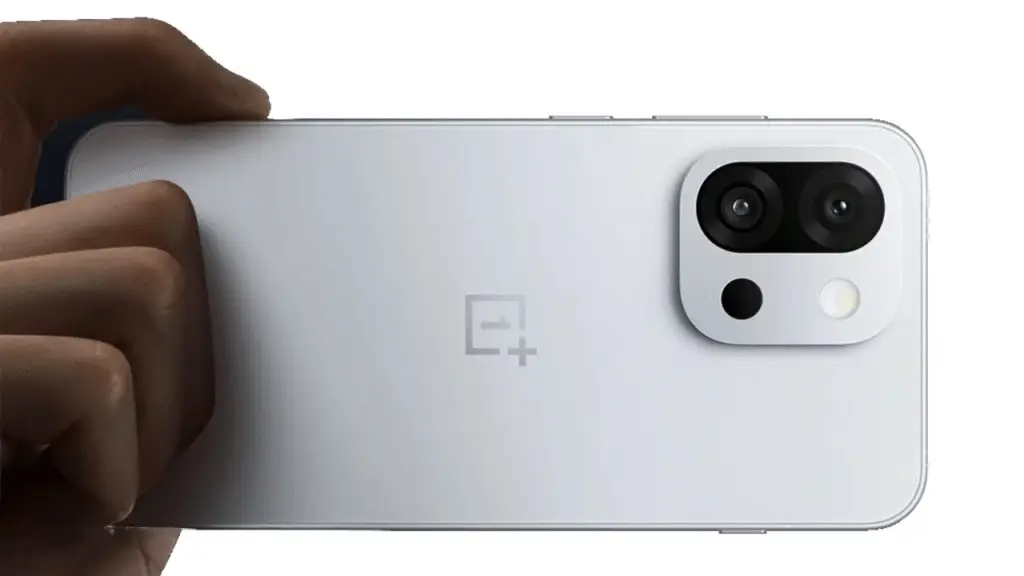
On the other side, the OnePlus model brings a new ceramic-coated back that reviewers say doesn’t scratch easily. It has a unique camera bump that gives it a more standout look. The ceramic feel is solid, durable, and surprisingly grippy, making it more comfortable to hold.
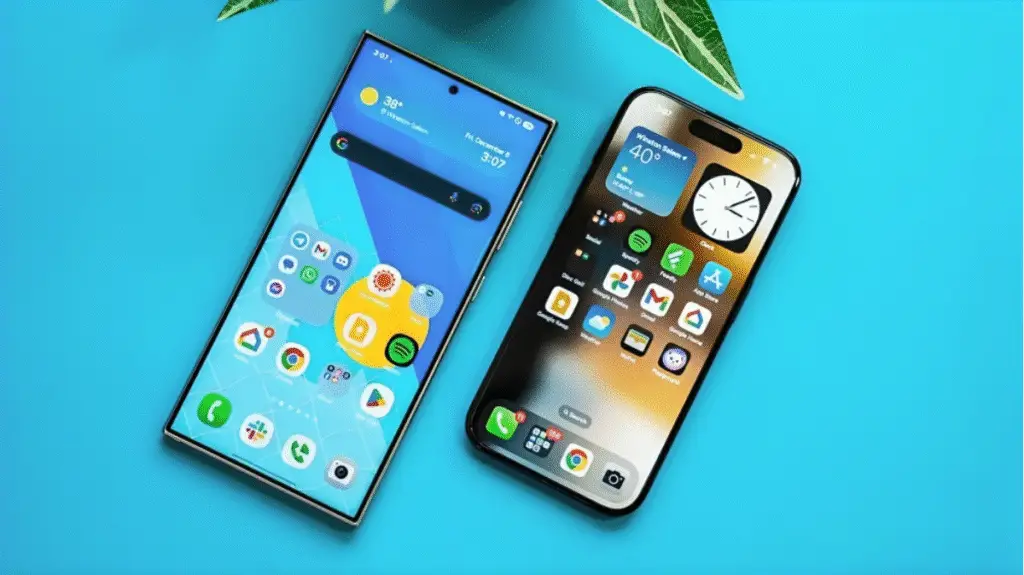
Looking at the front, the bezels on the OnePlus are slightly thinner, which is impressive considering Apple just reduced theirs as well. Even though the OnePlus has a 6.8-inch screen compared to the iPhone’s 6.9-inch display, the phone feels a bit more compact.
But the biggest shock is the price difference. OnePlus offers 16GB RAM and 512GB storage for around $1,000, while Apple charges $1,400 for the same storage but with only 12GB RAM. That alone gives the OnePlus a strong value advantage before even discussing performance.
Speaker Quality and Display Notes
Speaker tests showed that the OnePlus can get extremely loud. The iPhone, however, still carries the better overall sound quality with fuller bass and a more natural tone.
Display reflections tell another story. When both phones are side by side, the OnePlus screen reflects more light, while the iPhone shows deeper blacks. In brightness tests with auto brightness disabled, the iPhone appeared slightly brighter even though OnePlus claims a peak of 6,000 nits. These high-brightness claims didn’t show up clearly in real testing.
Still, both screens are sharp, colorful, and bright enough for outdoor use.
Smoothness and Refresh Rate
Both use 120Hz displays by default. The OnePlus animation speed feels faster, giving it a snappier feel overall. OnePlus also supports up to 165Hz in select mobile games, which is a major advantage for gamers.
OnePlus keeps 120fps active all the time, while Apple’s display adjusts between low and high refresh rates to preserve battery life. That difference makes OnePlus feel softer and smoother during everyday use.
Battery Life and Charging Speed
The OnePlus features a massive 7,000mAh split-cell battery, something far above typical flagship sizes. This setup helps preserve battery life and speeds up charging since heat spreads across two cells. Charging goes up to around 80W, taking only minutes to top up.
Apple improved its charging but only offers around 40W, which is far behind.
Battery endurance for OnePlus is expected to be excellent, especially with its hardware advantage.
CPU Performance: Snapdragon vs A19 Pro
Now for the most surprising part.
Geekbench 6 results showed the Snapdragon 8 Gen 5 nearly catches up to Apple’s single-core performance, with Apple only about 3.5% ahead. This has never happened before. Multi-core performance actually flips the score, with OnePlus going 11% higher.
It’s important to note that the Snapdragon uses more power to reach those numbers. But still, it’s the closest Android has ever come to Apple.
Graphics and Gaming Tests
Graphics testing starts with 3DMark Steel Nomad Light. Here, the OnePlus performed the test faster and delivered higher FPSabout 20% better than the iPhone.
However, when ray tracing came into play, the iPhone regained the lead with a 38% stronger result.
Classic Wild Life Extreme put OnePlus ahead again with a large margin, showing how strong Snapdragon’s regular GPU performance is.
But then came the hardcore stress tests.
The OnePlus overheated multiple times during 20-minute GPU testing. It stopped the test, closed apps, and disabled features like the flashlight and hotspot due to extreme temperature warnings. The iPhone finished the test with 73% stability and much cooler temperatures.
Thermal camera readings showed the iPhone at around 39°C while the OnePlus hit 52–53°C, far too high for comfort.
Real-World Gaming
Call of Duty Mobile told a different story. Both phones supported ultra graphics and high frame rates. The iPhone comfortably held 120fps without any heating issues, staying around 29–30°C.
The OnePlus hit an incredible 165fps almost nonstop. Gameplay felt unbelievably smoothsomething iPhone cannot match right now. Heating did occur but remained manageable in this specific game, likely because COD Mobile is not heavily demanding compared to synthetic benchmarks.
For gamers, the OnePlus offers a level of smoothness mobile players rarely experience.
Camera Breakdown
Both phones have similar main camera setups. OnePlus uses triple 50MP sensors including a 3.5x optical zoom. Apple uses triple 48MP sensors with a 4x optical zoom.
Selfies show the OnePlus has sharper detail thanks to its 32MP front camera. Close-ups reveal finer skin detail and texture.
Zoom comparisons showed the OnePlus doing surprisingly well at 3.5x and even at 10x, keeping images clear with controlled noise.
Ultrawide shots also look clean on both, with OnePlus sometimes showing slightly more fine texture. But in certain lighting conditions, Apple captured stronger detail due to better contrast handling.
Overall, both phones perform well, but the OnePlus holds its own far better than expected considering its lower price.
Final Thoughts: Which One Offers Better Value?
After all the testing, it’s clear that OnePlus created something impressive. It delivers outstanding performance, insane gaming smoothness, massive battery life, and strong camera results all while costing much less.
Apple still leads in stability, thermal performance, long-term reliability, and software optimization. The iPhone stays cool under pressure and provides consistent performance without crashes.
But in terms of raw value and power, OnePlus surprises everyone. It brings flagship specs with a price that challenges premium phones directly.
If performance per dollar is the only metric, OnePlus takes the win. If heat management, long-term efficiency, and camera consistency matter more, Apple remains ahead.
Either way, this generation marks the closest matchup Android has ever had against Apple.
Compare: OnePlus 15 vs Pixel 10 Pro XL
FAQs (OnePlus 15 vs iPhone 17 Pro Max)
Which phone is faster in real-world use?
Both are very fast, but in multi-core and many synthetic tests the OnePlus 15 (Snapdragon 8 Gen 5) pulls ahead. The iPhone 17 Pro Max still shines in single-core optimization and consistent performance under long workloads.
Does the OnePlus 15 overheat more than the iPhone?
Yes stress tests showed the OnePlus can run much hotter under synthetic GPU stress and may throttle or crash. In everyday gaming (e.g., COD Mobile) it ran at very high frame rates with manageable temps, but heavy sustained benchmarks revealed thermal limits.
Which has better battery life and charging?
The OnePlus 15 has a much larger battery and faster wired charging (and faster wireless on some models), so it offers better endurance and much quicker top-ups than the iPhone’s modest charging speeds.
Is the OnePlus 15 better for gaming?
For raw smoothness and frame rates, yes, the OnePlus supports up to 165Hz in supported games and delivered very high FPS in real tests. The iPhone is excellent and thermally stable but limited to ~120Hz in most cases.
Which phone has the better display?
Both have excellent OLED panels. The iPhone tends to show deeper blacks and a slightly higher measured brightness in tests, while the OnePlus offers thinner bezels and very fluid animations (with optional 165Hz in games).
How do the cameras compare?
Both produce strong photos. The OnePlus 15’s triple 50MP setup and high-res selfie give very sharp results; iPhone’s tuned processing and 4x optical zoom produce slightly better contrast and consistency in some scenes. Overall, both are competitive.
What about speakers and audio?
The OnePlus can get louder, but the iPhone retains better overall tonal quality and fuller bass so the iPhone sounds more natural, the OnePlus is punchy and loud.
Which offers better value?
The OnePlus 15 undercuts the iPhone on price while offering more RAM and similar/better raw specs so it’s the better value for performance per dollar. If you prioritise longevity, resale, and consistent thermals, the iPhone may be worth the premium.
Discover more from Phoonomo
Subscribe to get the latest posts sent to your email.