Apple didn’t just refresh the MacBook lineup yesterday it redrew the pricing map of the laptop market.
With the all-new MacBook Neo starting at $599, the refreshed MacBook Air, and powerhouse MacBook Pro models, Apple is now playing in every major laptop price bracket from Chromebook territory to high-end creative workstations.
And yes, this one matters.
Macs Were Getting Too Expensive
Let’s be honest, Apple’s laptop lineup had a gap.
If you wanted a new Mac, you were looking at four figures. The MacBook Air was great, but at $1,000+, it wasn’t exactly impulse-buy territory for students or families. Meanwhile, Windows manufacturers were flooding the $500–$700 space with capable machines.
Chromebooks dominated schools. Budget Windows ultrabooks ruled entry-level retail shelves.
Apple? It simply wasn’t competing there.
Until now.
Enter the $599 MacBook Neo
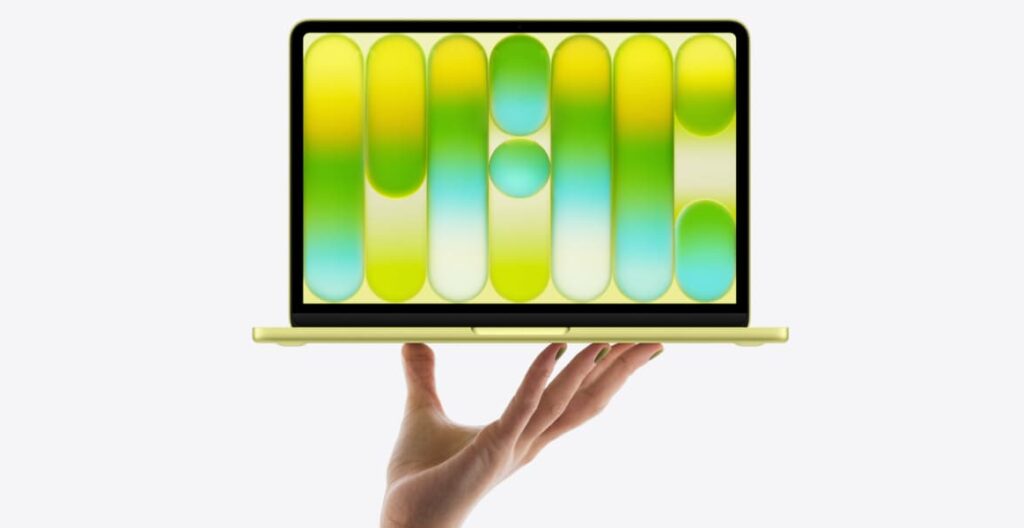
The headline act is the MacBook Neo, a brand-new line aimed squarely at students and first-time Mac buyers.
What you’re getting:
- 13-inch Liquid Retina display (2408×1506, 500 nits)
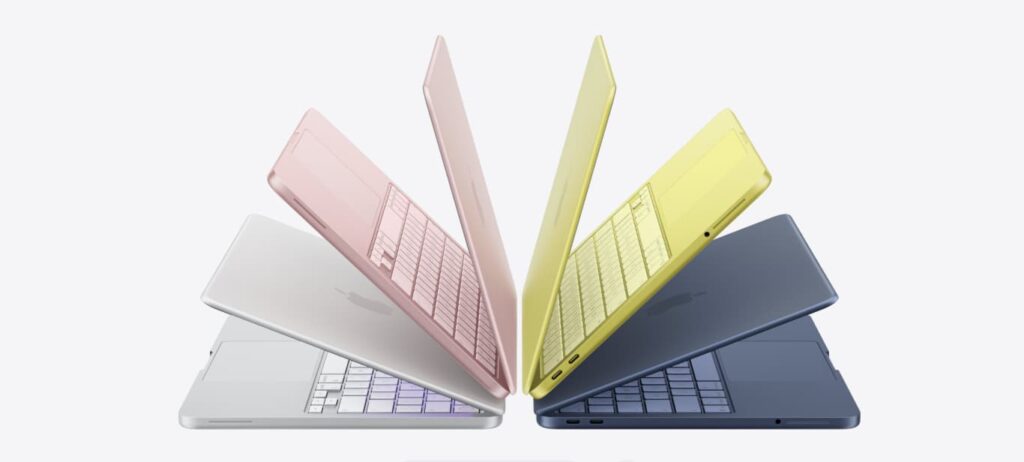
- Aluminum body in bold colors (blush, indigo, silver, citrus)
- 1080p camera + spatial audio speakers
- 8GB unified memory / 256GB storage
- Powered by the A18 Pro chip
- Starting price: $599 ($499 for education)
The use of the A18 Pro chip from Apple’s iPhone silicon family is the key here. Apple is leveraging its vertical integration: phone-class efficiency with laptop-level optimization.
That’s how you hit $599 without feeling “cheap.”
Why it matters
At $599, the MacBook Neo competes directly with premium Chromebooks and mid-range Windows ultrabooks from brands like:
- Dell
- HP
- Lenovo
But unlike most of those machines, this is still macOS with Apple ecosystem perks, tight iPhone integration, and Apple Intelligence baked in.
That’s disruptive.
The Middle Tier: MacBook Air Gets M5
While the Neo grabs headlines, the updated MacBook Air quietly levels up.
The new M5-powered Air now starts with:
- 512GB base storage (finally)
- Wi-Fi 7
- Bluetooth 6
- Improved AI acceleration
- Same thin-and-light design
Pricing begins at $1,099 for the 13-inch.
The real upgrade isn’t the design ‘s longevity. Doubling the base storage removes one of the biggest complaints about previous Air models.
And for everyday users, this might actually be the sweet spot in the lineup.
The Power Play: M5 Pro and M5 Max
At the top, Apple refreshed the MacBook Pro lineup with M5 Pro and M5 Max chips.
Highlights include:
- Up to 40-core GPU on M5 Max
- Base storage bumped to 1TB
- Faster SSD speeds
- Same pro-grade displays and ports
For creators, developers, and video editors, this is incremental but meaningful. Especially with AI workloads becoming mainstream, GPU and Neural Engine improvements aren’t just marketing fluff anymore.
Why Apple Did This Now
Three reasons.
1. Market Pressure
The global PC market has slowed. Consumers are holding onto devices longer. Apple needed a new growth driver.
A $599 Mac dramatically widens the funnel.
2. Education & AI Momentum
AI-powered features are rolling out across macOS. To make those features mainstream, Apple needs more devices in more hands.
The Neo becomes an on-ramp to Apple Intelligence.
3. Ecosystem Lock-In
Once someone buys a Mac, they’re more likely to buy:
- iPhone
- AirPods
- iPad
- Apple services
The Neo isn’t just hardware, it’s ecosystem expansion.
The Competitive Angle
Let’s compare positioning:
| Segment | Apple | Windows/Chromebook Rivals |
| $500–$700 | MacBook Neo | Chromebook Plus, budget ultrabooks |
| $1,000–$1,300 | MacBook Air M5 | XPS 13, HP Spectre |
| $2,000+ | MacBook Pro M5 Max | High-end RTX creator laptops |
The biggest disruption is clearly at the bottom. Apple rarely undercuts competitors on price.
Now it has.
The Implications
If the MacBook Neo performs well:
- Schools may reconsider Chromebooks.
- First-time laptop buyers may default to Mac.
- Developers may target macOS more aggressively.
- Windows OEMs may feel pressure to improve quality at lower prices.
The risk? Cannibalization of the MacBook Air. But Apple likely calculated that expanding the user base outweighs internal overlap.
Insider Insight: This Feels Strategic, Not Experimental
This doesn’t look like a one-off experiment.
The color choices, branding, and education pricing signal long-term commitment. Apple wants a generation of users to start on Mac not Windows.
And the use of iPhone silicon suggests Apple can scale this model profitably.
That’s the real story.
The Takeaway
Apple’s announcement isn’t just about faster chips.
It’s about access.
With the MacBook Neo, Apple has finally stepped into true mass-market pricing without abandoning its premium image.
If you’ve been waiting for a “reasonably priced” Mac, this is it.
If you’re shopping for a laptop this year, the buying decision just got more interesting.
And if you’re a competitor?
You probably didn’t want Apple anywhere near $599.
Discover more from Phoonomo
Subscribe to get the latest posts sent to your email.