You know how in the smartphone world everyone talks about going slimmer every year? Thin is stylish, thin is premium at least that’s the idea brands keep selling us. But the moment a phone becomes too thin, the real question pops up: did the company shave off the right things, or the things you actually needed? That was the exact thought running through my mind when I started testing the iPhone Air and Samsung Galaxy S25 Edge.
Both look futuristic, both feel like engineering showcases, and both cost a good chunk of money. But which one really makes sense in the real world? Let’s break it down iPhone Air vs Galaxy S25 Edge slowly, section by section, the same way the original reviewer did, and see what these ultra-slim phones actually deliver.
Design
Let’s start with the feature both phones use as their headline pitch slimness. On paper, the difference is tiny: the iPhone Air measures 5.6 mm, while the Galaxy S25 Edge sits at 5.8 mm. It shouldn’t matter much, but in the hand, the Air feels smoother and a bit more comfortable. That’s mostly because of its curved corners compared to the slightly sharper ones on Samsung’s model.
Samsung went for a boxier look, almost like a slimmed-down S25 Ultra. It feels more industrial, more “engineer-first.” The iPhone’s design feels more friendly. Even though the iPhone is a bit heavier, the balance on both phones is so good that you don’t really feel any difference.
Durability is usually a big worry with thin phones, but these two feel like tanks. Both use titanium frames and hold an IP68 rating. Apple gives you Ceramic Shield protection front and back, while Samsung uses its latest Corning formulas as well. Neither phone feels fragile in the slightest.
On the back, Apple takes a very unusual route: a single camera on a plateau-style module that holds not just the lens but also the SoC, the speaker module, and a bunch of internal pieces. You can even rest the phone on your finger using the ridge. Samsung sticks to its familiar triple-lens vertical layout.
One slightly strange thing is the off-center USB-C ports on both phones. It’s not noticeable until you stare at it, but it’s there. Samsung does offer faster Type-C speeds, though, if that matters to you.
| Feature | iPhone Air | Galaxy S25 Edge |
|---|---|---|
| Thickness | 5.6 mm | 5.8 mm |
| Weight | Slightly heavier | Slightly lighter |
| Build Material | Titanium frame, Ceramic Shield | Titanium frame, Victus 2 glass |
| Ergonomics | Smooth rounded corners, comfortable grip | Boxy, sharper edges, slightly less comfortable |
| Durability | IP68, ceramic shield front and back | IP68, Conclass Ceramic 2 front, Victus 2 back |
| Camera Layout | Single rear camera in pixel visor module | Vertical dual camera setup |
| Port Type | Type-C, centered | Type-C, not centered |
Display
Both phones offer great displays, but the experience isn’t identical. Samsung’s screen is a little larger at 6.7 inches, using a bright Dynamic AMOLED 2X panel with 120Hz refresh rate. The brightness peaks at 2,600 nits.
The iPhone’s 6.5-inch panel hits 3,000 nits and comes with an anti-reflective coating something Samsung didn’t include on the S25 Edge (even though it exists on the Ultra model). Outdoors, the Air looks slightly better, mainly because the reflections are kept under control.
Color accuracy leans in Apple’s favor as well. The Air supports Dolby Vision, and that makes a big difference in darker scenes. Shadow detail stands out more clearly, and Netflix HDR looks cleaner. Samsung uses HDR10+, which is still good, but side-by-side, Dolby Vision takes the lead.
The one area where Samsung wins is audio: it has stereo speakers. The iPhone Air only has one.
| Feature | iPhone Air | Galaxy S25 Edge |
|---|---|---|
| Screen Size | 6.5 inches | 6.7 inches |
| Display Type | OLED, 10-bit color, Dolby Vision | Dynamic AMOLED 2X, 8-bit, HDR10+ |
| Refresh Rate | 120 Hz (Promotion) | 120 Hz |
| Peak Brightness | ~3,000 nits | ~2,600 nits |
| Anti-Reflective Coating | Yes | No |
| Color Accuracy | High, wider gamut | Good, close to real colors |
| Multimedia Advantage | Dolby Vision support | Slightly higher resolution, curved edges |
Performance
Things get interesting here. Apple uses the A19 Pro, but with one GPU core removed. Geekbench single-core goes to Apple, but multi-core performance on the Snapdragon 8 Elite inside Samsung pulls ahead.
In gaming, Samsung actually performs smoother. Genshin Impact ran better on the S25 Edge, whereas the iPhone Air became uncomfortably hot. Apple doesn’t throttle performance much, and that’s probably why the heating issue appears. Samsung, on the other hand, throttles earlier, which keeps temperatures lower.
Both phones are fast, but Samsung feels more controlled in everyday use. The iPhone feels powerful but messy under thermal pressure.
| Feature | iPhone Air | Galaxy S25 Edge |
|---|---|---|
| Chipset | A19 Pro | Snapdragon 8 Elite |
| GPU | 1 less core than A19 Pro Max | Higher clocked cores |
| RAM | Not specified | 12 GB |
| Gaming | Smooth, can get hot | Stable performance, slightly cooler |
| Real-World Performance | Efficient, optimized | Faster in multi-core tasks, slightly throttles |
| Benchmarks | Single-core higher | Multi-core higher |
| Heat Management | Can get hot under load | Better cooling with vapor chamber |
Battery
Samsung packs a 3,900 mAh battery and offers around 4.5 to 5 hours of screen-on time depending on usage. Not amazing, not terrible.
The iPhone Air surprised everyone. With only a 3,000 mAh battery, it managed around 5.5 hours of screen-on time. Apple’s new chips, the C1X modem and the N1 connectivity chip seem to help efficiency a lot.
Both phones charge at around 40–45W, hitting 50% in roughly 20 minutes. Wireless charging is supported on both, and the iPhone includes MagSafe compatibility, which Samsung still hasn’t adopted.
Camera
The most visible difference? iPhone Air has just one rear camera. Samsung has a 200MP main camera plus an ultrawide.
But don’t underestimate Apple’s 48MP Fusion camera. In daylight, the Air often captures more texture and more detail because it outputs 24MP images by default. Colors are fairly close on both phones, though Samsung sometimes boosts oranges.
In HDR scenes, neither phone is perfect:
- iPhone blows highlights at times
- Samsung crushes shadows
In low light, the Air pulls ahead because its large sensor gathers more detail. Samsung performs well, but at 100% crop, Apple holds the edge.
However, Samsung wins versatility when you get an ultrawide, and the iPhone simply cannot match that since it has only one lens.
In video quality, the Air is clearly better. Dolby Vision HDR looks excellent, stabilization is strong, and Samsung’s low-light video comes with more noise.
Selfies are interesting on the Air. The wide mode gives you an 18MP output, but the regular 4:3 mode drops to 7MP. The Galaxy doesn’t have these quirks, but Apple’s quality looks cleaner overall.
| Feature | iPhone Air | Galaxy S25 Edge |
|---|---|---|
| Main Camera | 48 MP fusion | 200 MP f/1.7 |
| Ultra Wide | Not available | 12 MP, 13 mm equivalent |
| Selfie Camera | 18 MP | 12 MP |
| Low-Light Performance | Better, pulls more light | Slightly oversaturated, technical issues like chromatic aberration |
| Video Recording | Dolby Vision HDR, stabilized | 4K 30fps, natural colors but more noise in low light |
| Zoom | Digital zoom up to 2x usable | Ultra-wide versatility, better for landscape shots |
| HDR Handling | Balanced, less highlight clipping | Shadows can be crushed, highlights preserved |
Software
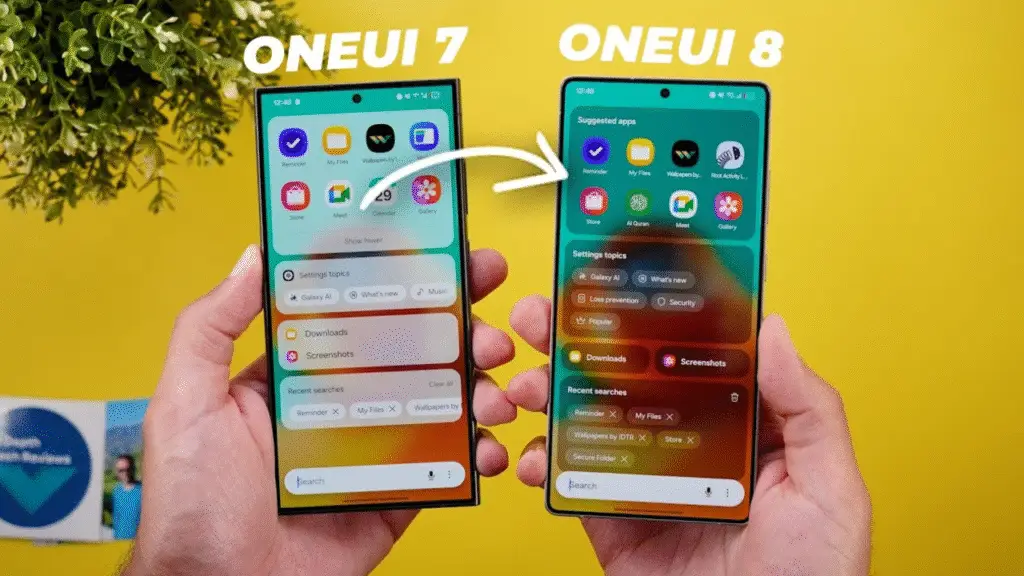
This part is really subjective. The Galaxy S25 Edge launched with One UI 7 and will soon get One UI 8. Samsung promises seven years of updates. Apple doesn’t say anything officially, but you can expect six to seven years as well.
One UI feels more customizable, more open, and actually smoother in animation control. iOS 26 is stable and polished, but obviously more restricted.
If AI features matter to you, Samsung offers more right now. Galaxy AI feels far more complete than Apple’s offerings at the moment.
Conclusion
So after spending time with both phones, here’s where things land.
The Galaxy S25 Edge may not be as slim as the Air, but it avoids making major compromises. You get:
- A larger battery
- A full stereo speaker setup
- Faster USB-C speeds
- An ultrawide camera for versatility
The iPhone Air takes a different approach. It focuses on feel, comfort, battery efficiency, and video quality. The device is impressively optimized, and that makes it attractive despite its limitations. The only big issue is the heat Apple needs to push an update to manage thermals better.
If you prefer a more balanced phone with fewer trade-offs, Samsung’s S25 Edge makes more sense. If you prefer a sleek, comfortable device with surprisingly strong performance in certain areas, the Air is genuinely impressive.
As for me, I wouldn’t pick either. I’m not a big fan of ultra-slim phones in general. But if you had to choose between the two, your pick will depend on which compromises you’re willing to live with.
Read Also Galaxy S26 Ultra vs iPhone 18 Pro Max: The AI War for 2026
FAQs (iPhone Air vs Galaxy S25 Edge)
What’s the main difference between the iPhone Air and the Galaxy S25 Edge?
The biggest difference comes down to the software experience and design approach. The iPhone Air focuses on a clean iOS feel, while the S25 Edge offers Samsung’s curved display and more customization with One UI.
Which phone has the better camera in real-world use?
Both are strong, but the S25 Edge leans toward sharper zoom shots, while the iPhone Air delivers more balanced colors and consistent video performance.
Is battery life better on the iPhone Air or the S25 Edge?
The iPhone Air usually lasts longer during typical everyday use, but the S25 Edge performs better when streaming or gaming for longer hours.
Which one is better for gaming?
Samsung’s S25 Edge pulls ahead slightly thanks to its cooling system and steady performance during long sessions.
Does the iPhone Air support fast charging?
Yes, but not as fast as the S25 Edge. Samsung’s phone offers quicker wired and wireless charging.
Which display looks better?
The S25 Edge has the more eye-catching screen with its curved edges and higher brightness. The iPhone Air screen looks clean and accurate but not as dramatic.
Who should buy the iPhone Air and who should pick the S25 Edge?
If you want simplicity, reliable performance, and long-term software support, the iPhone Air is a safer choice. If you prefer a more modern look, brighter display
Discover more from Phoonomo
Subscribe to get the latest posts sent to your email.