Well, everyone, it’s time to take a close look at the iPhone 16 Pro and see how it compares to the iPhone 14 Pro. Both are premium devices, but the newer one clearly brings some upgrades. Still, the 14 Pro remains a great option, especially for the price you can find it for these days. If you don’t care about a few new features or design tweaks, the 14 Pro still offers excellent performance and quality. But let’s break things down and see where the real differences lie between the two models.
Design
| Feature | iPhone 16 Pro | iPhone 14 Pro | Verdict |
|---|---|---|---|
| Material | Titanium frame (lighter, stronger) | Stainless steel frame | iPhone 16 Pro feels more premium and durable |
| Bezels | Thinner, more immersive display | Slightly thicker | iPhone 16 Pro wins with modern aesthetics |
| Buttons | New Capture button added | No Capture button | 16 Pro introduces fresh functionality |
| Size & Weight | Slightly larger but lighter | Compact yet heavier | 16 Pro is easier to handle despite size |
| Overall | Sleek, refined, and practical | Classic but aging design | Winner: iPhone 16 Pro |
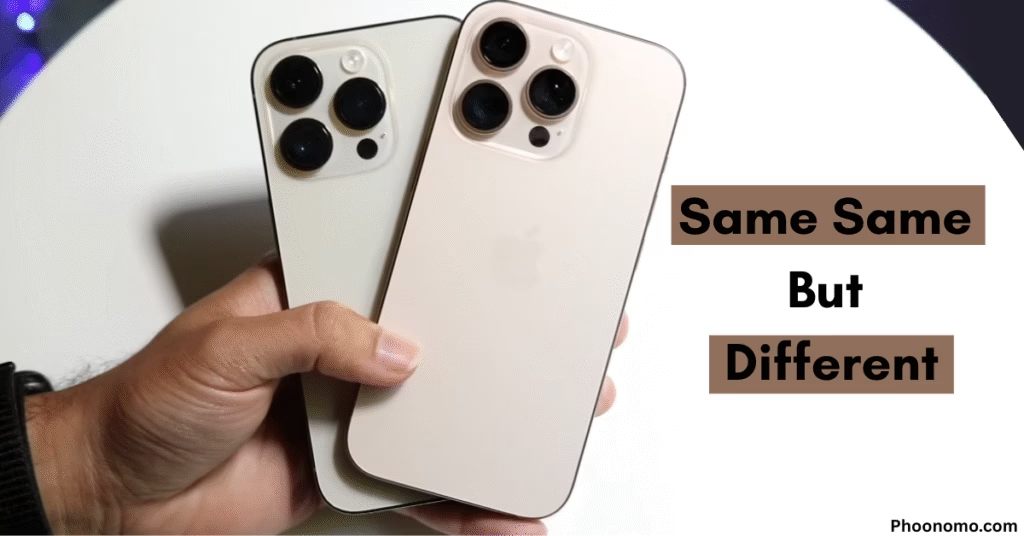
Starting with the design, the iPhone 16 Pro takes a familiar shape but refines it. It looks a bit sleeker, with noticeably thinner bezels. The 14 Pro, when it launched, felt almost bezelless, but when you compare the two side by side, the newer model definitely looks more modern. The 16 Pro’s sides have a different texture tooit’s less glossy, giving it a cleaner, more matte finish that doesn’t attract as many fingerprints. The action button replaces the traditional mute switch, and you now get a dedicated camera button, which feels surprisingly useful. Both phones still have that solid stainless steel frame feel, but the small design tweaks make the 16 Pro a bit more practical and premium in daily use. On the back, not much has changed with the triple camera setup, MagSafe, and similar finishes but overall, the 16 Pro feels slightly more refined and ready for the next few years.
Display
| Feature | iPhone 16 Pro | iPhone 14 Pro | Verdict |
|---|---|---|---|
| Type | Super Retina XDR OLED | Super Retina XDR OLED | Nearly identical panel tech |
| Brightness | Higher peak brightness (2000 nits) | 1600 nits | 16 Pro delivers better visibility outdoors |
| Size | 6.3 inches | 6.1 inches | Slightly larger canvas on 16 Pro |
| Refresh Rate | 120Hz ProMotion | 120Hz ProMotion | No major difference |
| Overall | Sharper, brighter, and smoother | Still excellent but dimmer | Winner: iPhone 16 Pro (slightly) |
Moving to the display, both phones deliver Apple’s best screen technology, but there are subtle differences. The iPhone 14 Pro comes with a 6.1-inch Super Retina XDR OLED display, which already looks beautiful, sharp, bright, and smooth with ProMotion 120Hz refresh rate. The iPhone 16 Pro increases that slightly to 6.3 inches, and because of the slimmer bezels, it doesn’t feel any larger in the hand. The always-on display remains, but the brightness and color accuracy have improved just enough to notice in outdoor use. Watching videos and playing games feels a bit more immersive thanks to that extra screen real estate and better contrast control. It’s not a revolutionary change, but the 16 Pro simply feels like the more polished version of an already excellent display experience.
Performance
| Feature | iPhone 16 Pro | iPhone 14 Pro | Verdict |
|---|---|---|---|
| Chipset | A18 Pro (3nm) | A16 Bionic (4nm) | 16 Pro runs faster and cooler |
| RAM | 8GB | 6GB | More headroom for multitasking |
| AI Features | Supports Apple Intelligence | Not supported | 16 Pro leads in smart processing |
| Storage | Up to 1TB | Up to 1TB | Equal storage options |
| Overall | Next-gen performance and AI boost | Still powerful, but aging | Winner: iPhone 16 Pro |
Now, let’s talk about performance. The iPhone 14 Pro runs on the A16 Bionic chip with 6GB of RAM, which is still a beast even in 2025. But the iPhone 16 Pro steps up to the A18 Pro chip with 8GB of RAM. This means faster app loading, better multitasking, and smoother performance in heavy games and creative apps. The A18 Pro isn’t just about speedit also brings improved efficiency and on-device AI processing for Apple Intelligence features. That’s something the 14 Pro simply doesn’t have. So, if you’re into features like smarter Siri responses, text summarization, or context-aware assistance, the 16 Pro is miles ahead. In daily use, though, both are extremely fast and responsive, and you won’t feel a massive difference in simple tasks like browsing or messaging. But if you plan to keep your phone for several years, the 16 Pro is definitely the more future-ready option.
Cameras
| Feature | iPhone 16 Pro | iPhone 14 Pro | Verdict |
|---|---|---|---|
| Main Sensor | 48MP with larger sensor | 48MP main | 16 Pro captures more detail in low light |
| Ultra-Wide | Improved clarity and low-light | Standard ultra-wide | Sharper and more dynamic on 16 Pro |
| Telephoto | 5x optical zoom (Pro Max level) | 3x optical zoom | 16 Pro expands reach |
| Video | 4K Dolby Vision, spatial video | 4K Dolby Vision | 16 Pro adds spatial video support |
| Overall | Big leap in versatility | Reliable but older optics | Winner: iPhone 16 Pro |
The camera setup is where many will expect big changes, and Apple does deliver some. Both phones still use a triple camera system, but the 16 Pro refines the formula. You get better low-light performance, more natural color balance, and an improved telephoto lens that goes up to 25x zoom compared to 15x on the 14 Pro. The new camera button makes it quicker to open the camera and even lets you adjust zoom levels while shooting. You also get 4K 120fps video recording on the 16 Pro, which makes it great for content creators. The 14 Pro still takes stunning photosit was one of the best in its time, but the 16 Pro’s new sensor processing and enhanced stabilization make it clearly more capable, especially for zoom and video. Both still offer cinematic mode, portrait, and macro options, so you’re not missing much if you stick with the 14 Pro. However, the 16 Pro’s results are just more consistent and sharp in difficult lighting.
Battery and Charging
Battery life has always been one of Apple’s strengths, and the iPhone 16 Pro continues that trend. Thanks to the more efficient A18 chip and slightly larger battery, you get around one to two hours of extra screen time compared to the 14 Pro. It’s not a huge leap, but for power users, it’s noticeable. Both phones support MagSafe and fast charging, and the newer one finally embraces USB-C instead of the Lightning port. This makes charging faster and more universal, which is a big practical improvement. In everyday use, the 16 Pro tends to run cooler and hold its charge a bit longer during gaming or video recording. So while the 14 Pro is still reliable for a full day, the 16 Pro comfortably pushes into the next morning without stress.
Software Experience
On the software side, the 14 Pro will still get updates for several more years, but the 16 Pro naturally has a longer future. The 16 Pro ships with iOS 18 and includes Apple Intelligence integration. That means smarter tools, improved dictation, and on-device privacy for AI features. The 14 Pro, being two years older, misses out on most of these. Still, it will continue getting performance and security updates for at least three to four more years, so you’re safe either way. But if you’re planning to use your phone for half a decade, the newer one gives you more long-term value.
Verdict
| Category | Winner | Reason |
|---|---|---|
| Design & Build | iPhone 16 Pro | Lighter titanium body and new Capture button |
| Display | iPhone 16 Pro | Brighter and slightly larger display |
| Performance | iPhone 16 Pro | A18 chip and AI upgrades lead the way |
| Camera | iPhone 16 Pro | Better zoom and spatial video support |
| Battery Life | iPhone 16 Pro | Lasts longer and runs more efficiently |
| Features | iPhone 16 Pro | Exclusive Apple Intelligence integration |
| Value | iPhone 14 Pro | Still excellent performance for less money |
| Overall Winner | iPhone 16 Pro (by a clear margin) | A refined, future-ready flagship with real improvements |
When comparing both side by side in real use, the iPhone 16 Pro feels like a smoother, slightly more advanced experience, but not a massive leap. The design feels cleaner, performance is faster, and the camera is more capable. However, the 14 Pro still feels incredibly premium, performs brilliantly, and costs significantly less now. For someone on a tighter budget, it’s hard to justify spending hundreds more unless you really want the new camera button, Apple Intelligence, or USB-C.
In the end, if you’re deciding between the two, it comes down to what you value most. The iPhone 16 Pro is the clear winner if you want the latest features, best performance, and longer support. But if you just want a reliable flagship that still looks and performs like new, the 14 Pro remains a great deal. The improvements on the 16 Pro are smart and refined, not revolutionary. So while it’s the better phone overall, the 14 Pro still holds up impressively well, even two years later.
Overall, the iPhone 16 Pro vs 14 Pro comparison shows Apple’s steady and careful evolution, nothing dramatic, but enough to keep things exciting for those who want the best iPhone experience today.
See Also iPhone 13 Pro Max vs iPhone 15 Pro Max: A Detailed Comparison
FAQs
Is the iPhone 16 Pro worth upgrading from the iPhone 14 Pro?
Yes, the iPhone 16 Pro offers a brighter display, better camera, and improved performance with Apple’s latest A18 Pro chip.
What are the main differences between iPhone 16 Pro and 14 Pro?
The iPhone 16 Pro features a larger display, new camera system, better cooling, and longer battery life.
Has Apple changed the design of the iPhone 16 Pro?
Slightly the iPhone 16 Pro has slimmer bezels, a new Capture button, and a more refined titanium frame.
Which phone has better battery life?
The iPhone 16 Pro lasts longer thanks to improved efficiency and a bigger battery compared to the iPhone 14 Pro.
Should I wait for the iPhone 17 or buy the iPhone 16 Pro now?
If you’re upgrading from the 14 Pro or older, the iPhone 16 Pro is a solid choice with meaningful hardware and camera updates.
Discover more from Phoonomo
Subscribe to get the latest posts sent to your email.