We’ve now had the Pixel 9 in our hands for a while, and one big question keeps coming up: should you upgrade if you already own the Pixel 8?
After all, the Pixel 8 isn’t exactly ancient; it came out about two years ago, and at the time, it stood as one of Google’s best flagships, packed with smart AI features and excellent cameras. But with the new Pixel 9 out, many users are wondering if the changes are worth the extra money this time around.
Let’s break it down in the most realistic way, not just what’s new, but what actually feels different when you use the phone every day.
Design and Build: A Noticeable Change
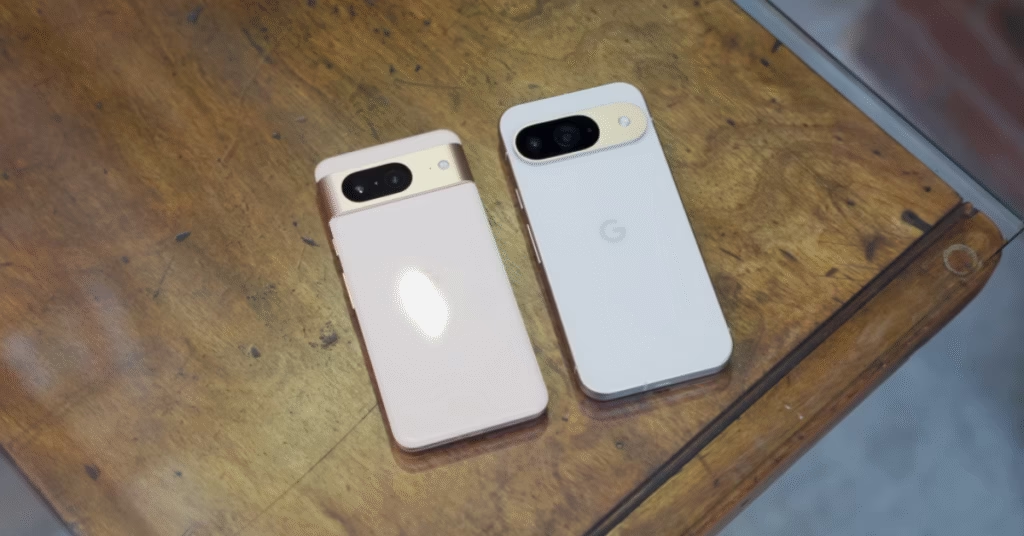
Right away, you’ll notice that the Pixel 9 looks quite different from the Pixel 8.
Google decided to move away from the rounded design we saw last year and went for a flatter, more boxy shape this time. That instantly gives it a more premium and modern look. In fact, it feels like a design leap that could have come after a few generations, not just one.
Both phones still have glossy glass backs which means fingerprints are unfortunately still an issue but the overall hand feel is more refined on the Pixel 9. It’s slightly bigger too, with a 6.3-inch display compared to the Pixel 8’s 6.2-inch screen.
Speaking of displays, both use 120Hz OLED panels, but the Pixel 9 gets brighter, peaking at 2,700 nits versus the 2,000 nits on the Pixel 8. It’s not something you’ll always notice indoors, but outdoors, especially under sunlight, it does make a difference.
A $100 Price Jump Is It Worth It?
One thing you’ll notice right away is the price difference. The Pixel 9 is priced at around $450, while the Pixel 8 now goes for roughly $270. That’s a noticeable jump, and it naturally makes you wonder whether the newer model really offers enough upgrades to justify spending the extra cash.
So, the obvious question: does it justify the extra money?
There are some small upgrades that might make it worthwhile for a certain type of user. The Pixel 9 comes with Gorilla Glass Victus 2, compared to the older Victus on the Pixel 8, and it feels slightly sturdier. But the big functional improvement is the new ultrasonic fingerprint sensor.
This may sound like a minor change, but in daily use, it’s a big deal. Unlike the optical sensor in the Pixel 8, which flashes a bright light and can sometimes lag, the ultrasonic reader on the Pixel 9 is faster, more accurate, and works even with wet fingers. It’s the small quality-of-life improvement that really makes the phone feel better built.
Performance
Under the hood, the Pixel 9 features Google’s latest Tensor G4 chip, while the Pixel 8 runs on the Tensor G3.
Now, on paper, you’d expect a big leap in speed and efficiency but in reality, it’s not a huge difference. Benchmarks show the two chips performing very close to each other in both single-core and multi-core tests.
During real-world use, whether it’s web browsing, scrolling through apps, or light gaming, you won’t see a dramatic difference. Both phones handle these tasks smoothly. Even in heavier use, like multitasking or editing photos, the performance gap is minimal.
If you were hoping for a big raw power boost, you won’t find it here. The improvements are more on the software side, thanks to better AI optimization.
Battery Life and Charging
When it comes to battery, things stay very similar. The Pixel 9 packs a 4,700 mAh battery, slightly higher than the 4,575 mAh in the Pixel 8.
But that doesn’t translate to a big gain in endurance. Both phones comfortably last a full day with regular use. Whether you’re watching videos, playing light games, or just browsing, you’ll get roughly the same battery life.
Interestingly, in some cases, the Pixel 8 actually performs slightly better especially during video playback tests. Charging speeds remain identical, with both supporting 27W wired charging. The Pixel 9 takes about 85 minutes for a full charge, while the Pixel 8 does it in around 77 minutes, mainly due to its smaller capacity. Wireless charging remains the same on both.
So, if you’re thinking of upgrading just for better battery performance, there’s not much of a reason to do so.
Camera: Almost the Same Story
For years, the Pixel series has been known for its camera quality, and the good news is that both phones continue that legacy. But if you’re expecting a major camera overhaul, you might be disappointed.
Both the Pixel 8 and Pixel 9 use the same 50MP main sensor, so image quality in most lighting conditions is nearly identical. Photos have that same contrast-heavy, realistic look Google is famous for.
Even portrait and night mode shots look similar; you’d have to pixel-peep to notice minor differences.
The ultrawide camera does get an upgrade on the Pixel 9, jumping from 12MP to 50MP. On paper, that’s a huge bump, but in real-world photos, the improvement is modest. You might notice a touch more detail, but nothing groundbreaking.
Selfies remain identical, too, with the same 10.5MP front camera. And for video, both shoot up to 4K 60fps, with very similar quality. If you compare them side-by-side, the Pixel 9 might look slightly sharper, but it’s hard to tell without looking closely.
Software and AI Features
Both phones run Android 16 with Google’s signature Pixel experience.
The main advantage for the Pixel 9 is that it will receive one extra year of software updates, just because it’s newer. That means an additional year of OS and security patches.
Where you will notice some difference is in the AI features. The Pixel 9 gets exclusive access to a few new tools powered by Gemini Nano including features like Add Me in the camera app, Pixel Studio for creative edits, and some upgraded on-device AI for smarter suggestions.
Both devices, however, share essentials like Circle to Search, Magic Editor, Live Translate, and Gemini Live so you’re not missing out on most of the fun if you stick with the Pixel 8.
Day-to-Day Experience
In daily use, both phones feel nearly identical in performance, responsiveness, and smoothness. The design change on the Pixel 9 makes it feel newer and more premium, but if you blindfolded someone and asked them to use both, they’d struggle to tell which one was which.
Animations are equally smooth, app loading times are the same, and the software experience is still among the cleanest in Android. You’ll only start appreciating the Pixel 9 if you value those little refinements like the fingerprint sensor, brighter display, and subtle design changes.
Verdict: Should You Upgrade?
So, should you upgrade from the Pixel 8 to the Pixel 9?
Honestly, for most users, no. The changes this year are small, and the experience between the two is nearly identical. The Pixel 9 feels like a refinement not a reinvention.
If you’re coming from a Pixel 7 or older, though, that’s a different story. You’ll see a big jump in design, AI features, and overall polish. But from the Pixel 8 to 9, it’s hard to justify the $100 price increase unless the ultrasonic fingerprint reader or slightly brighter screen really matters to you.
Both phones deliver great cameras, clean software, and a smart AI experience. But if your Pixel 8 is still going strong, you can comfortably skip this generation without missing much.
Final Thoughts
The Google Pixel 9 is a nice evolution of the Pixel series cleaner design, better fingerprint reader, and a few smart upgrades. But at its core, it’s still the same excellent phone we got last year.
For anyone asking whether it’s worth upgrading, the answer depends on what you value. If you crave something newer and like the premium feel, go for it. If you just want solid performance and reliable cameras, your Pixel 8 still holds up perfectly fine.
FAQs (Google Pixel 8 vs Pixel 9)
What is the price of the Google Pixel 8 and Pixel 9?
The Google Pixel 8 is currently priced at around $270 while the newer Pixel 9 starts at around $450.
Is the Pixel 9 worth upgrading from the Pixel 8?
Not for most users. The Pixel 9 brings a slightly brighter display, a boxier design, and a faster ultrasonic fingerprint sensor, but overall performance and camera quality remain very similar.
What’s the main difference between Pixel 8 and Pixel 9?
The biggest differences include the new Tensor G4 chip, ultrasonic fingerprint reader, and a 50MP ultrawide camera on the Pixel 9, along with a slightly brighter screen.
Do both phones have the same battery life?
Yes, battery life is almost identical. The Pixel 9 has a slightly larger 4,700 mAh battery compared to the 4,575 mAh in the Pixel 8, but real-world endurance is nearly the same.
How long will Google support these phones with updates?
Both run Android 16, but the Pixel 9 will get one extra year of software updates since it’s a newer model.
Are the cameras better on the Pixel 9?
The main 50MP camera remains the same. The ultrawide sensor has been upgraded to 50MP, offering a bit more detail, but photo and video quality are still very close overall.
Should I buy the Pixel 9 or stick with the Pixel 8?
If your Pixel 8 is working well, there’s no urgent reason to upgrade. But if you want a newer design, better fingerprint sensor, and slightly improved AI features, the Pixel 9 is a nice upgrade.
Discover more from Phoonomo
Subscribe to get the latest posts sent to your email.