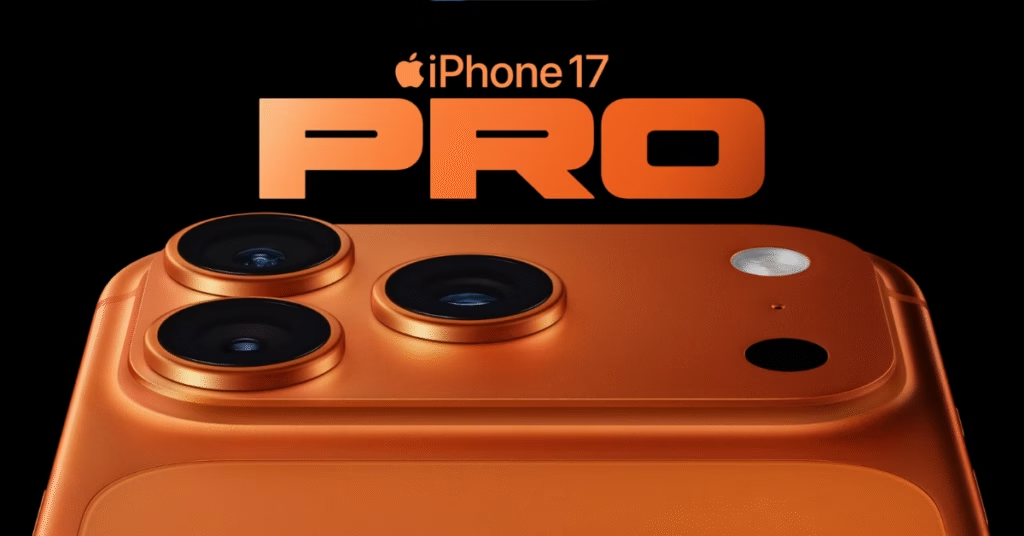
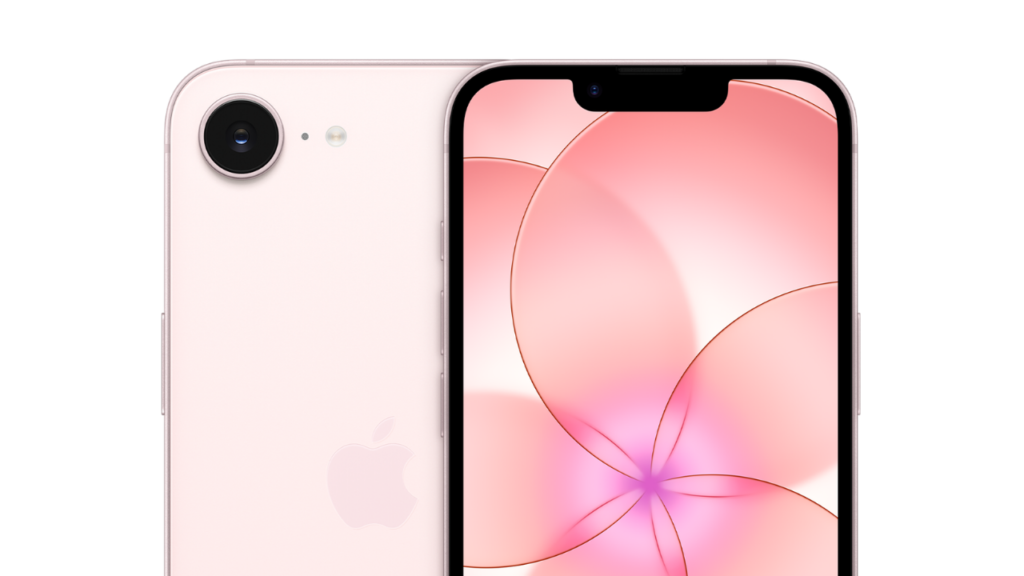
In a year when “value flagships” are redefining the smartphone market, Apple has thrown its hat firmly into the ring. The new iPhone 17e is here and it’s not the watered-down afterthought some expected. With a faster A19 chip, a 48MP camera, MagSafe support, and 256GB as the new baseline, this could be the most compelling non-Pro iPhone in years.
But why does this launch matter right now?
Because in 2026, the real battle isn’t at $1,199 anymore it’s in the $500–$700 bracket, where buyers want longevity, performance, and AI features without paying Pro-level premiums.
The Problem
For years, Apple’s more affordable models walked a fine line. They delivered solid performance, yes but often skipped the features that made Pro models exciting. Limited storage. Slower modems. No MagSafe. Older camera hardware.
Meanwhile, Android competitors were stepping up. Phones like the Samsung Galaxy S25 FE and Google Pixel 10a started offering high-refresh OLED displays, advanced AI cameras, and generous storage at aggressive prices.
Consumers began asking a fair question:
If I’m spending around $600, why am I compromising?
Apple’s Response: Make “e” Mean Essential, Not Entry-Level
With the iPhone 17e, Apple appears to have reset the formula.
256GB Is the New Starting Point
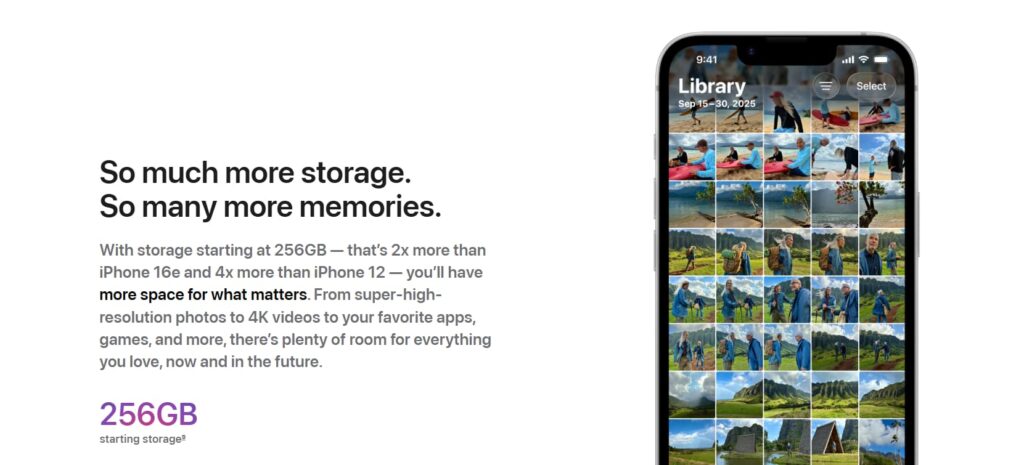
No more 128GB base storage. The iPhone 17e starts at 256GB for $599, which is a quiet but meaningful shift. In 2026, 128GB simply isn’t enough for 4K video, AI features, and modern app sizes.
A19 Chip: Not a Hand-Me-Down
The device runs on Apple’s new A19 chip, built on a 3nm process. That means:
- 6-core CPU
- 4-core GPU
- 16-core Neural Engine
This is important. Apple isn’t recycling an older chip here. Performance should be close to flagship territory, particularly in AI-driven tasks and gaming.

48MP “Fusion” Camera
The jump to a 48MP main sensor with 2x optical-quality zoom changes the story. Previous “e” models often lagged in camera hardware. Now you get:
- 4K Dolby Vision at 60fps
- Night mode improvements
- Smart Portrait detection (including pets)
That’s no longer entry-level behavior.
Design & Hardware
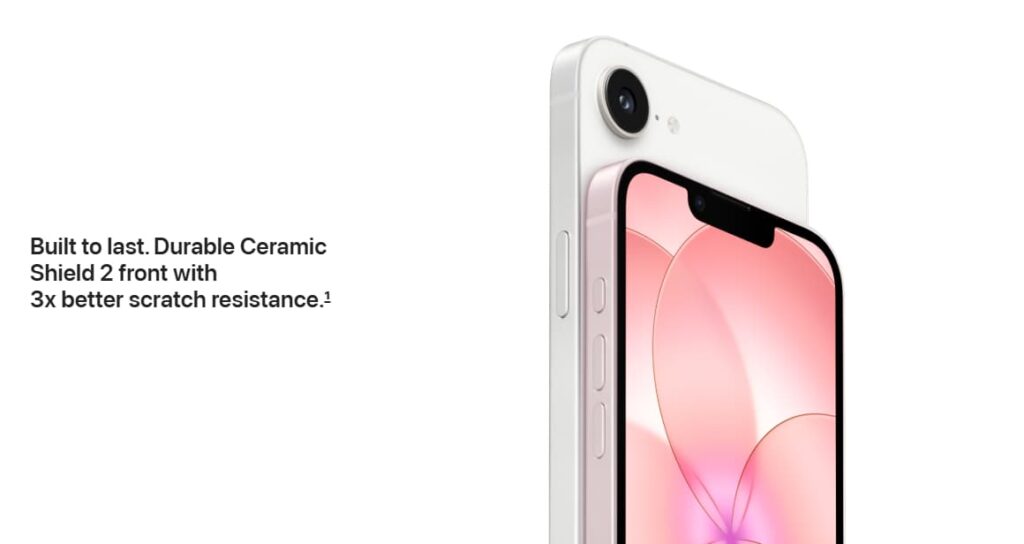
The iPhone 17e sticks with a 6.1-inch Super Retina XDR OLED display sharp, vibrant, and bright enough for HDR content.
It also gets:
- Ceramic Shield 2 front glass
- IP68 water resistance
- USB-C
- MagSafe + Qi2 wireless charging (up to 15W)
- Action Button
MagSafe’s return to this price tier is significant. It opens the door to accessories, wallets, stands, and battery packs, something the previous generation lacked.
And yes, satellite connectivity remains onboard for Emergency SOS and messaging when off-grid.
Why This Launch Hits Differently
The timing matters.
In 2026, buyers are keeping phones longer, often 3 to 5 years. That shifts priorities toward:
- Long-term performance
- Storage headroom
- Software support
- AI readiness
By shipping with iOS 26 and full Apple Intelligence features, the iPhone 17e feels built for longevity rather than short-term savings.
Apple also quietly solved one more friction point: faster 5G via its upgraded C1X modem. In crowded cities and developing 5G markets, modem quality directly impacts real-world performance.
How It Stacks Up Against the Competition
Here’s where things get interesting.
| Feature | iPhone 17e | Galaxy S25e | Pixel 10a | iPhone 16e |
| Base Storage | 256GB | 128GB / 256GB | 128GB | 128GB |
| Chip | A19 | Snapdragon 8s Gen 4 (expected tier) | Tensor G4 | A18 |
| Main Camera | 48MP Fusion | 50MP | 64MP | 48MP (older sensor) |
| AI Integration | Deep system-wide | Galaxy AI suite | Pixel AI-first | Limited vs 17e |
| Wireless Charging | MagSafe + Qi2 | Qi | Qi | No MagSafe |
| Satellite Features | Yes | Limited/Region-based | No | Yes |
The Toughest Question: 17e vs 16e
This is where buyers hesitate.
The 16e is cheaper now. But the 17e gives you:
- A19 vs A18 (better AI headroom)
- 256GB standard
- Improved modem (C1X)
- MagSafe support
For long-term ownership (3–4 years), the 17e makes more sense unless the 16e is heavily discounted.
Android rivals still offer higher refresh rates (depending on panel choice) and sometimes more versatile multi-camera setups. But Apple’s ecosystem integration and silicon efficiency remain strong differentiators.
If you’re invested in iMessage, AirDrop, or Apple Watch, the value proposition strengthens further.
The iPhone 17e doesn’t feel like a cost-cut device. It feels strategically trimmed.
Apple removed excess, not essentials.
No ProMotion? Sure.
No triple-camera array? Expected.
But the core pillars performance, camera quality, storage, connectivity are all intact.
That signals a shift in philosophy: the “e” model is no longer about getting people into the ecosystem cheaply. It’s about keeping mainstream buyers inside it confidently.
Who Is This Phone Really For?
- Upgraders from 2–3-year-old iPhones
- Users who don’t need telephoto zoom beyond 2x
- Buyers who prioritize performance over flashy extras
- Students and professionals wanting longevity
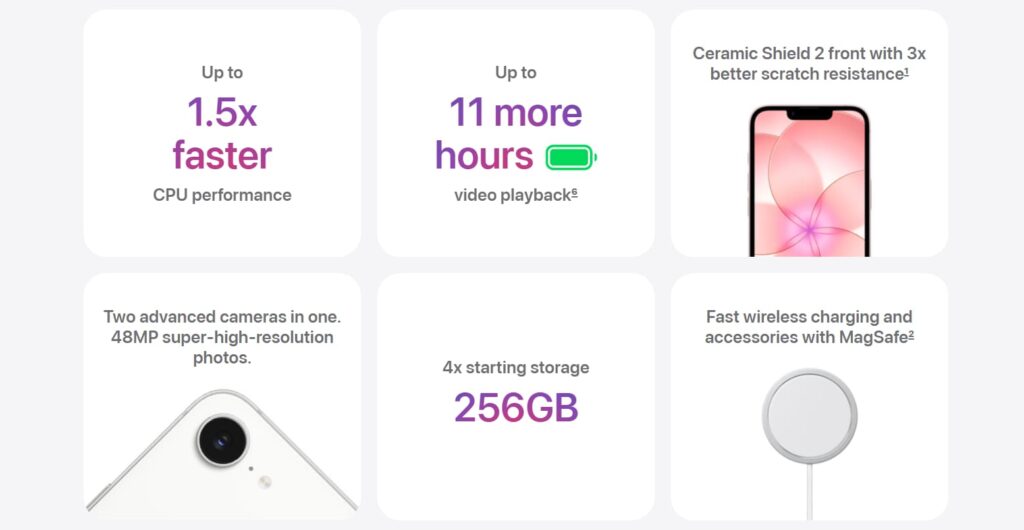
At $599, it undercuts many flagships while delivering near-flagship fundamentals.
Final Takeaway: The Smart Buy of 2026?
The iPhone 17e may quietly become one of Apple’s most important launches this cycle.
It fixes storage anxiety.
It upgrades the camera meaningfully.
It delivers modern connectivity.
And it doesn’t feel compromised.
If Apple’s goal was to redefine what a “budget iPhone” means mission accomplished.
Actionable thought: If you’re choosing between last year’s discounted Pro model and the new 17e, look closely at storage and long-term chip support. For most users, the 17e might actually be the smarter investment.
Discover more from Phoonomo
Subscribe to get the latest posts sent to your email.