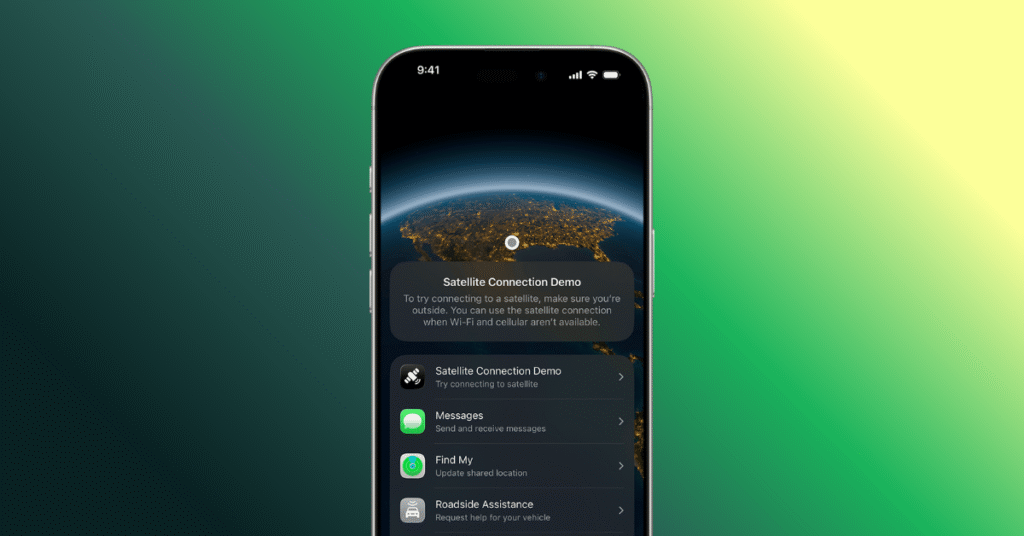
Apple is taking its satellite connectivity to the next level. What started as a life-saving feature with Emergency SOS via Satellite on the iPhone 14 is now evolving into a broader suite of satellite-based tools for communication, safety, and convenience.
According to recent reports, Apple is preparing to expand its satellite capabilities beyond emergencies. This includes new features like sending messages, sharing locations, and possibly even limited navigation all without relying on cellular or Wi-Fi connections.
From Lifeline to Everyday Utility
When Apple first introduced satellite connectivity in 2022 with the iPhone 14 series, it was positioned as a last-resort feature. Users stranded in areas without service could connect directly to a satellite to message emergency responders. Later, Apple added Roadside Assistance via Satellite for vehicle breakdowns in remote areas, and even allowed Find My location sharing without cellular coverage.
Now, two years later, Apple is broadening the scope. With iOS 18.5, even iPhone 13 users have gained access to satellite-based emergency features, something that was previously exclusive to newer models. This marks Apple’s gradual shift toward making satellite technology a standard part of the iPhone experience.
What’s Changing
The upcoming updates are said to make satellite connectivity more versatile. While details remain under wraps, leaks suggest that Apple is experimenting with:
- Two-way satellite messaging, allowing users to chat with contacts off-grid.
- Map integration via satellite, helping users navigate in areas with no internet.
- Improved indoor satellite reception, making it easier to connect even when the sky isn’t perfectly clear.
Currently, these features rely on Apple’s partnership with Globalstar, the satellite network provider that powers the existing Emergency SOS feature.
Free for Now But for How Long?
When Apple launched Emergency SOS via Satellite, it offered the service free for two years. That free period for early iPhone 14 adopters is nearing its end, prompting speculation about future pricing. Many expect Apple to introduce a subscription model for extended or non-emergency satellite use.
A report from MacRumors also notes that Apple is working on “non-emergency satellite communication,” which could eventually include photo sharing and enhanced message options but likely as part of a paid tier.
How It Works
Connecting to a satellite isn’t quite like using your mobile network. To send or receive a message, the iPhone must be outdoors with a clear view of the sky. Once connected, the device guides you to point toward a specific satellite, and messages usually take around 30 seconds to send.
While it’s slower than regular messaging, it can be a lifesaver in areas with no cellular signal from mountain trails to desert highways.
Global Expansion on the Horizon
Initially, these satellite features were limited to the U.S. and Canada, but Apple has gradually rolled them out to more countries. As of late 2025, regions across Europe, Australia, and parts of Asia are beginning to receive support.
Apple’s investment in 5G NTN (Non-Terrestrial Networks) technology also hints at an even more ambitious plan integrating satellite connectivity directly into regular network coverage, so users can stay connected almost anywhere on Earth.
Apple’s satellite initiative highlights a broader industry shift. As smartphones reach maturity, connectivity beyond Earth’s infrastructure is becoming the next frontier. Brands like Huawei and Samsung have already introduced similar emergency satellite options, but Apple’s ecosystem integration and user-friendly approach give it a noticeable edge.
The Bottom Line
The iPhone’s satellite capabilities are no longer just a survival tool; they’re evolving into a practical, everyday backup for communication. As Apple continues to expand these features, users can expect more reliable off-grid connectivity, smarter integrations, and perhaps soon, a world where losing signal isn’t a concern at all.
Whether it’s reaching help during a roadside emergency or texting loved ones while hiking in the wilderness, Apple’s satellite technology is quietly redefining what it means to stay connected even when you’re completely off the grid.
Discover more from Phoonomo
Subscribe to get the latest posts sent to your email.