Five years of waiting. One chip upgrade. Apple just turned its most beautiful headphones into its most capable ones and the ANC throne is suddenly up for grabs.
There’s a reason audiophiles, commuters, and Apple loyalists never stopped talking about the AirPods Max even after half a decade
of near-silence from Cupertino. The original 2020 model was arguably the most premium-feeling pair of headphones ever built: aluminum, mesh headband, magnetic ear cushions, a masterpiece of industrial design that happened to also sound absolutely brilliant. The problem? Underneath that gorgeous shell, the H1 chip was getting old, the feature list was falling behind, and Sony and Bose were quietly eating Apple’s lunch.
Today, Apple answered. And it answered hard.
The AirPods Max 2 are official, powered by the H2 chip, and they arrive with a feature set that should have existed three years ago but better late than never when it’s this good.
Same Iconic Design, Brand New Brain
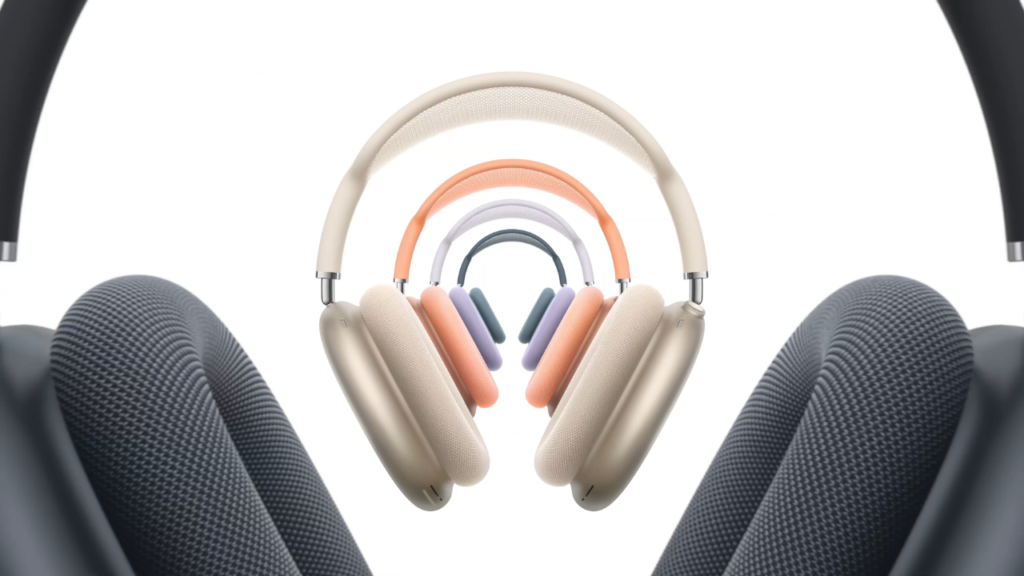
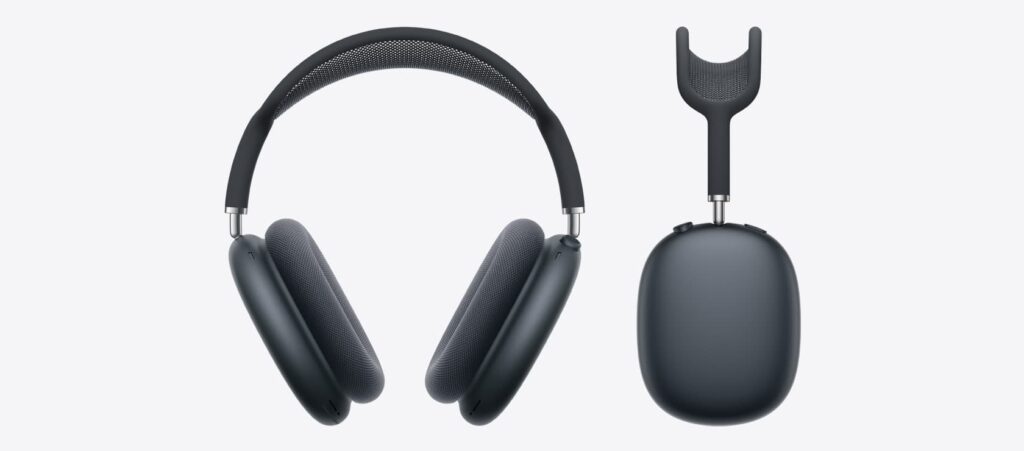
Let’s get this out of the way first: if you’re expecting a visual overhaul, you won’t find one. The AirPods Max 2 are 13.6 ounces of the same stunning aluminum-and-mesh construction the original debuted with. Same sweeping arms, same cushioned headband, same magnetic ear cups. Available in Midnight, Starlight, Orange, Purple, and Blue identical to the USB-C refresh from 2024.
But that’s where the familiarity ends. Inside, Apple swapped out the aging H1 silicon for the H2 chip, the same processor that made AirPods Pro 2 a best-in-class product the moment it launched. That’s not a minor tweak. That’s like dropping a new engine block into a classic car. Everything that follows flows from that single decision.
The ANC Story: 1.5x Better, But Does It Beat Sony and Bose?
Apple’s headline claim for the AirPods Max 2 is bold: up to 1.5x more effective Active Noise Cancellation than the previous generation. New computational audio algorithms running on H2 process environmental noise faster and more aggressively, and in real-world scenarios commuter trains, open-plan offices, coffee shop buzz the difference is immediately noticeable.
But let’s be honest about where this places Apple in the competitive landscape.
The Sony WH-1000XM6 ($449) reduced average loudness by 87% in standardized testing, while the Bose QuietComfort Ultra achieved 85%. Both are staggering numbers. In blind tests, most people still pick Bose for noise cancellation. Bose’s CustomTune feature, which maps your ear canal, genuinely works.
Apple hasn’t published equivalent dB reduction figures yet, but industry reviewers who’ve had early time with the Max 2 suggest it now competes squarely in this top tier particularly for mid and high-frequency noise like voices, HVAC systems, and street traffic. For sustained low-frequency rumble like jet engines over a 10-hour flight, the Bose QC Ultra still earns praise for its ability to throw a “noise-cancelling blanket” over the entire sonic environment, while Sony’s QN3 processor adapts faster to sudden changes.
The Max 2’s ace card, however, is Transparency Mode and here no competitor comes close. Apple’s new DSP algorithm makes the outside world sound so natural through the microphones that it’s genuinely difficult to tell you’re using a mode at all. Sony and Bose both implement solid transparency, but there’s a faint digital processing hiss to both. Apple simply doesn’t have it.
Lossless Audio: A First for AirPods Max
This might be the feature that matters most to serious listeners. The AirPods Max 2 now support 24-bit, 48 kHz lossless audio when connected via the included USB-C cable, a genuine first for Apple’s over-ear line. Combined with a brand-new high dynamic range amplifier, the result is cleaner audio reproduction across the entire frequency range: more accurate bass, more natural mids, and airier highs.
For musicians and producers, Apple has built something genuinely unique here. Using the USB-C cable, AirPods Max are the only headphones that let musicians both create and mix in Personalized Spatial Audio with head tracking a full professional workflow loop from Logic Pro straight to your ears.
Wirelessly, the Max 2 runs on Bluetooth 5.3 (up from 5.0 on the original), and reduced wireless latency means Game Mode on iOS and iPadOS now feels noticeably snappier. For context, Sony’s XM6 supports SBC, AAC, LDAC, and LC3 with LE Audio, giving Android users a wireless high-res path Apple still doesn’t offer without a cable. That’s a real gap but the USB-C lossless option partially bridges it for the wired crowd.
The Feature Flood: Everything H2 Unlocks
If you own AirPods Pro 2, some of these features will feel familiar. For AirPods Max users, they’re all brand new and long overdue.
Adaptive Audio is perhaps the most seamless of the bunch. It reads your environment continuously and blends ANC and Transparency automatically. Walk from a quiet library into a noisy street? The headphones adjust before you reach the door.
Conversation Awareness is the one you’ll use daily without realizing it. Start talking to someone nearby, and your music drops automatically. Stop talking, it comes back. No button presses. No fumbling. It just works and once you’ve used it, every pair of headphones without it feels broken.
Live Translation, powered by Apple Intelligence, is the genuinely new addition to the ecosystem. It enables real-time in-person language translation through the headphones, the kind of feature that sounds like fiction until you’re using it at an airport abroad or in a meeting with an international colleague. Availability depends on region and language support.
Voice Isolation on calls is another step forward. H2 actively separates your voice from ambient noise so callers hear you clearly even on a windy street corner.
Camera Remote lets you trigger your iPhone or iPad’s camera shutter by pressing the Digital Crown, a surprisingly useful tool for content creators and anyone who’s ever fumbled with a timer shot.
Studio-Quality Audio Recording opens up a new use case entirely: podcasters and musicians can now use AirPods Max 2 as a recording microphone with noticeably higher vocal texture and clarity.
And finally after five years you can say just “Siri” instead of “Hey Siri.” Small things. Deeply satisfying.
The Battery Reality Check
Apple promises 20 hours of listening with ANC enabled. That’s comfortable for a transatlantic flight, a full work day, or a long weekend trip. But here’s the honest comparison:
The Sony WH-1000XM6 clocked in at over 37 hours in real-world testing, nearly 10 hours more than Bose’s 27 hours. Sony’s fast charging also gets you 3 hours of playback from just 3 minutes of charging.
Apple’s 20-hour rating trails both. If you’re a frequent long-haul traveler who forgets to charge before leaving the house, that gap matters. For most daily commuters and hybrid workers, 20 hours is plenty. Just don’t be the person who forgets to top up before a 14-hour flight to Tokyo.
The Price Conversation Nobody Wants to Have
At $549, Apple is $100 more expensive than the Sony WH-1000XM6 and $120 more than the Bose QuietComfort Ultra. The Bose regularly drops to around $350 on sale, which makes the value gap even harder to ignore for budget-conscious buyers.
What does that premium actually buy you? Build quality, for one no competitor in this space matches the material craftsmanship of the AirPods Max. The aluminum construction, the precision-machined hinges, the magnetic ear cushions, this is a product that feels like $549. Beyond that, it’s the Apple ecosystem: instant iCloud pairing, seamless device switching, Find My support, deep Personalized Spatial Audio integration with iPhone and Apple Watch, and now Apple Intelligence-powered features like Live Translation that Sony and Bose simply can’t replicate.
For Android users? The Sony WH-1000XM6 remains one of the most complete headphone packages available with excellent sound quality, robust app controls, industry-leading ANC, and marathon battery life at a significantly lower price point. That recommendation doesn’t change.
For iPhone users? The calculus shifted today.
Who Should Actually Buy These?
Buy the AirPods Max 2 if: You’re in the Apple ecosystem, you want the most premium-feeling headphones money can buy, Transparency Mode matters to you, you work in music or content creation, or you just want one pair that does everything without needing to switch between devices.
Wait or look elsewhere if: You’re on Android, you need 30+ hours of battery on a single charge, you want the absolute maximum ANC performance for intercontinental travel, or you want to spend $549 on features rather than materials.
The Takeaway
Apple spent five years letting the AirPods Max age gracefully while the competition built increasingly serious challengers. The AirPods Max 2 corrects that in a single swing H2 chip, lossless audio, Adaptive Audio, Live Translation, Voice Isolation, Camera Remote, Studio Recording, and a transparency mode that still sounds like black magic.
These are, without question, the best over-ear headphones Apple has ever made. They’re not the cheapest. They’re not the longest-lasting on a single charge. But for anyone living inside Apple’s ecosystem, they’ve never made more sense.
Orders open March 25. Units ship in early April. At $549, the only question left is whether your ears are worth it and we think you already know the answer.
Discover more from Phoonomo
Subscribe to get the latest posts sent to your email.