So, uh, yes, Huawei went ahead and did it again. The Pro Plus line has now been renamed as Pro Max, and honestly, this year showed us something interesting. Xiaomi basically proved through its own sales that as long as the product is strong enough, the name doesn’t matter at all. Huawei probably realized the same thing, which is why the HUAWEI Mate 80 Pro Max has stepped in as the new peak of the Mate lineup. And from the moment you hold it, you can tell this is the most refined “Pro Max” they’ve ever made. The redesign is bold, the idea is confident, and even the launch price undercuts last year’s model. There’s no reason this phone should be anything short of great.
Design & Features
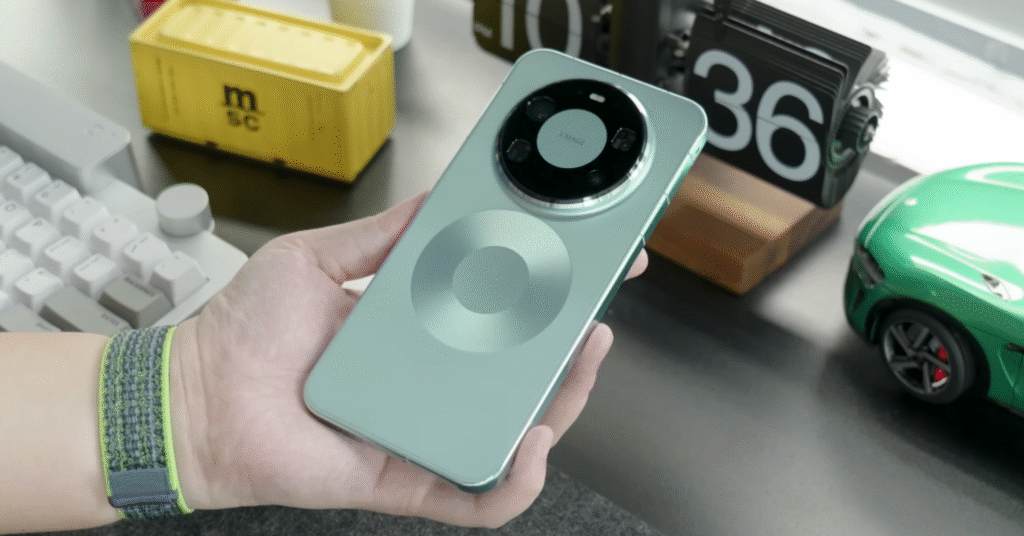
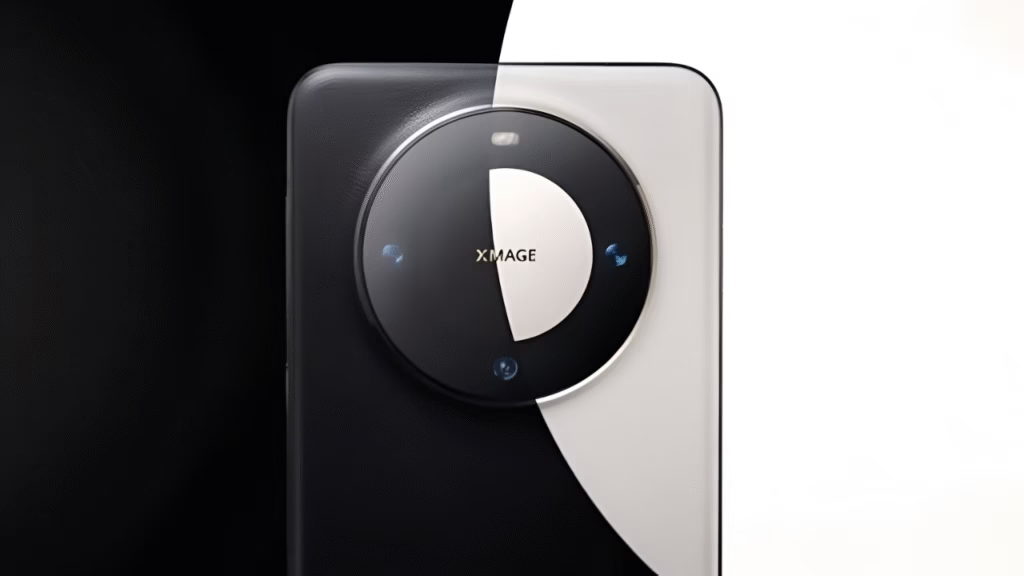
Let me get straight to the question everyone has been asking. No, the ring on the back does not support magnetic accessories. It looks like it might, but it’s actually there for a much simpler function: the metal back cover would block the wireless charging coil, so Huawei added the ring to keep that part clear. A practical solution, even if some people were hoping for a magnetic ecosystem.
Compared to the previous M70 series, the whole frame has shifted from rounded edges to a flat-sided design. The upside is that it looks slimmer and cleaner. The downside? Well, your hands will figure that out pretty quickly. And this phone has a lot of holes—literally. The three cutouts on the front are familiar: the 3D facial recognition system and the front camera. Along the sides, you’ll find the usual microphone, speaker port, SIM tray, and so on.
But then there’s this one tiny hole on the side that makes everyone pause. Turns out, it’s also part of the speaker system. It helps cancel sound leakage during calls, which means more privacy. A pretty thoughtful feature, especially for people who take calls outdoors.
Speaking of outdoor use, Huawei clearly has a specific group of users in mind. A lot of Mate buyers love traveling, hiking, and exploring, so the new Expedition Mode on the HUAWEI Mate 80 Pro Max feels like it was made just for them. It turns the phone into a kind of survival tool: satellite messaging, emergency communication, extended battery endurance, and a smarter map system that can automatically record your routes and help you retrace them anytime.
With both IP68 and IP69 protection, plus second-generation Kunlun Glass, it honestly makes sense if someone calls this phone the “rugged flagship.” And if you can stretch your budget a little, the Pro Max and RS Ultimate models even take the setup further.
Display
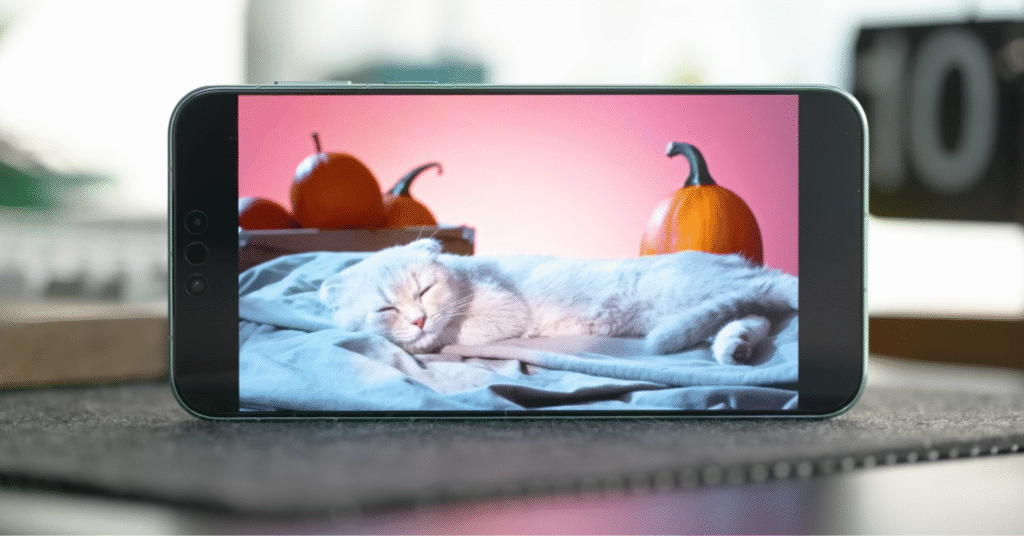
Here’s where the upgrade gets serious. If you pick the higher-end versions, the display jumps from a regular panel to a Tendon OLED. Now, Tendon OLED isn’t new; the iPad Pro uses it, and last year’s RS Ultimate did too but bringing it into this phone changes everything.
The benefits show up immediately. Higher brightness, wider color gamut, and lower power use. Higher resolution is cool, but brightness is what really hits you. I placed the device next to other flagships, and at a glance, the difference was obvious. Under the sun, it stays easy to read. With HDR content, the highlights almost look too bright for the camera to capture accurately.
You should definitely take a look in-store if you get the chance. I’m sure you’ll understand the temptation the moment the screen lights up. The only drawback of Tendon OLED is, uh, cost. But surprisingly, the HUAWEI Mate 80 Pro Max is one of the cheapest phones at launch with this display tech, making it a genuine selling point.
Performance & Battery
Inside the phone is Huawei’s newest and most powerful chip, the Kirin 9030 Pro. Compared to the earlier 9020 generation, this one adds an extra high-performance core and bumps up frequencies across CPU and GPU. What’s interesting is that all four models in the series use different processors, so if you want the absolute best performance Huawei offers right now, the Pro version with 16GB RAM is the way to go.
Benchmarks won’t help much here since most common apps are blocked on Huawei devices, but honestly, numbers wouldn’t tell the whole story anyway. So let’s jump straight into real gaming.
Thanks to MiHoYo creating a HarmonyOS-exclusive version of Genshin Impact, this is one of the very few phones that can unleash the full power of the Kirin 9030 Pro. Turn on High Performance Mode and you can even disable frame interpolation. Huawei also added a new tool, Smart Performance Finder, which finally allows accurate frame-rate tracking on HarmonyOS.
And wow the frame-rate graph is almost perfectly straight. Hard to believe it’s running on a Huawei phone without interpolation. Heat management is also solid thanks to the full metal back, which spreads warmth evenly. The gaming experience feels close to Snapdragon 8 Gen 5 phones.
Of course, nothing is perfect. The chip has improved a lot, but power consumption still has some room to grow. The battery is only about 300 mAh larger than before, so heavy gaming drains it faster than expected. But for light to medium use, the efficiency is good enough to match phones with much bigger batteries. Charging is excellent 100W wired and up to 80W wireless. In our tests, a full charge took about 50 minutes.
Cameras
All four rear cameras use Huawei’s Smart Sense technology, and honestly, every one of them performs well. The ultra-wide offers a truly wide field of view, and the two telephoto lenses make long-distance shooting easy.
Two things really stand out:
- The ultra-wide sensor is not compromised like many other flagships. It uses the same sensor as the telephotos, so quality stays consistent across focal lengths.
- Every sensor uses an IB filter for better low-light performance. Combined with the improved color-temperature sensor, color accuracy remains stable even in difficult scenes.
The main camera’s variable aperture and the new HDR method create one of the most balanced camera systems I’ve seen. Dynamic range, color balance, detail everything feels polished.
Some brands rely on huge 200MP telephoto sensors and crop in for extra zoom. While this sometimes looks similar, it has two major downsides:
• They can’t shoot macro through the telephoto lens
• Video quality drops sharply at high zoom levels
The 4x telephoto here can focus as close as 5 cm, giving it the best macro results I’ve ever seen on a smartphone. And for video, stabilization has improved massively, especially on the ultra-wide camera.
The front camera is smaller but still decent. Selfies are fine, nothing mind-blowing. Video quality from the front camera depends on your taste. I’ll leave that for you to judge.
Conclusion
After using this phone longer, I realized I like it even more than when I first bought it. Sure, the design is cleaner and maybe a little less flashy, and yes, it still can’t beat some top-tier Pro Max competitors in raw performance. But HarmonyOS 6 runs very smoothly, the battery is reliable unless you’re gaming nonstop, and the camera system is simply a joy to use.
Combine that with the brightest display I’ve seen on a Huawei device, strong signal performance, fast Face ID, and a lower price than expected, and it becomes clear why the HUAWEI Mate 80 Pro Max is such a popular choice. For long-time Huawei users, this might be the perfect moment to upgrade.
Discover Also Huawei Watch GT 6 Series Debuts in India

M Adnan Akram is the founder and lead writer at Phoonomo, covering mobile technology with a primary focus on Apple and the broader smartphone industry, alongside emerging developments in AI. He follows product launches, spec leaks, and industry trends closely to keep readers informed with timely updates.
Discover more from Phoonomo
Subscribe to get the latest posts sent to your email.