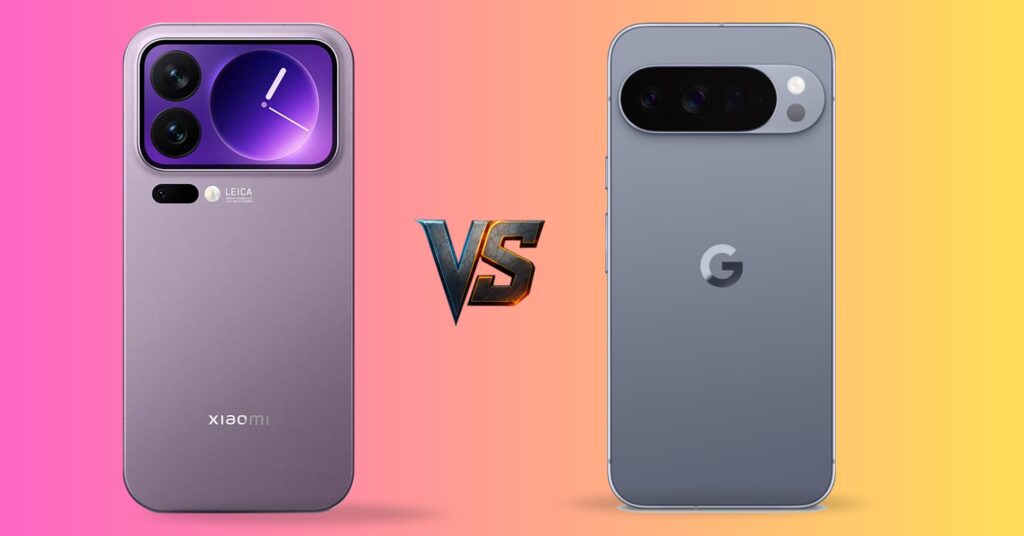
Switching between two flagship phones back-to-back is always interesting, but using the new Xiaomi 17 Pro Max and the Pixel 10 Pro at the same time for about two weeks made the differences even clearer. On paper, they both sound like top-tier devices, fast chipsets, premium cameras, bright displays but the daily experience is what truly separates them. Here’s my honest take after carrying both around, shooting photos, gaming, working, and basically living with them.
Design & In-Hand Feel
The first thing that stood out to me was the size difference. The Xiaomi feels noticeably bigger the moment you pick it up. Its 6.9-inch display and wider frame make it feel like a mini tablet, while the Pixel keeps things compact at 6.3 inches. I didn’t like typing and browsing on the Xiaomi felt luxurious simply because of the screen real estate, but using it one-handed was nearly impossible.
The Pixel, on the other hand, hits that sweet spot of compact yet premium. The matte finish, curved rails, and balanced weight make it easier to carry around. If I’m rushing out and don’t want a big device in my pocket, I naturally reach for the Pixel.
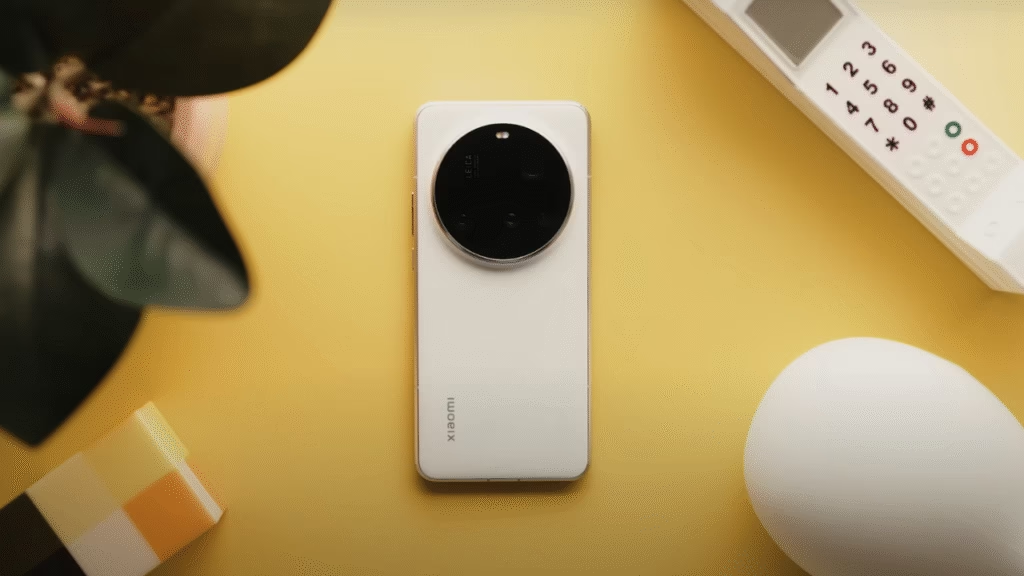
Xiaomi definitely looks more “futuristic,” especially because of the secondary display on the back. At first, I used it mostly for checking notifications and lining up selfies with the rear camera, but surprisingly, I ended up relying on it more than I expected. It genuinely feels like a unique feature, not a gimmick.
Both are IP68-rated, though Xiaomi can survive deeper underwater, at least according to the rating.
Displays
Daily use made the display differences obvious.
Xiaomi 17 Pro Max:
- Massive 6.9-inch LTPO panel
- 3500-nit peak brightness
- Smooth 120Hz
- Dolby Vision & HDR10+
- Plus the 2.9-inch rear display
The Xiaomi is a joy for watching videos and reading. Outdoors, it’s ridiculously brightprobably the brightest screen I’ve ever used. That 3500-nit peak is no joke.
Pixel 10 Pro:
- 6.3-inch LTPO OLED
- 3300-nit peak
- 2856×1280 resolution
- Slightly sharper
The Pixel’s panel is smaller but sharper, and colors look very natural. It’s calmer on the eyes and feels more balanced. Brightness outdoors is good, but side-by-side with the Xiaomi, it looks dimmer.
If you love huge displays, Xiaomi wins big. But for balanced color accuracy and sharpness, the Pixel is better.
Performance
This is the part where the real gap appears. Xiaomi’s Snapdragon 8 Elite Gen 5 is simply in another league compared to Google’s Tensor G5.
Xiaomi 17 Pro Max Performance Experience
The phone feels like a powerhouse. Everything from heavy gaming to multi-tasking stays smooth. I tried games like Genshin and PUBG at max settings with HDR graphics, and the device barely broke a sweat. It stayed cooler than most phones I’ve tested. The benchmarks confirm its scores are nearly double the Pixel’s.
Pixel 10 Pro Performance Experience
The Pixel handles daily usage well. Scrolling, social apps, and switching between multiple apps feel smooth thanks to its optimized software. But when you push it especially in gaming it starts to warm up quicker. Heavy tasks drain the battery fast too.
This is not surprising; Google designs the Tensor chips for AI and imaging, not raw performance.
Verdict: If performance is your priority, Xiaomi wins without competition.
Cameras
I tested both in different lighting: daylight, low-light, indoor, portraits, video, and even ultra-wide night shots.
Xiaomi 17 Pro Max Camera Experience
Xiaomi’s Leica tuning gives photos a punchy, dramatic look. The contrast, the shadows, the colors all have personality. Add to that the periscope zoom, and Xiaomi becomes a fantastic all-rounder.
The 5× zoom on Xiaomi is cleaner, sharper, and more stable than the Pixel’s.
Night mode also looks more natural, with less artificial brightness.
The selfie camera is surprisingly good. The rear screen helps take high-quality selfies using the main camera too.
Video performance is excellent, especially with the Dolby Vision and stabilization.
Pixel 10 Pro Camera Experience
Pixel’s photos are extremely consistent. Its color science is unmatched skin tones especially. Everyday shots, like people, food, pets, and landscapes, come out accurate and clean.
The ultra-wide camera performs better than Xiaomi’s in low light.
Zoom is impressive too, but Xiaomi still edges ahead at higher magnifications.
Where Pixel shines is processing. Best Take, Zoom Enhance, Ultra HDR… these features make photos look polished without feeling over-edited.
Video has improved, but Xiaomi still feels smoother in movement.
If you want natural photos: Pixel.
If you want dramatic, punchy, zoom-friendly photos: Xiaomi.
Battery Life & Charging
This is another area where Xiaomi absolutely dominates.
Xiaomi 17 Pro Max
- 7500mAh battery
- 100W wired
- 50W wireless
- 22.5W reverse charge
- Almost 21 hours active use
This thing is a battery monster. I easily got through two days of moderate use. Even with heavy use, it never died before bedtime. Charging is ridiculously fast100W takes it from nearly empty to full in under 30 minutes.
Pixel 10 Pro
- 4870mAh
- 30W wired
- 15W wireless
- Around 12 hours active use
The Pixel struggles here. By evening, I usually needed to charge it especially when doing lots of camera tests or navigation. Charging is… slow. In 2025, 30W feels outdated.
Battery is Pixel’s biggest drawback.
Software & Experience
Pixel 10 Pro
This is where the Pixel shines. Android 16 on the Pixel feels smooth, clean, and thoughtfully designed.
- 7 major updates
- Best AI features
- Smart reply suggestions
- Live translation
- Best Take
- Zoom Enhance
The Pixel is designed around AI-based convenience, and it shows. It feels simple yet smart.
Xiaomi 17 Pro Max
HyperOS 3 is now lighter and smoother than older MIUI versions. The animations are elegant, and everything loads fast.
But Xiaomi still pushes more features and customizations sometimes more than necessary. If you love tweaking settings, Xiaomi is fun. If you prefer clean simplicity, Pixel feels better.
Speakers, Connectivity & Extras
Both have loud stereo speakers, but the Xiaomi sounds deeper with more bass.
Pixel’s speakers are cleaner but not as full.
Both support Wi-Fi 7 and UWB, but Xiaomi also includes an IR blaster, which I used surprisingly often.
Pixel has a skin temperature sensor, which is nice but not something I use daily.
Final Verdict (Xiaomi 17 Pro Max vs Pixel 10 Pro)
Using both side by side made the differences very clear.
- Xiaomi is the performance king, the battery champion, and the more exciting phone overall with its secondary display, powerful chipset, and strong zoom camera.
- Pixel is the software master, the camera consistency leader, and the more compact, more comfortable device to carry daily.
If I had to pick one as my main phone, it honestly depends on the day. For photography and a calm, clean software experience, I naturally reach for the Pixel. But for travel, gaming, long days outside, or battery-heavy situations, Xiaomi feels unbeatable.
Both are excellent, but they cater to different types of users. And having used both, I can say this: the gap between Chinese flagships and Google’s own hardware has never been more interesting.
Read Also iPhone 17 Pro Max vs Xiaomi 17 Pro Max: Why Xiaomi?

M Adnan Akram is the founder and lead writer at Phoonomo, covering mobile technology with a primary focus on Apple and the broader smartphone industry, alongside emerging developments in AI. He follows product launches, spec leaks, and industry trends closely to keep readers informed with timely updates.
Discover more from Phoonomo
Subscribe to get the latest posts sent to your email.