Every year, new phones arrive claiming they’re changing the game. But when Samsung introduced the Galaxy S25 Edge, the reaction wasn’t just curiosity, it was surprise. This is the company’s slimmest flagship yet, a device that almost looks like one of those futuristic concept renders from years ago. And while Samsung hasn’t positioned it as a direct rival to anything, the closest phone in the market right now is Apple’s iPhone 16 Plus. Similar size, similar camera count, and similar appeal for people who want a large phone without going all the way to an Ultra or Pro Max.
So, in this Galaxy S25 Edge vs iPhone 16 Plus review, I’m breaking everything down just as you’d experience it in real life design, display, cameras, performance, software, battery, and price. By the end, you’ll know exactly which one fits your daily use better.
Design
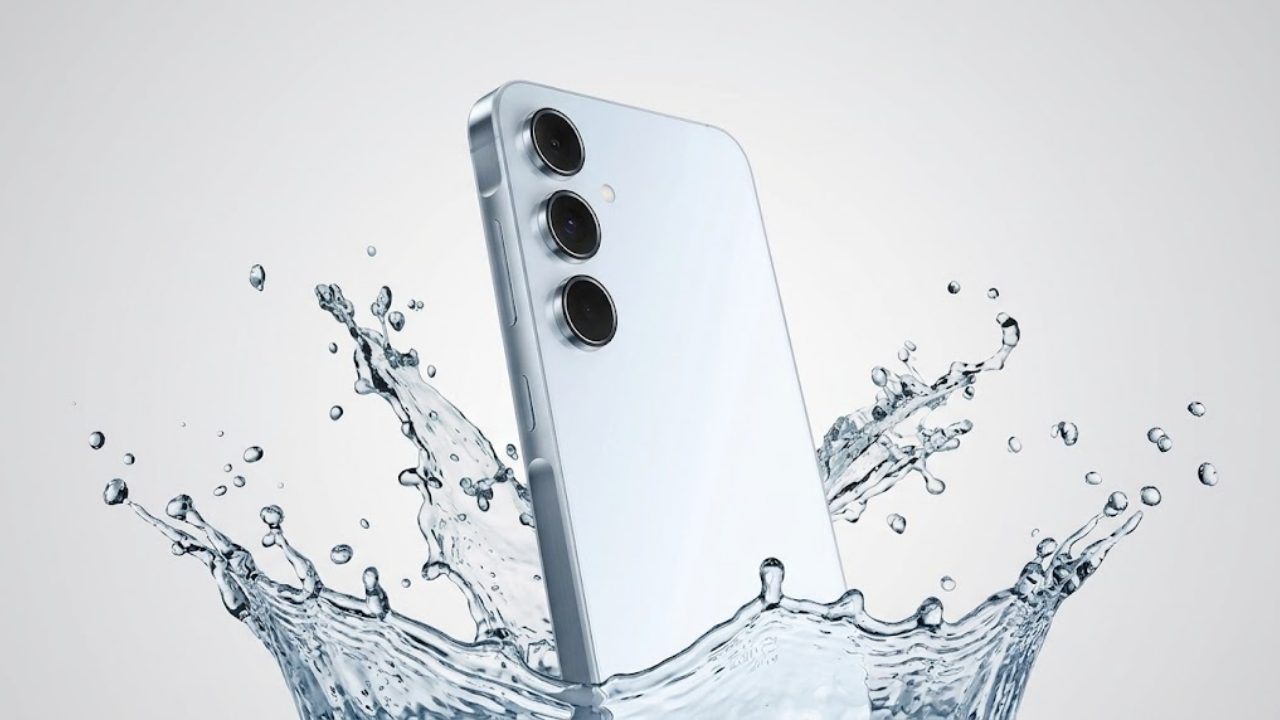
From the back, these two phones might trick you into thinking they’re almost identical. Flat glass, clean rings around the cameras, and minimalist branding. But the moment you flip them and look at the sides, the differences become immediately clear.
The Galaxy S25 Edge uses a lightweight titanium frame with a matte finish. The iPhone sticks to aluminum, also matte, but noticeably heavier. At 163g, Samsung’s phone feels shockingly light, almost unreal for a 2025 flagship. The iPhone 16 Plus sits at 199g, and you feel that extra weight the moment you pick it up.
Both devices offer IP68 protection, and each uses frosted glass on the back. Samsung mentions Gorilla Glass Victus 2, while Apple doesn’t specify its exact formulation.
In hand, the S25 Edge is one of those phones that almost disappears into your grip. It feels like the kind of thin iPhone design people used to beg for in concept videos. The iPhone feels more traditional, more grounded, and more familiar.
Choosing between them comes down to taste: the S25 Edge feels futuristic and featherlight; the iPhone feels sturdy and classic. Surprisingly, even the teams testing these devices were split into a mix of iPhone loyalists and a few converts admiring Samsung’s sleek engineering.
Display
Both phones have flat 6.7-inch screens, but the experience is nowhere near equal.
Samsung uses an LTPO AMOLED panel capable of 120Hz, while Apple sticks to 60Hz. At this point, 60Hz genuinely feels outdated, especially on a phone this large.
Brightness also tells the same story. Under simulated sunlight exceeding 100,000 lux, the Galaxy hit 1,646 nits on a full-white screen, while the iPhone reached 1,088 nits. Outdoors, that difference matters a lot.
Samsung includes an ultrasonic fingerprint scanner under the display. Apple relies, as always, on Face ID.
Whether it’s sharpness, smoothness, or brightness, Samsung clearly offers a better visual experience here. If you watch a lot of videos or just want the smoothness that most 2025 phones already offer, the S25 Edge simply feels more modern.
Audio
Both phones use stereo speakers bottom firing plus earpiece. And despite Samsung working with such a thin body, the S25 Edge is surprisingly loud.
But loud doesn’t equal better.
The iPhone delivers richer bass and cleaner treble. If you care about overall balance, Apple still wins this category.
Cameras
This is where things get interesting, because the results swing back and forth depending on the scenario.
Main Camera (Wide)
The S25 Edge uses the same 200MP sensor found in Samsung’s Ultra model. Apple sticks to a 48MP main lens.
Outdoors, Samsung controls highlights better and tends to produce cooler colors. The iPhone sometimes introduces a green cast but usually looks sharper. Indoors, the iPhone looks more natural, with the Galaxy leaning toward slight purple tints and more noise in darker areas.
Ultrawide Camera
Both offer 12MP ultrawide cameras with nearly identical specs. Outdoors, they’re almost impossible to tell apart. Indoors, Apple goes warmer and noisier, while Samsung stays cooler with less noise. It’s mostly preference here.
Portraits
With the main lens, Samsung handles tricky foreground elements better and produces richer colors. At 2x, though, Apple has the upper hand with more precise edge detection even capturing small hairs though its sharpening can be a bit aggressive.
Video
Samsung allows up to 8K30 on the main camera; Apple stops at 4K60. But for comparisons, 4K30 is where they both meet.
Outdoors, Apple captures more detail in dark areas but clips highlights. Samsung is more balanced and natural. Indoors, Apple shifts exposure more smoothly, while Samsung keeps colors truer to life.
For ultrawide video, Apple offers a wider field of view and slightly more detail. Indoors, it also maintains stronger dynamic range.
Front Camera
Both use 12MP sensors, and the results are closer than expected. Samsung nails jacket and clothing colors better, but in low light, Apple takes the lead with better color control despite adding more noise.
Low Light
Samsung sometimes goes overly bright and loses skin tones entirely. Apple tends to keep things realistic, even if it’s a touch blurry. Ultrawide behavior is the opposite: Samsung goes cold, Apple goes warm and punchy.
Overall: daytime is mostly a tie; indoors and low-light lean toward the iPhone.
Performance
The Galaxy S25 Edge runs the Snapdragon 8 Elite for Galaxy. Apple uses its A18 chip. On paper, both are powerful. In practice, each one wins in different areas.
Gaming
Grid Legends:
– iPhone hit 60fps, dropping only to 49
– Samsung dropped to 30fps and ran hottest
Withering Waves:
– Samsung held more stable performance
– But again ran the hottest
Bloons TD6 chaos test:
– iPhone dropped dramatically
– Samsung stayed higher but also hit 52°C
The theme? Samsung pushes harder but heats more.
Real-World Tasks
Lightroom export of 99 photos:
– Samsung finished almost 90 seconds faster
CapCut 4K render:
– iPhone won, but only by 4 seconds
Excel with 4M cells:
– iPhone demolished Samsung here (4 seconds total load)
Benchmarks
Geekbench:
– iPhone wins single-core
– Samsung wins multi-core
3DMark:
– Samsung hits bigger peak numbers
– But throttles more aggressively
Samsung uses UFS 4.0 storage; Apple sticks to NVMe.
In summary: the iPhone performs slightly better in sustained gaming and heat control; the Galaxy shines in productivity and benchmarks but runs much hotter.
Software
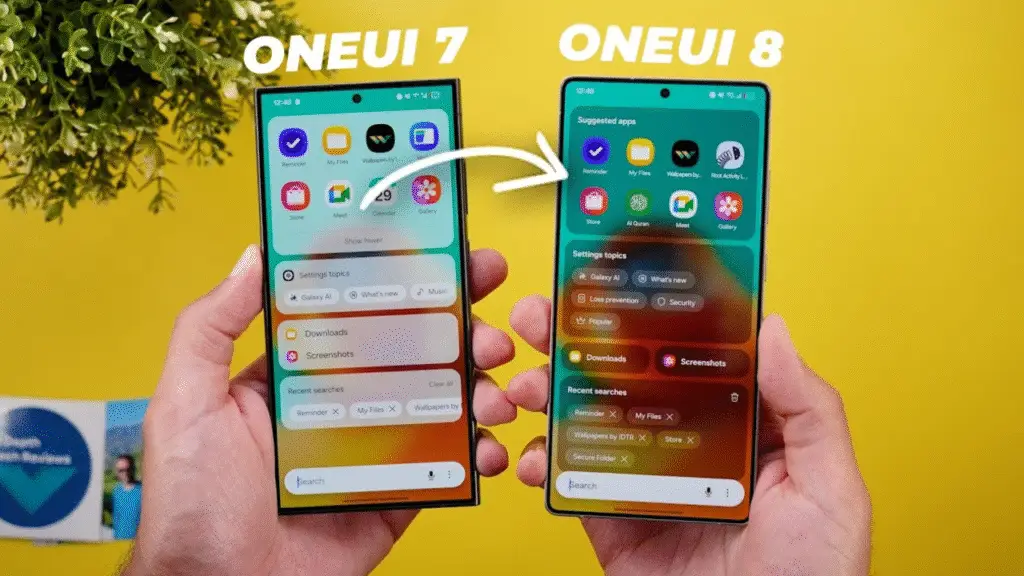
Samsung ships One UI 8 (Android 15). Apple runs iOS 26.
Both brands now promise around seven years of updates.
One UI 8 brings redesigned controls, smoother animations, and Samsung’s AI features like Note Assist and gallery generative tools. iOS adds new personalization, an upgraded Siri with ChatGPT support, and on-device image creation through Playground.
Each OS has its own charm: Samsung is feature-heavy and flexible; Apple is streamlined and predictable. Neither is a wrong choice, it’s purely a comfort thing.
Battery & Charging
This is the S25 Edge’s weakest point.
Samsung uses a 3,900 mAh battery smaller than even the base S25. Apple packs a much larger 4,674 mAh cell.
During testing, the iPhone survived the entire performance cycle. The S25 Edge died mid-way and needed a recharge to continue.
The Galaxy charges at 25W wired and 15W wireless. The iPhone doesn’t disclose wired wattage but supports 25W wireless via MagSafe.
In a charging test with a 100W brick:
– Samsung took 1 hour 7 minutes
– Apple took 1 hour 42 minutes
Samsung charged faster despite having the smaller battery.
Price
The Galaxy S25 Edge launches at $1,199.
The iPhone 16 Plus costs $999 for 256GB or $899 for 128GB.
What complicates things is Samsung’s own lineup: the Galaxy S25+ costs $999, includes a bigger battery, and arguably makes the S25 Edge harder to justify.
Final Thoughts
The Galaxy S25 Edge is an exciting phone mostly because it shows what Samsung can achieve in design and engineering. It’s incredibly slim, unbelievably light, and packed with strong hardware. But that thinness comes with real compromises: heat and battery life.
The iPhone 16 Plus isn’t cutting-edge in every area, especially with that 60Hz display, yet it’s more consistent day-to-day. Better battery. More stable performance. Stronger low-light camera reliability. And the price is easier to justify.
If you want a futuristic, featherweight device and don’t mind carrying a charger, the S25 Edge is fun and unique. But for most people, especially at current pricing, the iPhone 16 Plus is simply the more practical choice ideally on sale.
Read Also Samsung S24 vs iPhone 15: Which Holds Up Better?

M Adnan Akram is the founder and lead writer at Phoonomo, covering mobile technology with a primary focus on Apple and the broader smartphone industry, alongside emerging developments in AI. He follows product launches, spec leaks, and industry trends closely to keep readers informed with timely updates.
Discover more from Phoonomo
Subscribe to get the latest posts sent to your email.