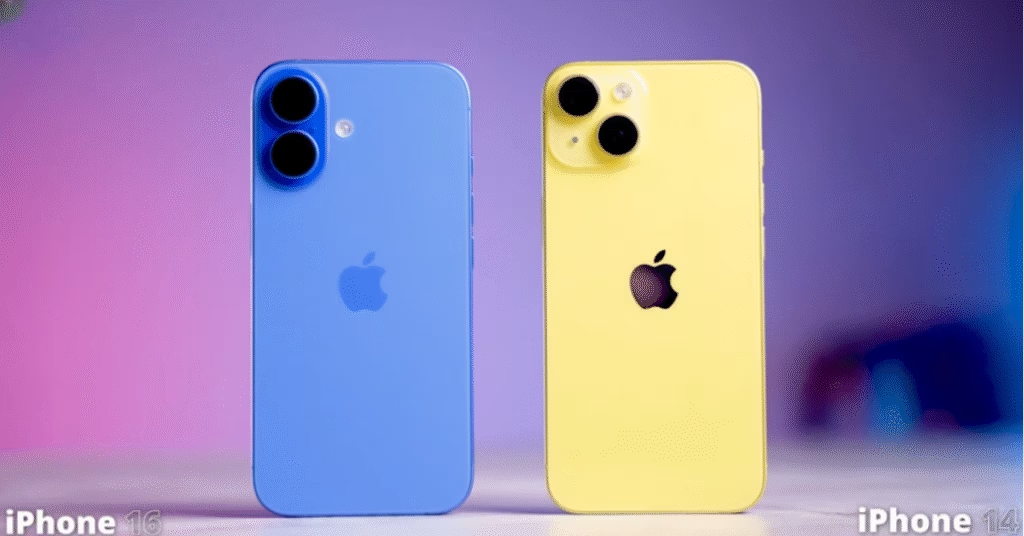
Today we’re going to compare the latest iPhone 16 with the two-year-old iPhone 14.
There are two primary reasons for this comparison: the price difference and the question of whether an upgrade is necessary for existing iPhone 14 users. The iPhone 14 is significantly cheaper around $200 less for a new unit and up to $500 less for a used model, depending on condition and retailer.. So, the core question is: should you spend double the money for the iPhone 16, or save a substantial amount by opting for the iPhone 14? We will also address whether current iPhone 14 users should upgrade.
This comparison also includes the iPhone 14 Plus and iPhone 16 Plus, as the differences between the base and Plus models are primarily in screen size, battery capacity, and priceall other core features remain the same.
Design, Build Quality, and Look
From the back, the difference is immediate: the iPhone 14 has a glossy back, while the iPhone 16 features a frosted matte finish glass with color infused inside, giving it a more premium, vibrant look.
The camera layout is different: the iPhone 14 has a diagonal camera setup, while the iPhone 16 has a vertical one. The Apple logo remains centered on both. The iPhone 16 feels slightly more premium to the touch, but considering 99% of people use a case, this difference is negligible. The overall form factor and in-hand feel are very similar, with a minimal 2-gram difference in weight. Both phones have aluminum sides of similar quality.
Physical Controls and Durability:
- Left Side: Both have the volume rocker. The iPhone 14 features a simple Mute Switch (flick to mute/unmute). The iPhone 16 replaces this with the Action Button, which is customizable for functions like the flashlight. I find the classic Mute Switch to be a more “no-nonsense” and practical feature. The iPhone 16 also features a new Camera Control Button on the side, which we’ll discuss later.
- Durability: Both have the same IP68 rating for water and dust resistance. The front glass on both is Ceramic Shield, which offers excellent drop protection. However, the iPhone 16 features a “next-generation” Ceramic Shield, meaning it is theoretically harder, though the iPhone 14 is also very durable.
Display Comparison
The screen sizes are identical: 6.1 inches for the base models and 6.7 inches for the Plus models. The display quality is also similar, with both featuring 460 ppi and being OLED panels.
The major differences are:
| Feature | iPhone 14 / 14 Plus | iPhone 16 / 16 Plus | Verdict |
|---|---|---|---|
| Peak Brightness (Outdoor) | 800 nits (Typical) | 2000 nits (Typical) | iPhone 16 Advantage: Much brighter for outdoor viewing. |
| Refresh Rate | 60 Hz | 60 Hz | No difference. |
| Display Cutout | Notch | Dynamic Island | iPhone 16 Advantage: Better visual appeal and more interactive experience. |
| Bezels | Slightly thicker | Slightly thinner | iPhone 16 Advantage: Slimmer look, though both remain thicker than Pro models. |
Speakers: Both phones have a stereo setup (one in the earpiece, one at the bottom). A loudness test showed an identical output of 88-89 dB, indicating no practical difference in speaker volume or quality.
Specifications and Performance
The iPhone 16 brings a significant jump in internal hardware.
| Component | iPhone 14 | iPhone 16 | Performance Notes |
|---|---|---|---|
| Chipset | Apple A15 Bionic | Apple A18 | iPhone 16 Advantage: Significant gains in single-core, multi-core, and GPU performance. |
| RAM | 6GB | 8GB | iPhone 16 Advantage: Smoother multitasking and better future-proofing. |
Day-to-Day Use: The difference in raw performance will not be felt in daily tasks, as both are extremely fast. Apps open equally quickly.
Future-Proofing (Apple Intelligence): The extra performance and RAM on the iPhone 16 will be used for on-device Apple Intelligence features, which will not be available on the iPhone 14.
Gaming: While the A18 chipset is more powerful, both phones have a 60Hz refresh rate display, meaning games like BGMI are capped at 60 FPS on both. For professional gamers, the iPhone 16 offers more consistent and better peak performance, but for the average user, the experience is comparable.
Battery and Charging
Both phones support the same basic charging standards:
- Wired Charging: Both support 20W charging (max output is about 21-23W even with a 30W adapter).
- MagSafe: The iPhone 16 supports a faster, newer MagSafe charger, but in testing, the charging speed difference from the older 15W MagSafe was negligible.
Battery Life: The iPhone 16 provides an advantage with approximately 2 hours more video playback than the iPhone 14. The same relative difference exists between the 16 Plus and 14 Plus. However, the iPhone 14 Plus will still offer a significantly longer battery life than the standard iPhone 16 due to its larger battery capacity. The battery life on the iPhone 14 is not poor by any means, but the iPhone 16 is better.
Wireless Technology:
- Wi-Fi: iPhone 14 supports Wi-Fi 6; iPhone 16 supports Wi-Fi 7. This is only an advantage if you have a Wi-Fi 7 router.
- Bluetooth: Both support Bluetooth 5.3.
- USB-C Port: The iPhone 16 has a USB Type-C port, which allows for easier use of Type-C accessories like pen drives. However, the port supports only USB 2.0 speeds on both the iPhone 14 (Lightning) and iPhone 16 (USB-C), meaning there is no advantage in wire transfer speed. You also cannot record video directly to an external SSD on the base iPhone 16, unlike the Pro models.
Cameras
This is the area with the most significant difference in hardware.
| Camera | iPhone 14 | iPhone 16 | Advantage |
|---|---|---|---|
| Main Rear Camera | 12MP Wide | 48MP Wide | iPhone 16 (Massive advantage in photo detail) |
| Ultra Wide Rear | 12MP | 12MP | Similar |
| Front-Facing | 12MP | 12MP | Similar hardware, surprising results |
Still Photography
- Rear Camera: The 48MP sensor on the iPhone 16 is a clear winner, capturing significantly more detail and clarity, especially when viewed on a larger display.
- Portrait Mode (Rear): iPhone 16 is better, offering superior quality, detail, and edge detection. It also has the ability to take 2x portrait photos due to the higher resolution main sensor.
- Front-Facing Camera: Surprisingly, the iPhone 14 was better than the iPhone 16 in the still-photography selfies tested. The iPhone 16 struggled with edge detection in Portrait Mode, particularly with hair and beards.
- Macro Photography: The iPhone 16 supports Macro Photography, a feature that is absent on the iPhone 14 (and even the iPhone 15).
Videography
- Front-Facing Video (4K 30/60fps): The video quality and image stabilization are exactly the same on both phones. The skin tone on the iPhone 16 was marginally better, but overall, there is very little difference.
- Rear Video (4K 30/60fps): Video quality and stabilization (even in Action Mode) are extremely similar. The main difference is the audio quality; the iPhone 16 records better audio with improved noise cancellation and supports Stereo Plus Spatial Audio with an audio mixing feature (not on the 14). In dynamic range tests, the iPhone 16 had slightly better face exposure when the light was behind the subject.
Camera Control Button (iPhone 16 Only): This new physical button can be used to toggle camera settings (lens, aperture, photographic style). While a “good feature,” I found it not very useful for regular, everyday shooting, especially handheld.
AI Features and iOS
Both the iPhone 14 and 16 can be updated to iOS 18, and the iPhone 14 is expected to receive at least four more iOS updates. Therefore, updates are not a concern.
iOS 18 Common Features: Both phones will share general iOS 18 features like new icon customization, the updated Control Center, and the camera’s pause button. Both will also get the new Call Recording feature.
The Key Difference is Apple Intelligence:
| Feature | iPhone 14 / 14 Plus | iPhone 16 / 16 Plus |
|---|---|---|
| Apple Intelligence | Not Available | Fully Available |
Apple Intelligence features (exclusive to the iPhone 16):
- Writing Tools (Proofreading, rewriting, etc.)
- Clean Up feature in Photos (removing objects, logos, text)
- Mail and Notification Summarization
- Upcoming features like Image Wand, Image Playground, and Visual Intelligence (in iOS 18.2).9
If these cutting-edge AI features are important to you, the iPhone 16 is the only choice. If you don’t plan on using them, the iPhone 14 remains perfectly capable.
Pricing and Final Verdict
Both phones are available in 128GB, 256GB, and 512GB storage variants.
| Model | New Price (Approx.) | Used Price (Approx.) | Difference (New) |
|---|---|---|---|
| iPhone 14 | $699 | $350 – $420 | $100 less than iPhone 16 |
| iPhone 16 | $799 | — | — |
| iPhone 14 Plus | $799 | $450 – $500 | $100 less than iPhone 16 Plus |
| iPhone 16 Plus | $899 | — | — |
Recommendation:
- If you already own an iPhone 14: Do NOT upgrade to the iPhone 16. The gains in design, Dynamic Island, Action Button, and camera control are not worth the substantial cost. Wait one more year for the iPhone 17, which should offer a more meaningful upgrade.
- If you are buying a new phone and money is no object: Go for the iPhone 16. The inclusion of Apple Intelligence and the superior rear camera make it the better overall device and provide more future-proofing.
- If you are looking for the best value for money (and are comfortable with used phones): Go for a used iPhone 14 or 14 Plus. This option offers the most bang for your buck, saves a significant amount of money, and you can still upgrade later when the iPhone 17 is released without a major loss of capital.
I hope this complete comparison has clearly laid out the pros and cons of both devices. The choice is yours, and I’d love to hear which option you choose in the comments!
See Also iPhone 14 Plus vs iPhone 16 Plus: The Upgrade Explained
FAQs (iphone 14 vs 16)
Is the iPhone 16 worth upgrading from the iPhone 14?
Not really for most users. The iPhone 16’s camera and Apple Intelligence features are nice additions, but performance, display, and battery differences aren’t big enough to justify the higher price if your iPhone 14 is still in good condition.
Does the iPhone 16 have Apple Intelligence features?
Yes. Apple Intelligence is fully supported on the iPhone 16 and 16 Plus, but not available on the iPhone 14 series.
How much brighter is the iPhone 16 display compared to the iPhone 14?
The iPhone 16 can reach 2000 nits of outdoor brightness versus 800 nits on the iPhone 14more than double, making it much easier to see in sunlight.
What are the main camera differences?
The iPhone 16 has a 48 MP main camera compared to the iPhone 14’s 12 MP. It also supports Macro Photography and improved portrait details.
Does the iPhone 16 charge faster than the iPhone 14?
Not significantly. Both use around 20 W wired charging and similar MagSafe speeds.
Which phone offers better battery life?
The iPhone 16 lasts about two hours longer in video playback. However, the iPhone 14 Plus still beats the iPhone 16 in total endurance thanks to its larger battery.
What’s the biggest reason to pick the iPhone 16?
Apple Intelligence and the upgraded 48 MP camera make it the more future-proof choice if you value new software and AI features.
What’s the best value for money?
A used iPhone 14 or 14 Plus offers the best bang for your buck in 2025.it’s fast, reliable, and much cheaper.
Do both phones support USB-C?
Only the iPhone 16 does. The iPhone 14 still uses the Lightning port.
Which one should I buy in 2025?
If you want Apple Intelligence and the latest camera tech, choose the iPhone 16. If you prefer saving money without losing much performance, the iPhone 14 is the smarter buy.

M Adnan Akram is the founder and lead writer at Phoonomo, covering mobile technology with a primary focus on Apple and the broader smartphone industry, alongside emerging developments in AI. He follows product launches, spec leaks, and industry trends closely to keep readers informed with timely updates.
Discover more from Phoonomo
Subscribe to get the latest posts sent to your email.