After the Xiaomi 17 series dominated headlines for two weeks, vivo quietly entered the scene with the launch of its new vivo X300 series. And while Xiaomi focused on flashy design choices like a rear display, vivo took a completely different approach improving everything under the hood without cutting corners. As someone who loves comparing phones in real-world use, I spent some time with both models the vivo X300 and the X300 Pro and the results surprised me.
Design and Feel in Hand
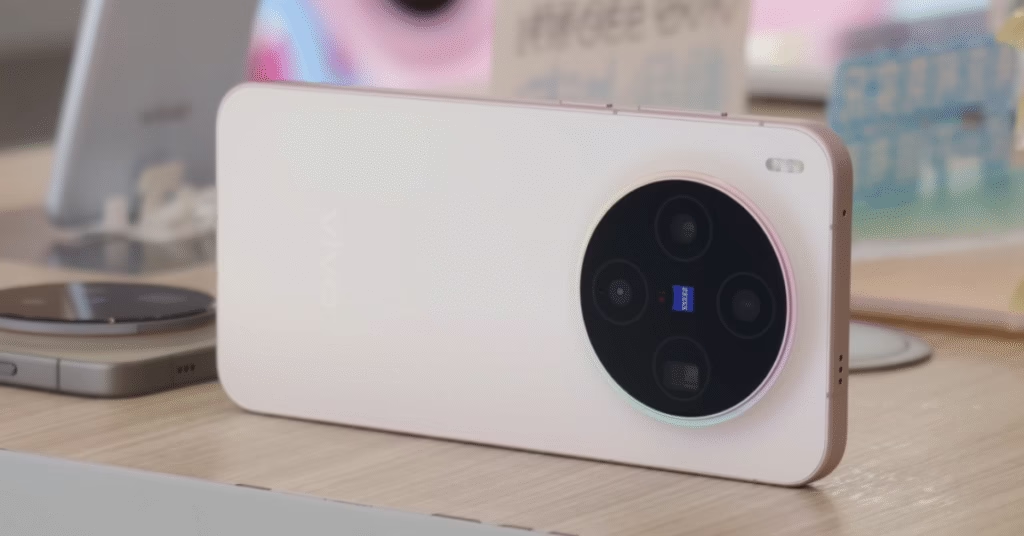
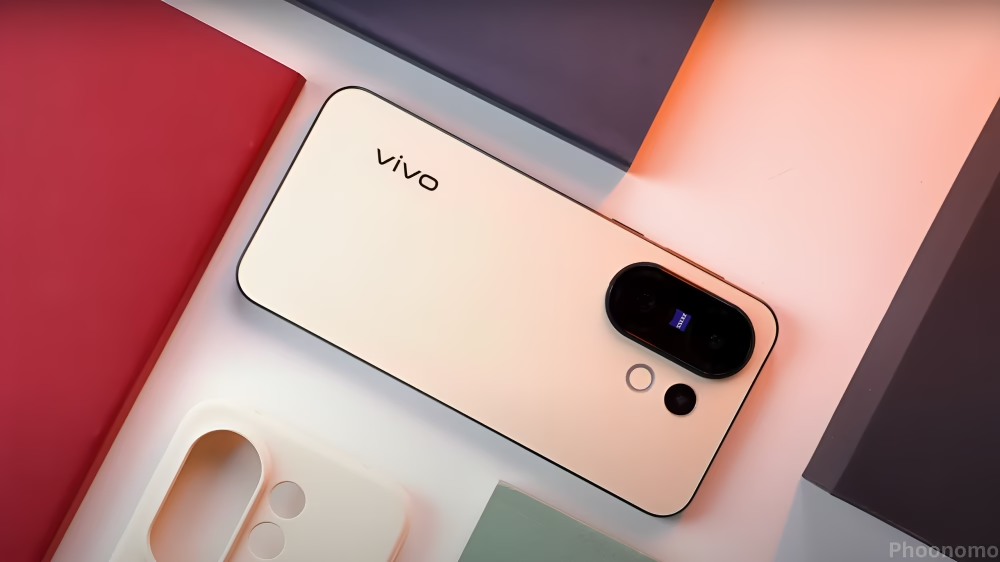
Let’s start with the standard vivo X300, because honestly, this is where vivo nailed it. It might not look dramatically different from the X200 series, but once you hold it, you realize how refined it feels. The 6.3-inch size makes it compact and comfortable, more like a successor to the X200 Pro Mini than the X200S. I personally like that vivo dropped the “Pro Mini” name this time; it always sounded a bit awkward.
The biggest improvement is the way the back and camera module blend together. The older model looked like someone stuck a cookie on top, but now the design feels natural like a volcanic crater forming smoothly from the back panel. The pink version even features a decorative ring around the camera setup. It’s not an RGB light, but it adds just enough flair to make it stand out without going overboard.
vivo also made some thoughtful physical upgrades. The USB 2.0 port is finally replaced with USB 3.2, making file transfers faster. The overall weight is lighter, and the phone feels thinner in the hand. The only small disappointment is that the X300 doesn’t include an action button, something its big brother proudly carries.
X300 Pro: Familiar But Still Refined

Now, the X300 Pro doesn’t stray too far from the previous generation in design. In fact, from a distance, you’d easily mistake it for the X200 Pro. The large circular camera module remains, though it’s slightly shorter than the one on the X200 Ultra. The body is a bit thinner, but the overall weight remains almost the same.
There’s also a bit of controversy about the camera control button. Some users love it, others not so much. Personally, I think vivo should’ve made it optional. Still, the Pro model looks and feels premium, with that signature vivo finish we’ve come to expect. The only big visual change is on the front, the Pro now uses a flat display instead of the quad-curved panel from last year. And honestly, it looks much cleaner and easier to protect with a screen guard.
Display

Both the vivo X300 and X300 Pro come with BOE’s latest display panels. The standard model offers a slightly smaller screen, while the Pro version gets a touch larger and more advanced display. What really impressed me was the new uniform bezels perfectly even on all four sides. They’re slimmer than ever, giving the phone a balanced and high-end look from every angle.
Another small but noticeable upgrade is the new ultrasonic fingerprint sensor under the display. It’s fast and more reliable than the older optical ones. This change alone makes everyday unlocking much smoother, especially when your fingers are slightly wet or oily. These are the kinds of little refinements that make a big difference in daily use.
Camera
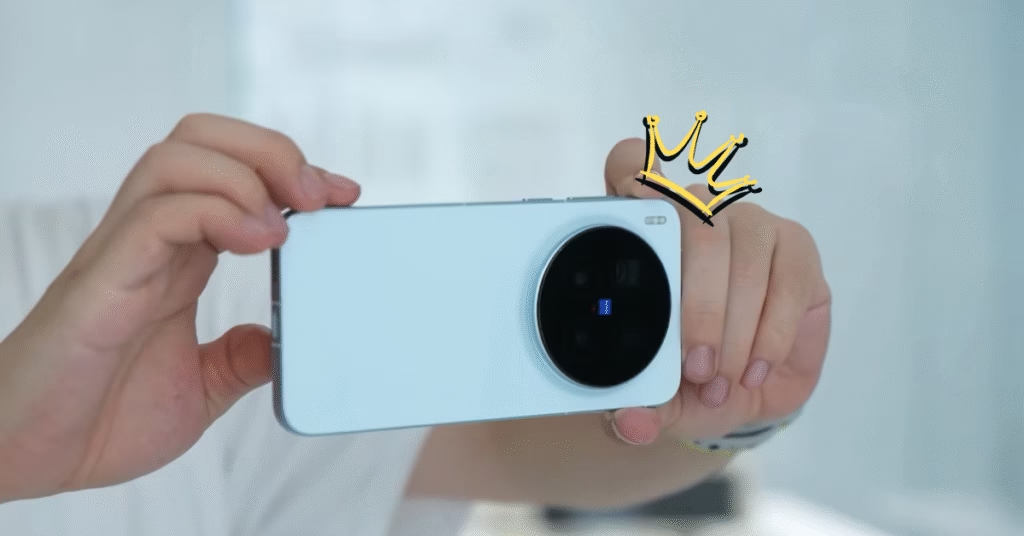
Now, onto what most people care about the cameras. The vivo X300 features a brand-new 200-megapixel main sensor. That’s a big jump from last year’s 50MP setup and it fixes one of the biggest complaints about the older model sharpness. The new sensor brings excellent detail, especially when you zoom in on textures or fine patterns.
The telephoto lens is also among the strongest in its price segment. It delivers consistent, sharp results, whether in daylight or at night. For photography enthusiasts, this setup feels like a reliable all-rounder.
The X300 Pro, on the other hand, doesn’t see as dramatic an upgrade. The main camera switches to Sony’s IMX A2.8 sensor, and the telephoto moves to Samsung’s HPB. The focal length didn’t change to 35mm like we saw on the X200 Ultra, so the improvement is moderate. Still, the Pro captures better color accuracy and slightly sharper low-light shots.
All X300 series models now support external telephoto extender lenses, a rare feature in this segment. This gives creators more flexibility when shooting outdoors or doing close-up portrait work. I’m genuinely excited to see how reviewers push this feature in real-world photography tests.
Performance
Under the hood, both models are powered by MediaTek’s Dimensity 9500 chip, scoring over four million points on benchmark tests. On paper, that’s already impressive. But benchmarks aside, the phones handle daily use with ease from switching between heavy apps to running demanding games.
I tried running a few high-end games, and the experience was smooth with no noticeable frame drops. Even during long sessions, the thermal management was surprisingly good. vivo’s optimization this year feels more balanced; you get power when needed, but the phone stays cool during regular use.
Battery Life and Charging
Of course, no phone is perfect, and the vivo X300 series has its compromises. The smaller model packs a 6,000mAh battery, which sounds great for its compact size. However, when you compare it to Xiaomi’s 17 series, which fits a 7,000mAh battery into a similar body, vivo’s effort feels a bit behind.
The Pro version doesn’t do much better in this department either. Battery life is decent for daily use but not exceptional. Both models support 90W wired and 40W wireless charging. It’s fast enough to get you through the day, but in 2025, competitors like OnePlus and Xiaomi are pushing much higher numbers.
Verdict
After comparing both models in daily use, I can say that vivo’s latest lineup is all about refinement rather than reinvention. The upgrades may not be massive, but they’re consistent. And that’s something I really appreciate.
Where other brands sometimes cut corners to make phones look exciting, vivo has quietly improved every small detail from the USB port to the fingerprint sensor. The vivo X300 feels like the kind of device that doesn’t need to shout to prove its worth. It’s a balanced, reliable, and elegant phone built for those who value smooth performance and great camera quality without unnecessary gimmicks.
If you already have an X200 Pro, upgrading might not feel essential. But if you’re coming from an older device or want something that just works well without compromise, the vivo X300 is an easy recommendation. It’s not flashy, but it’s the kind of phone that grows on you the more you use it.
See Also OriginOS 6 Review: Vivo’s Biggest Software Upgrade Yet
FAQs
What are the main upgrades in the vivo X300 series?
Both models bring smoother design, upgraded cameras, and faster USB 3.2 support.
Does the vivo X300 have an action button?
No, the standard version doesn’t include it, but the X300 Pro does.
What processor powers the vivo X300?
Both the X300 and X300 Pro are powered by MediaTek’s Dimensity 9500 chip.
How good is the vivo X300 camera setup?
It features a 200MP main sensor and one of the best telephoto cameras in its price range.
How fast is the charging on the vivo X300?
It supports 90W wired and 40W wireless charging, enough for a full charge in under an hour.

M Adnan Akram is the founder and lead writer at Phoonomo, covering mobile technology with a primary focus on Apple and the broader smartphone industry, alongside emerging developments in AI. He follows product launches, spec leaks, and industry trends closely to keep readers informed with timely updates.
Discover more from Phoonomo
Subscribe to get the latest posts sent to your email.